By Emily R. Zarevich, Local Journalism Initiative Reporter
When do women ever get to talk without being interrupted? When do they ever get to converse in peace? With the demands of children, household duties, partners, and bosses always cutting in, it can sometimes feel like a full, finished, uninterrupted conversation between women is a rare commodity. However, Susan Miller’s 20th Century Blues, which is currently being performed by Village Theatre Waterdown, at last provides its female characters with a platform to speak to each other, and to a listening audience, without anyone interfering.
Directed by Jerrold Karch and produced by Ilene Elkaim, this emotionally charged drama in two acts follows four women situated in New York City, but it’s not Sex and the City. Miller’s women have a lot more to talk about than fleeting affairs. In fact, they have a particularly important matter to discuss, one that presents a looming threat to their decades-long friendship, which has traversed historical events and dramatic changes to the social order.
Danny, a photographer with a penchant for being pushy, presses her three closest pals to sign releases to have a lifetime’s worth of group photographs officially exhibited at the Museum of Modern Art (MoMA). Her friends Gabby, Mac, and Sil are riddled with insecurities and are not entirely open to signing away their privacy to public scrutiny. What ensues from this conflict is a long, confrontational, and wittily humorous discourse that incorporates their individual viewpoints on body image, the fluidity of sexuality, feminism, ageism, global politics, empathy, and so much more.
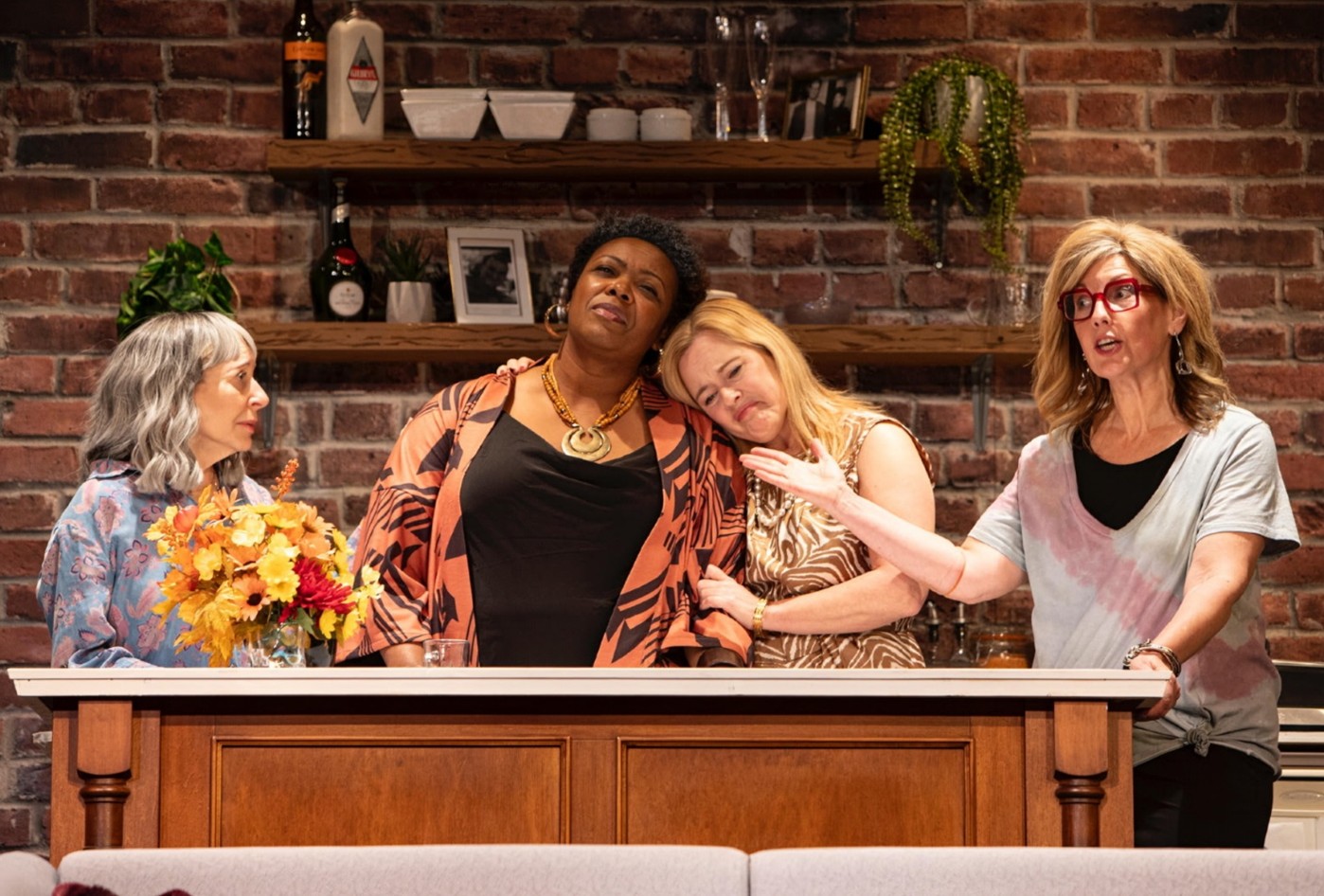
The play has little action but instead is carried through by the oral strengths of debate and repartee. It’s a dialogue-driven narrative. Each of the four main actresses approaches their character as a studious venture into realistic blemishes and prominent women’s issues. They effectively utilize emotion and vocal range to convey their characters’ aspirations, frustrations, and memories painted with words. Karen Gaudun plays Danny as ambitious but lacking confidence, as her desperation to assemble a successful exhibition reflects her self-perceived failures as an artist, the daughter of an elderly parent with dementia (played by Theatre Burlington’s Kathy Hyde-Nagel), and the mother of an adopted son. Zakiya Toby-Erwig plays Mac, a gutsy newspaper reporter of social justice issues, who in her later years is becoming exhausted by the pressure to constantly rally public attention for the causes of Black people, LGBTQIA+ people, and women’s rights. Toby-Erwig has a strong stage presence. She brings to the narrative a conflicted character who represents a generation of Baby Boomer professionals who fear being left behind by new innovations in their fields while, at the same time, struggle to admit that they’re getting tired.
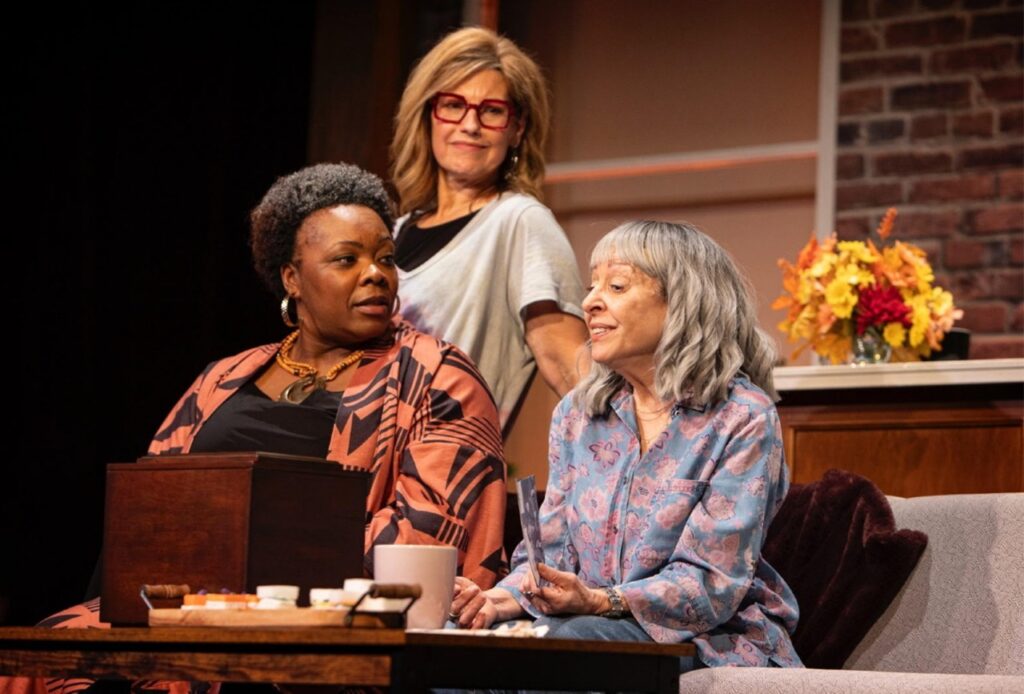
Lisa Weeks plays the self-conscious and self-effacing Sil, who is contemplating plastic surgery in the face of a declining career as a real estate agent. She attributes her lack of success to losing her looks. Weeks captures Sil’s vulnerability and desperation. Her performance speaks to the legions of women who have felt their self-worth devalue with every new wrinkle or bag of sagging skin that comes with age. And Harriet Rice plays Gabby, the bubbly, optimistic heart of the group. Gabby is a veterinarian and cancer survivor whose chirpy demeanour masks profound anxieties about the future. She is eagerly waiting for the next chapter of her life to begin while dreading the end of the one she is living now.
These four older women have an established dynamic that is equal parts tension and camaraderie. They have known each other for a long time and have no inhibitions whatsoever towards calling each other out and pushing each other’s buttons. They also know exactly what to say to provide each other with much-needed support as their stresses and worries mount.
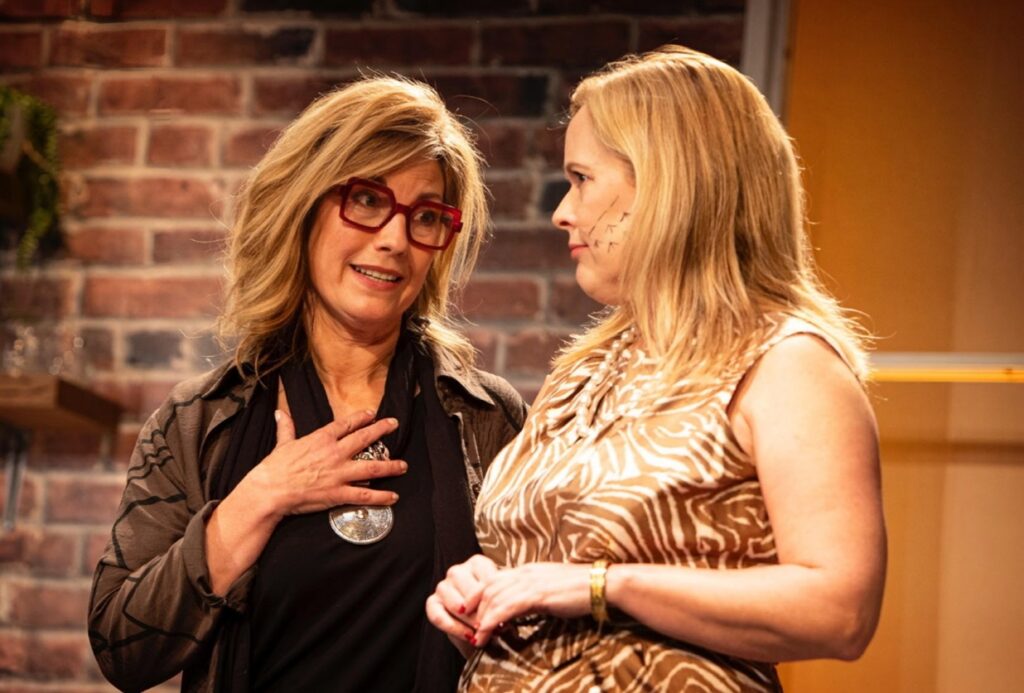
The one male character in the storyline is Danny’s adult son Simon, played by Matthew Francis, who only appears around halfway through the second act. Performed with considerable skill and passion by Francis, this character is idealized to the point of perfection. He appears to be Miller’s idea of what a grown man could be and should be: unceasingly gentlemanly to the women in his life and inspired by their accomplishments to the level of idolization. He is relentlessly polite and never seems to say a single wrong thing. He has no discernible flaws and few opportunities to further develop as a character beyond his relationships with the women. He lacks their depth and takes a backseat role in the ongoings. In short, he holds a spot that female characters have held in literature for centuries. It’s a fascinating, thought-provoking reversal of fictional gender roles.
The set is superb. Jerrold Karch and Dan Koehler, along with their talented construction team, completely repurposed the Village Theatre Waterdown stage into a chic and cozy New York apartment that clearly belongs to a professional woman with means. It has a brick wall, fine furnishings, household plants, and pleasing little details such as a row of vintage cameras lining the shelf above Danny’s workstation, symbolizing technological growth over time.
The characters play musical chairs in a believable, appropriately decorated living room with an adjoining kitchen where, at one point, Danny prepares coffee and French toast for her guests.
The other women seem perfectly at home in Danny’s apartment and know where to find everything. Audience members will feel the urge to mount the stage themselves and look around the apartment at all of Danny’s things: her son’s school day drawings on the fridge, the bottles in her kitchen, the contents of her desk, and, of course, her award-winning photographs that depict her friends. Basically, all of the little pieces that make up not just her own life, but the lives of a circle of women who love each other very much.
Performances of 20th Century Blues will continue until November 23, 2025. Tickets to upcoming performances can be bought here through the Burlington Performing Arts Centre website. Those who are not able to make it this year can support Village Theatre Waterdown by anticipating its upcoming spring 2026 production. This will be Christopher Durango’s Vanya and Sonia and Masha and Spike, set to premiere on April 17, 2025.