By Jack Brittle, Local Journalism Initiative Reporter
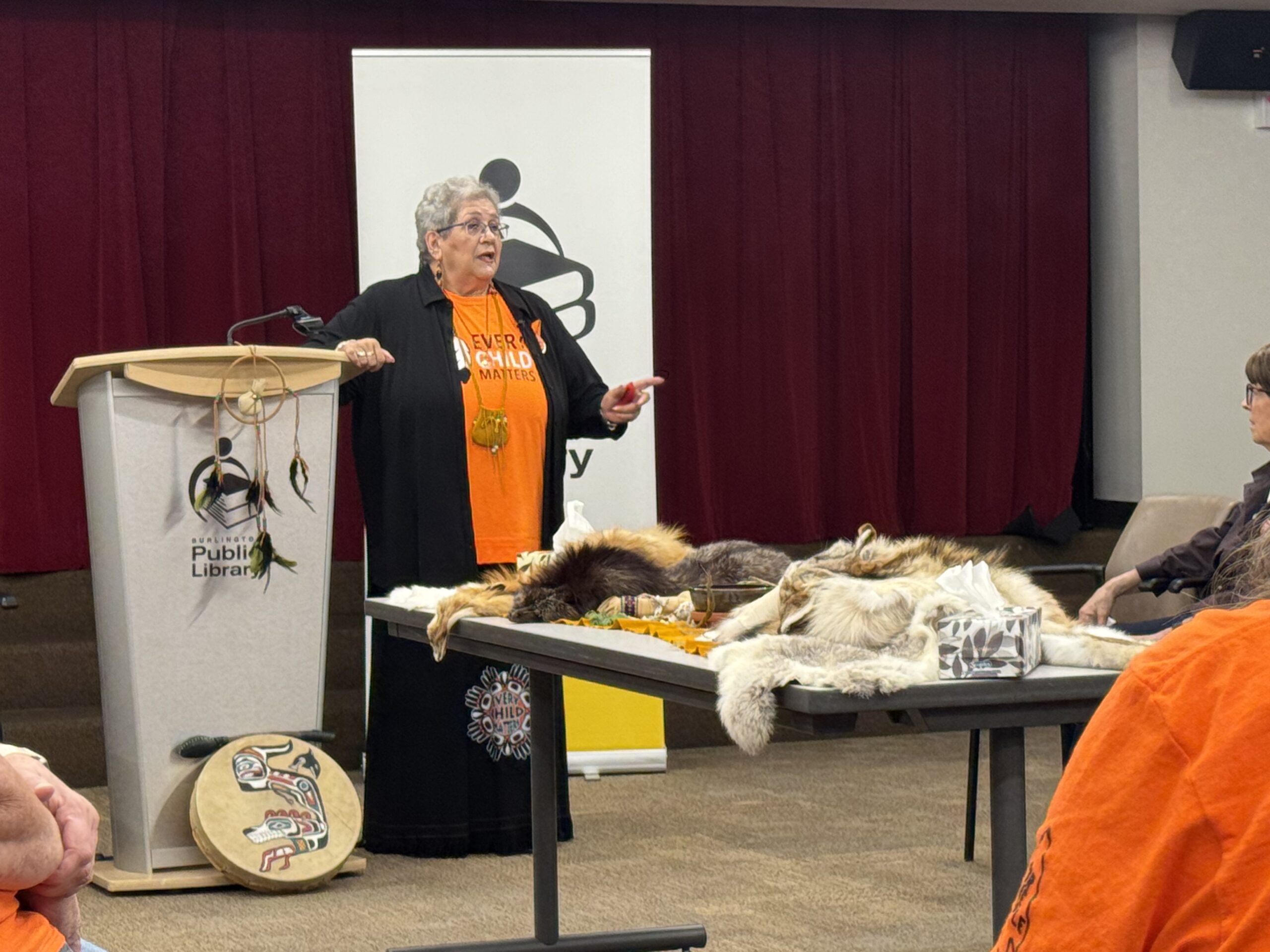
On September 30, the Burlington Public Library (BPL) hosted an event led by Indigenous educator Kate Dickson, titled “Understanding Orange Shirt Day.”
The name of the event refers to the custom of wearing orange shirts on September 30, National Truth and Reconciliation Day, in remembrance of the children who died at residential schools throughout Canada’s history.
The talk was held at the Central Branch of the BPL, in its Centennial Hall.
Before the talk, Parampreet Khanuja, BPL’s events coordinator, introduced Dickson to the room and gave her a traditional tobacco offering.
“Tobacco is called sacred currency by the way,” Dickson said. “So when an elder, particularly, is asked to do something, you give a tobacco pouch. And when you give that pouch, the person who receives it cannot refuse.”
Dickson is originally from British Columbia, but now resides in Burlington and sits on the Indigenous Advisory Circle to Mayor Marianne Meed Ward.
She opened the talk by saying that she doesn’t “do land acknowledgements.”
“I gave up on that quite some time ago,” Dickson said. “I’ve never done one. I don’t like them, and I don’t think you should be subjected to one here.”
She instead read a “land statement,” which contained context and history related to the Indigenous peoples of Canada and their relationship with land.
“Today, we question the word acknowledgement,” Dickson said. “As it implies an agreement between Indigenous groups and the Crown to take our ancestral lands through uneven treaties, which to this day reflect colonial denial of Indigenous rights and determination. But regardless of where Canada’s Indigenous groups have their territory, this statement very importantly refers to the reverence we have for the land.”
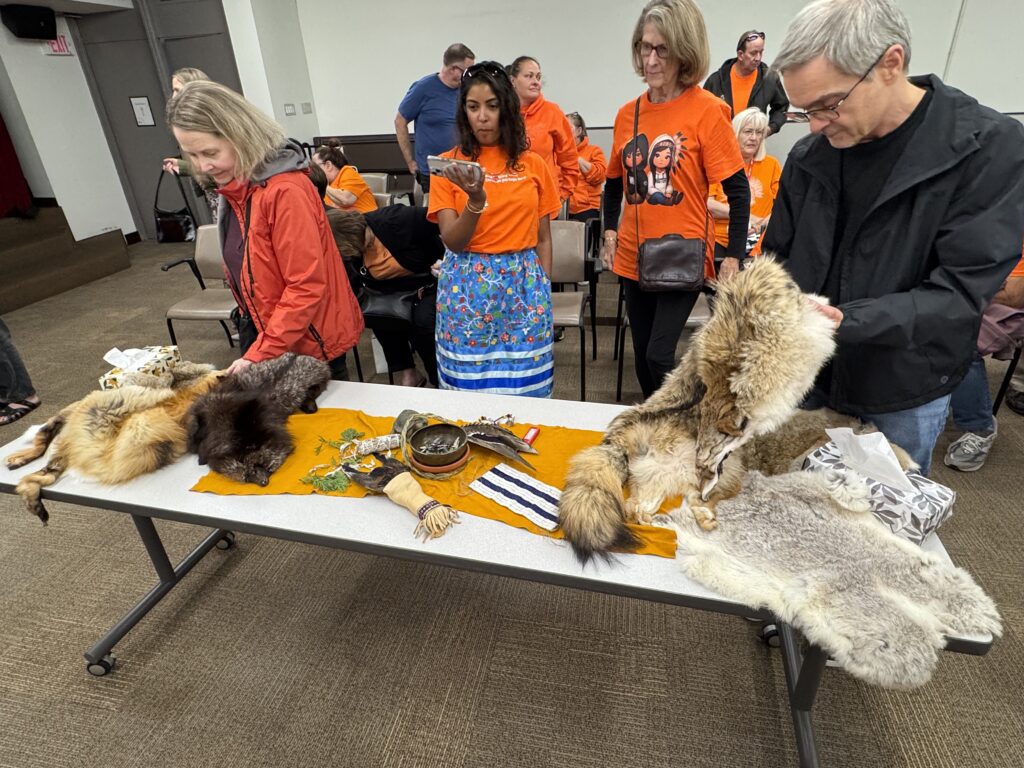
Dickson clarified that none of the animals whose fur was displayed on a table in front of the speaker’s podium were shot “just so I could bring them here for identification.”
“These are animals who have been shot and lost their lives, have been trapped or have been subject to fires,” Dickson said. “We’ve lost their environment, and they are cleaned by a group of native people who do this.”
Dickson encouraged audience members to come up and grab a fur if they were ever uncomfortable during the talk.
She also prefaced the talk by explaining to guests that it is not her intent to make anyone feel guilty, and asked that no one apologize to her after the event was over.
“Please don’t do it, because you weren’t there,” Dickson said. “But more importantly, you were not allowed to know anything. This was all kept secret, and it is only recently that it’s now coming to light.”
Dickson then began her talk, which covered events spanning 1763 to the current day. She provided historical context for the evolving attitudes and legislation regarding Indigenous people and explored the genesis of things like reserves and Indian Status cards.
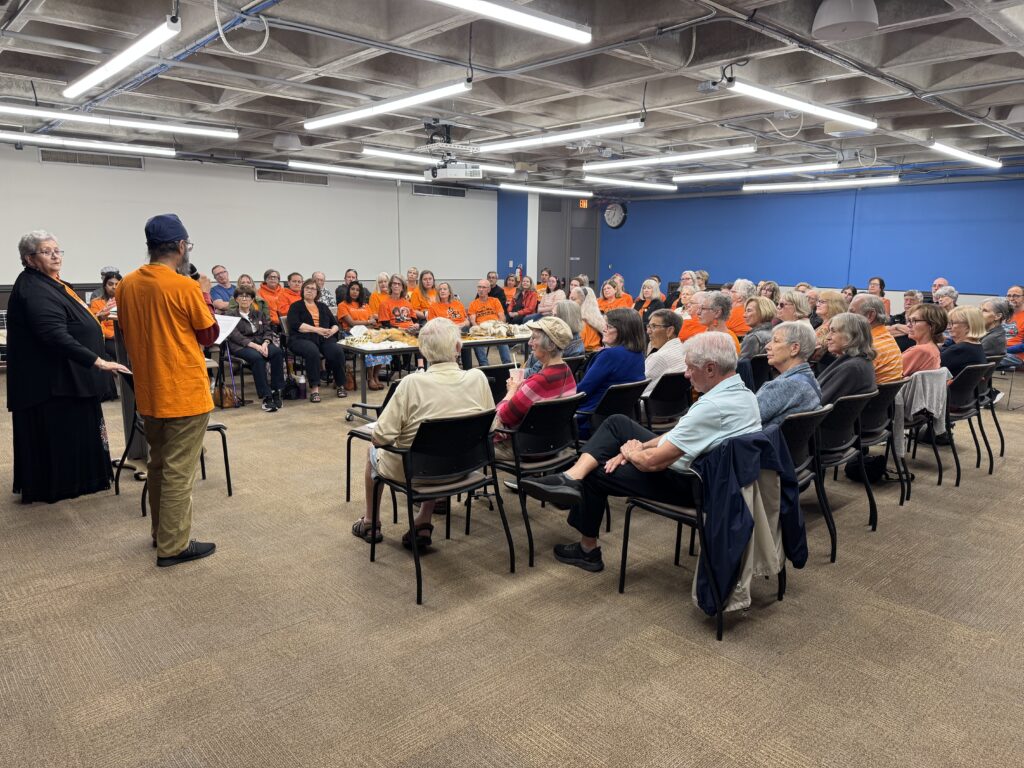
Also discussed at length were residential schools and the abhorrent treatment of the children attending them. This segued into the last portion of Dickson’s talk, which directly explained the meaning behind wearing orange shirts on September 30.
Dickson told the story of Phyllis Webstad, a residential school survivor who was stripped of her clothes on her first day at St. Joseph Mission Residential School, including a prized orange shirt, which she never got back.
Dickson quoted Webstad when telling the story: “’I loved that shirt, and I didn’t understand why they wouldn’t give it back. The colour orange has always reminded me of that day, how my feelings didn’t matter and how no one cared. All of us were crying, but no one cared.’”
“And so,” Dickson noted, “by wearing orange shirts, with Every Child Matters, we’re acknowledging not only Phyllis’s story, but the thousands of children who didn’t make it back, and the thousands of children who were trying to make it through.”
Dickson also explained the significance of the September 30 date, as it represents the time of year when many children were taken from their homes and relocated to the schools.
She closed the talk by restating her position on apologies.
“I think that ultimate apology is not one where people come and sob,” Dickson said. “It’s one where people go out and do something.”
She listed a number of things that people can do to support Indigenous people in Canada.
“Read and reread the Truth and Reconciliation Commission’s report and the 94 Calls to Action,” Dickson said. “Learn about Indigenous history, the Royal Proclamation, the Indian Act, the residential schools and pay attention to the ongoing, quite frankly, horror of missing and murdered Indigenous women who experience significantly higher rates of violence, including homicide and missing cases.”
“Be aware of the Highway of Tears, a 720-kilometre corridor off Highway 16 between Prince George and Prince Rupert in BC, which has been and is the location of crimes against Indigenous women,” Dickson said. “Be aware of Red Dress Day on May 5 to honour these women, held each year. Listen and learn from elders and survivors, attend a Truth and Reconciliation event, honour the Orange Shirt Day on September 30 and the National Indigenous Day on June 21.”
Dickson also encouraged attendees to write their MP and MPP to support Indigenous initiatives and force the issue of clean water infrastructure on reserves.
“And more than anything else, be an ally, because that’s what you are right now,” Dickson said.