By Kezia Royer-Burkett, Local Journalism Initiative Reporter
Five days before the HEDR Pride Gala Soirée, all VIP dinner tickets had sold out, leaving just ten remaining for the drag show set to light up the Art Gallery of Burlington (AGB). And light up it did: beneath a warm June night sky, with string lights shimmering above and laughter echoing throughout, the AGB’s courtyard transformed into a vibrant celebration of inclusivity, resilience, and community.
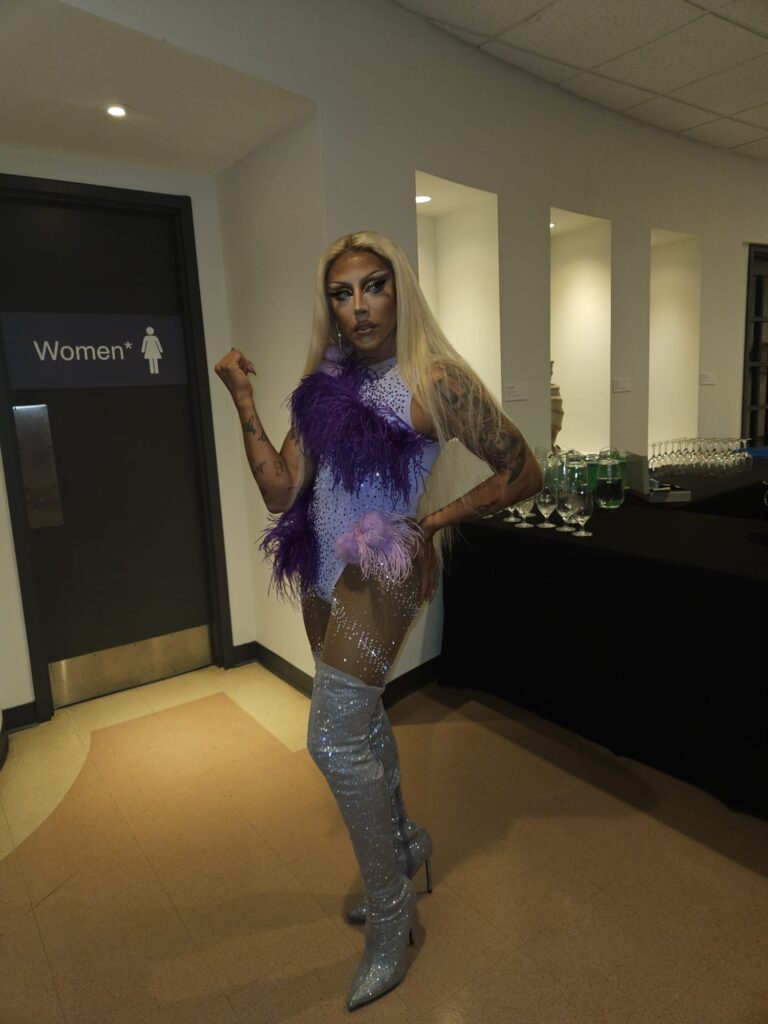
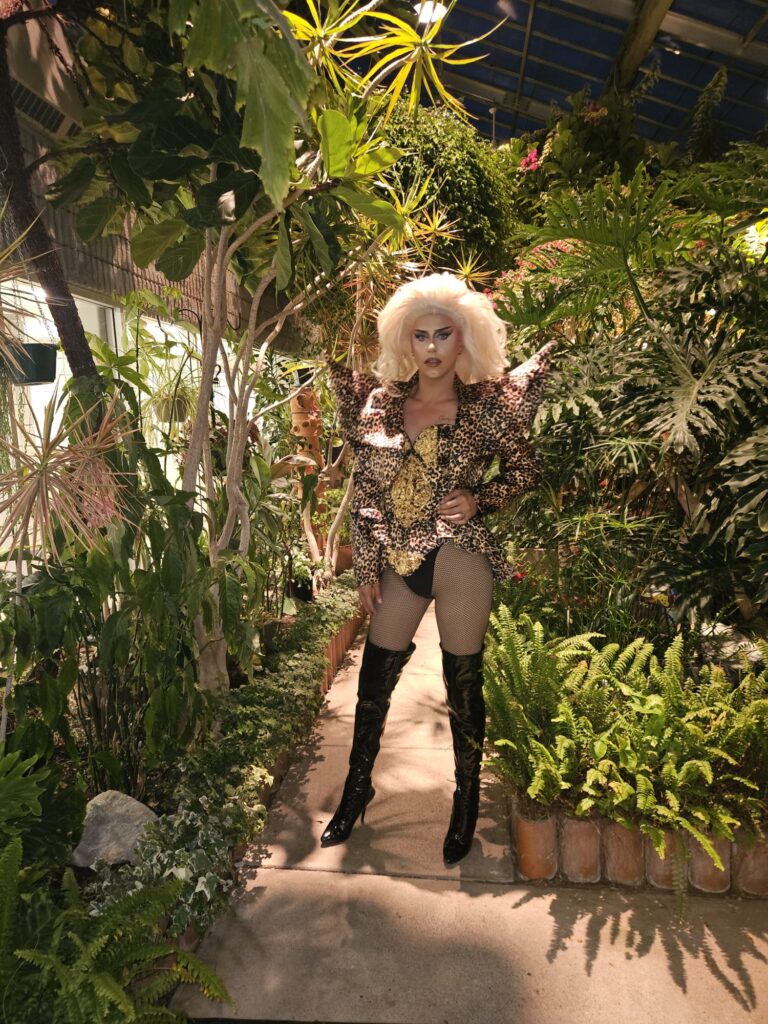
This wasn’t just a pride event; it was a powerful intersection of advocacy for safer, braver spaces. With support from sponsors like Drag Academy and Flair Airlines, and an electrifying lineup of performers including Lolita Banana, Lady Kero, Dahlia Doll, Dulce, Aura Ra, Jessie James, and Georgina Hudson, the evening celebrated Pride with style, but also with depth.
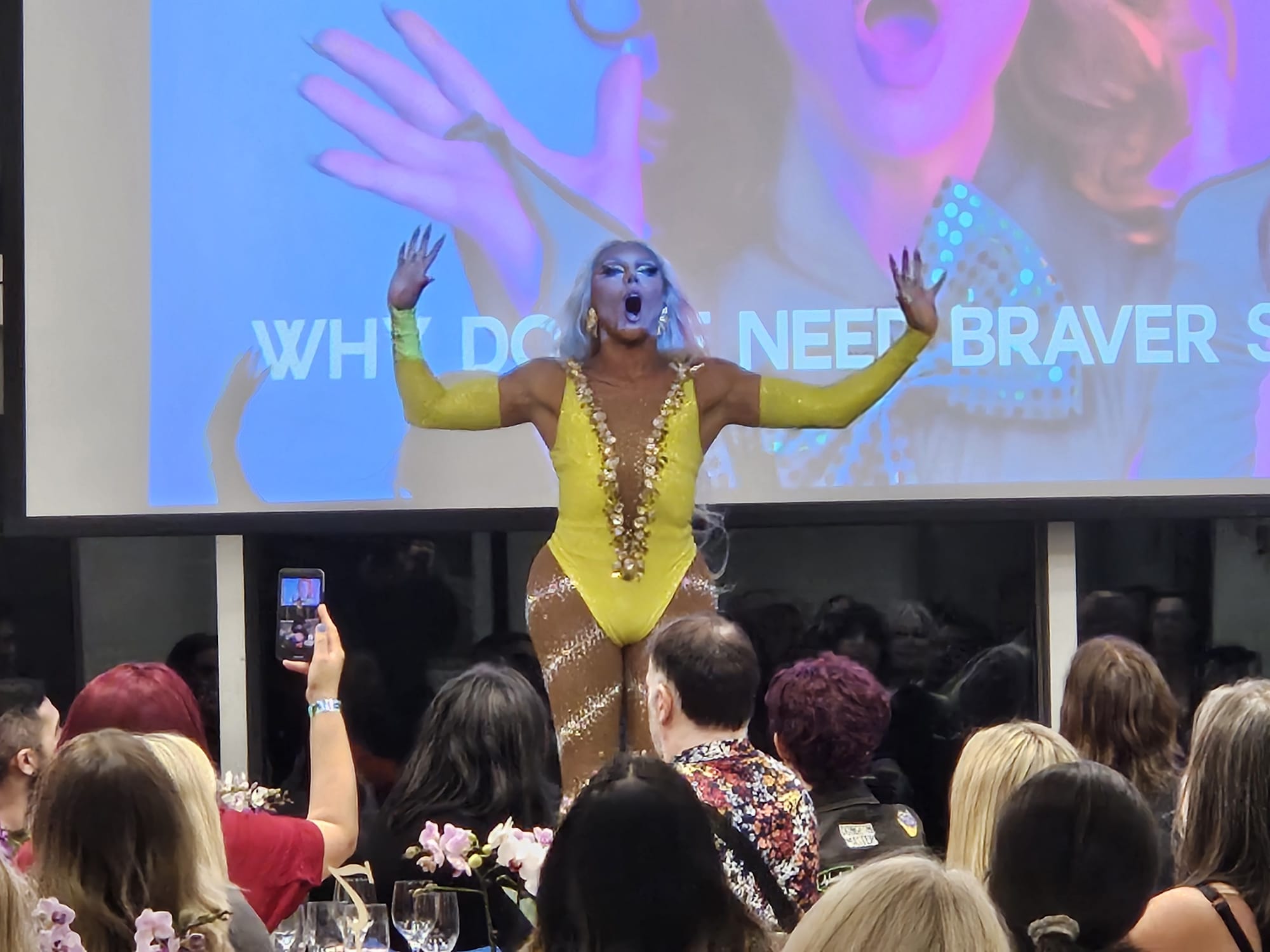
Headliner Lolita Banana, host of Drag Race Mexico, captivated the crowd with explosive energy, acrobatic flips, and unapologetic charm, reminding everyone that joy is resistance. Fluent in French and full of wit, Lolita had the audience rolling with laughter as she playfully teased attendees — calling out the straight folks in the audience based on their “very safe” fashion choices, and celebrating the flamboyant and fabulous styles of the 2SLGBTQIA+ community. Her performance was as hilarious as it was heartfelt, and she paid tribute to drag royalty by belting out two iconic Céline Dion hits, bringing down the house with drama, glamour, and reverence. The performances that evening weren’t just entertainment; they were declarations of identity, power, and survival.
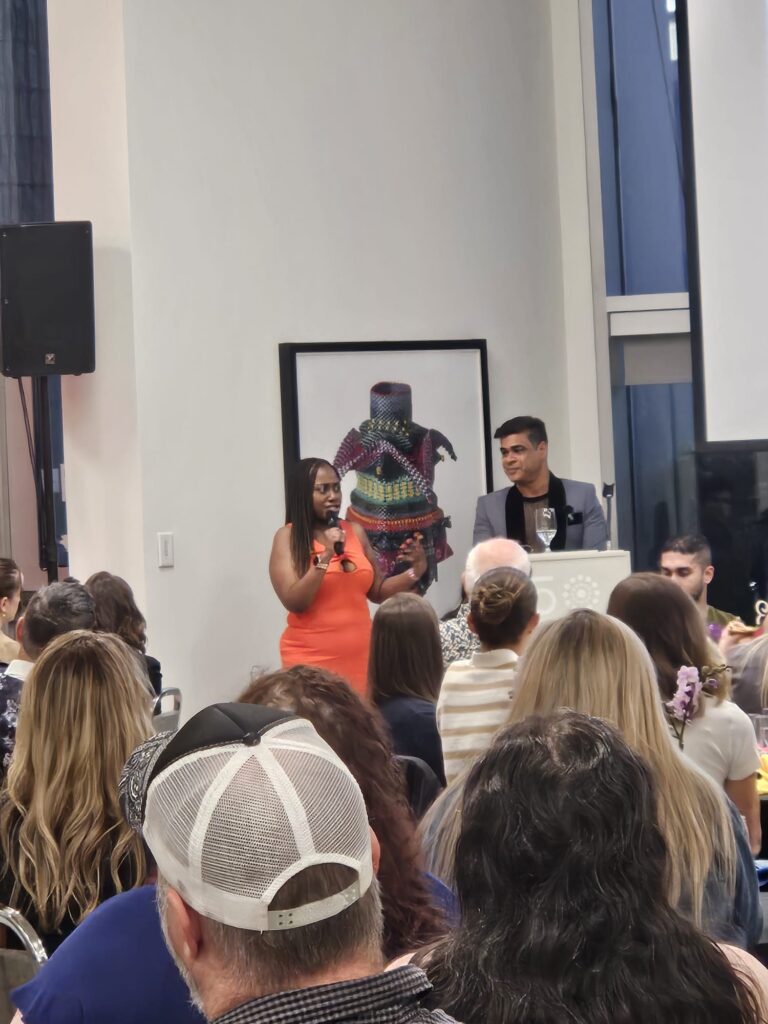
Among the powerful voices that evening was activist and journalist Muluba Habanyama, who shared her journey of growing up in Oakville and how she found belonging in the queer community. “Even though I’m unfortunately heterosexual,” she joked, “this community saved me. They taught me how to love myself and how to live out loud.” Born with HIV and raised to keep her status a secret, Muluba opened up about the isolation she felt after losing both parents to HIV-related complications. Now an ambassador for CANFAR and the Ontario AIDS Society, she uses her story to educate, empower, and advocate for others. Her words were met with thunderous applause and more than a few tears.
The evening wasn’t just a showcase — it was a call to action. Funds raised supported HEDR’s Braver Spaces program, a deeply intentional initiative that moves beyond performative DEI and toward transformative culture change. As noted on their website, “Brave spaces are not perfect spaces. They’re not always comfortable. But they are honest, accountable, and rooted in a commitment to growth.”
In today’s social and political climate, especially with mounting concerns around 2SLGBTQIA+ rights globally and particularly in the U.S., the need for such spaces has never felt more urgent.
“As much as Pride is a celebration, it’s also still a protest — and for good reason,” said MP Adam van Koeverden, who attended alongside MP Karina Gould. “Rights are being stripped back, or people are trying to. I’m here to listen. I’m an ally. Whatever it takes to make sure that kids feel safe, that people feel included, and that we have a great country that supports everybody — that’s my job.”
Van Koeverden also took a moment to highlight the importance of local Pride events, noting Milton’s upcoming Pride parade on July 20 and reaffirming his pride in Canada’s inclusive military policies. “We should be very proud of the fact that we have policies that allow everybody to serve our country. But there’s still so much more work to do.”
During dinner, HEDR Co-Chair Daven Seebarran credited the night’s impact when he shared that two youth had chosen to skip their high school prom to attend the gala instead: to feel seen, safe, and celebrated within their community.
The Pride Gala Soirée was more than a beautiful evening: it was a bold affirmation. It told stories of survival and triumph, invited joy and reflection, and offered a communal promise — to build spaces not just of tolerance, but of truth, authenticity, and transformation.