By Kezia Royer-Burkett, Local Journalism Initiative Reporter
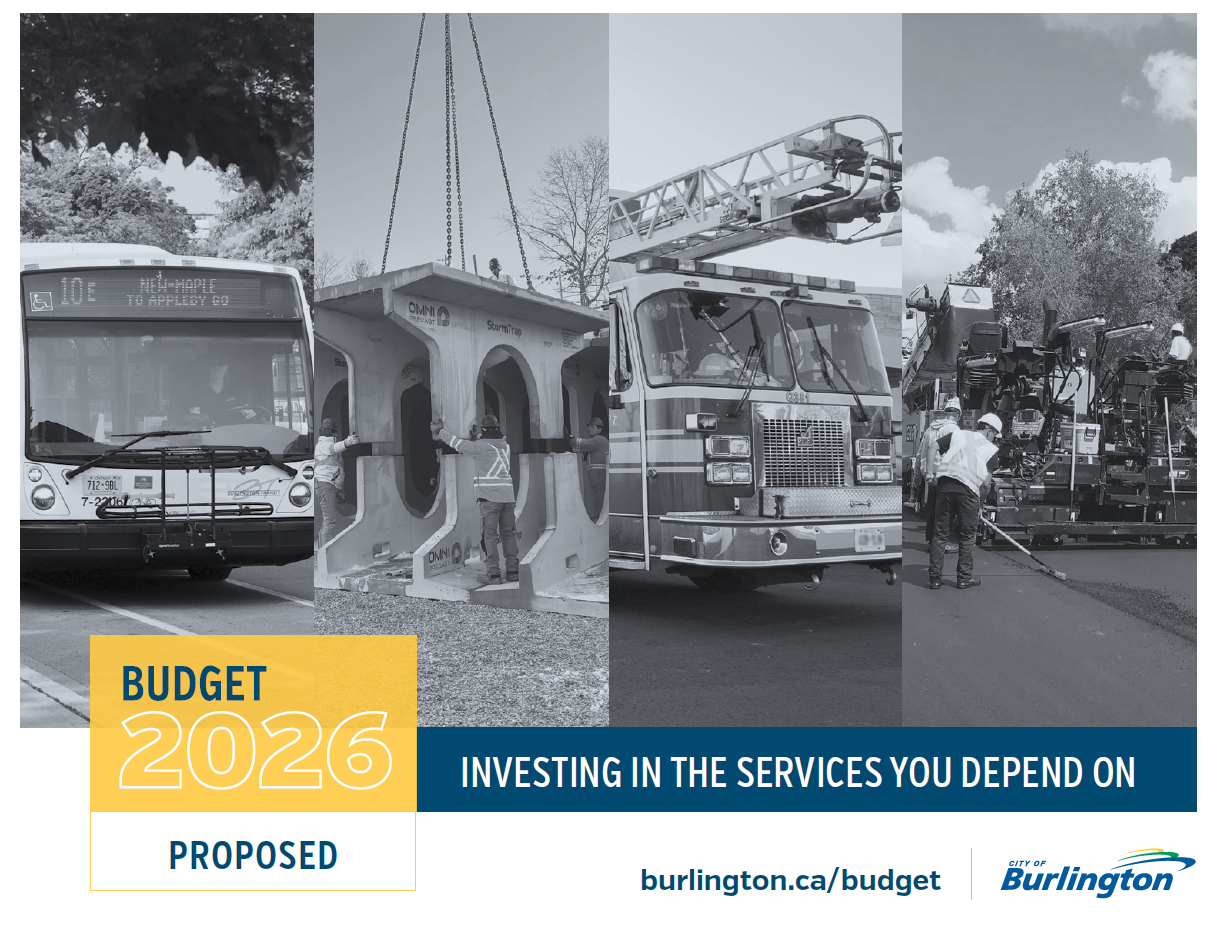
Burlington residents will soon get a closer look at how the city plans to balance growth, aging infrastructure, public safety, and quality of life in the proposed 2026 Budget. City Council begins its official review on November 24 at 9:30 a.m., with discussions continuing on November 25 if needed.
The proposed 2026 Budget is now available on the Get Involved Burlington website, giving residents a transparent view of the city’s investment priorities for the year ahead. The document reflects months of planning, public engagement, and financial forecasting — work that aims to support both current needs and the evolving vision of Burlington’s future.
One of the biggest questions each year revolves around taxes, and the city has provided a clear picture of what to expect. With updated figures from Halton Region presented on November 12, Burlington’s proposed 2026 Budget includes a city budget increase of 5.80%. When combined with Halton Region services, police services, and local school boards, residents are looking at a proposed property tax increase of 4.46%. In real terms, that means an additional $43.36 per $100,000 of a home’s current value assessment. While no increase is ever ideal, city leaders say the proposal reflects the realities of inflation, aging infrastructure, and service demands that continue to rise.
The city has outlined several major areas of investment, each aimed at improving daily life for residents while preparing Burlington for long-term stability. Infrastructure remains a significant focus, with $105.7 million in capital investments planned for 2026. Nearly $49 million of that is dedicated to maintaining and renewing aging roadways, while investments in parks and city facilities help ensure Burlington remains a welcoming and active community.
Emergency response and public safety also feature prominently. The budget proposes $1.6 million to replace aging Fire Department fleet vehicles and $450,000 to upgrade emergency radios and pagers — technical investments that ultimately support the speed and reliability of frontline response. Keeping Burlington moving is another priority, with $4.2 million earmarked for hybrid-electric transit vehicles, an added Handi-Van to meet growing demand, and dedicated funds for transit maintenance to minimize service disruptions.
As weather patterns shift and severe storms become more frequent, Burlington continues to invest in flood mitigation. The 2026 proposal includes $7.6 million for stormwater management projects that protect homes, neighbourhoods, and natural areas. Traffic safety and citywide mobility also receive attention, with $675,000 set aside for traffic management technology to help emergency vehicles and buses move more efficiently through intersections.
Community spaces remain central to Burlington’s quality of life, and the proposed budget supports that as well. An additional $180,000 is slated for operating the New Appleby Branch of the Burlington Public Library, along with increased waste management resources to keep parks cleaner and more inviting. Local boards are set to receive a 1.75% base budget increase, totalling just over $302,000, ensuring programs and services continue to evolve with community needs.
The proposed 4.46% total tax increase aligns with the Mayoral Direction endorsed on July 15, 2025, and reflects extensive feedback gathered from residents through the city’s Food for Feedback event, online surveys, town halls, and engagement workbooks. City leaders emphasize that this budget is not created in isolation, but shaped by the priorities and concerns shared through these community touchpoints.
Residents will have one more chance to weigh in before the budget is finalized. After council reviews and considers amendments, a special council meeting will take place on December 2, 2025, to vote on the final 2026 Budget. Delegations for that meeting can be submitted at burlington.ca/delegate by noon on December 1.
As Burlington continues to grow, the 2026 Budget represents more than numbers — it’s a roadmap for strengthening services, enhancing safety, and ensuring the city remains vibrant and resilient for years to come.