By Jack Brittle, Local Journalism Initiative Reporter
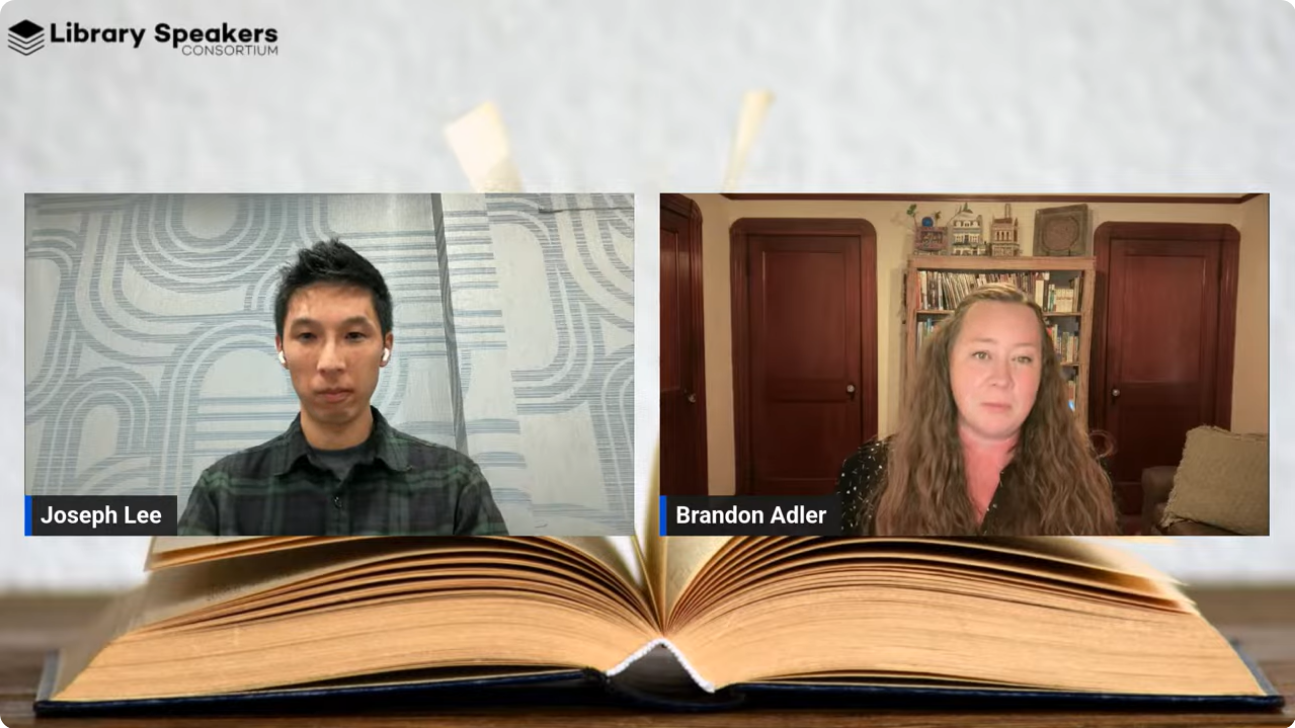
Author Joseph Lee was hosted online by Burlington Public Library (BPL), for a discussion centred around his new memoir, Nothing More of This Land, earlier this month. The talk was facilitated by the Library Speakers Consortium, which Brandon Adler, host of the talk, described as “a partnership of more than 500 library systems across the U.S., Canada, and New Zealand, with the goal of making author talks more accessible to communities of all sizes.”
Lee started the talk by explaining the focus of the book.
“I am Aquinnah Wampanoag, which is a small tribe on Martha’s Vineyard, the small island off the Massachusetts coast,” Lee said. “The island is known for being kind of this fancy vacation destination with beautiful beaches for celebrities, movie stars, and presidents. The book starts there with my childhood experience of growing up, visiting my grandparents on the island, growing up in the tribe and trying to understand what it meant to be Wampanoag, and what it meant to be from a place like Martha’s Vineyard.”
Lee said that the book tries to “tackle big questions” regarding Indigenous identity, land, and sovereignty, through his own experiences growing up. He used those experiences as a starting point and expanded the questions to other tribes and Indigenous communities across the U.S. and the world.
Lee wanted to ask what it means to be Indigenous, how to confront “community challenges” like climate change and land dispossession, and to explore some of the “really exciting things that Indigenous people are working on.”
These are all questions Lee has been trying to answer his whole life, but work on his book started around 10 years ago.
“I was in grad school, and around the time, I was realizing how little I knew about my own tribe and our tribal history, and I really wanted to learn more,” Lee said.
Lee said that he wanted the book to be more about the exploration of these questions than trying to answer them. He interviewed family members and past tribal leaders for research, as well as poring through records, old newspapers, and photos.
Lee said that it was important to him to write the book from his own perspective.
“A lot of material has been written about the Wampanoag people,” Lee said. “Very little of it has been written by Wampanoag people.”
Adler asked Lee who his earliest role models or mentors in life were.
“The first one I would say would be my parents,” Lee said. “They really taught me the importance of family and community and made an effort for my brother and me to know our tribal community cousins, family, who we are and where we come from.”
Lee also mentioned his older cousin Tobias.
“I knew that he was pretty skilled in our language, knew a lot about our culture and history, and was doing competitive powwow dancing,” Lee said. “I really admired that commitment to our culture, and back then, I think I didn’t necessarily know how to engage or what the different ways I could engage with being a tribal member were. So, I really looked up to people like that, who were making their own way and finding ways to make it meaningful in their lives.”
Lee also spoke about the impact that the tourism industry has had on Martha’s Vineyard.
“It [tourism] powers most things on the island,” Lee said. “And that, I would say, is a really tricky spot to be in for my tribe and other tribes that I’ve talked to, where you rely on tourism, but you also know that tourism is ultimately something that’s not really benefiting the community or the land in a long-term way.”
Lee said that one of his biggest takeaways from his experience writing the book is that his Indigenous identity is constantly evolving.
“I thought it was always something where I was trying to reach for something [that] I was trying to achieve,” Lee said. “Like, ‘Okay, I need to be this way and, and when I get there, it’ll be great.’ I think what I’ve realized through writing the book and through talking to so many other people is how much it’s just an ongoing process.”
“It’s more about intentionality and action than one specific thing,” Lee continued. “It’s about ‘Am I trying to do this? Am I trying to learn and grow and understand?’ As long as you’re trying to do that, I think it’s okay.”
Adler asked Lee how non-Indigenous people can help support Indigenous peoples’ endeavours.
“Read our books, buy them, get them from the library, request them from your library, write positive reviews, share them, and tell all your friends about the books,” Lee said. “I think every year there are more and more native or Indigenous authors, and I think we all need as much support as we can get.”
Lee also said that just asking what a tribe needs and how you can help also goes a long way.
“I would also say, it’s all of our responsibility, myself included, to learn as much as we can about this history,” Lee said. “Learn how it affects the present and how colonialism wasn’t just this thing that happened a while ago and it was bad, and is over. It’s not over, it’s just evolved.”
To watch the entire talk, click here.
To borrow Nothing More of This Land from BPL, click here. Burlington Public Library is currently hosting more literary events for all ages right now as part of its month-long Burlington Literary Festival. Click here to see the list of events and to register.