By Kezia Royer-Burkett, Local Journalism Initiative Reporter
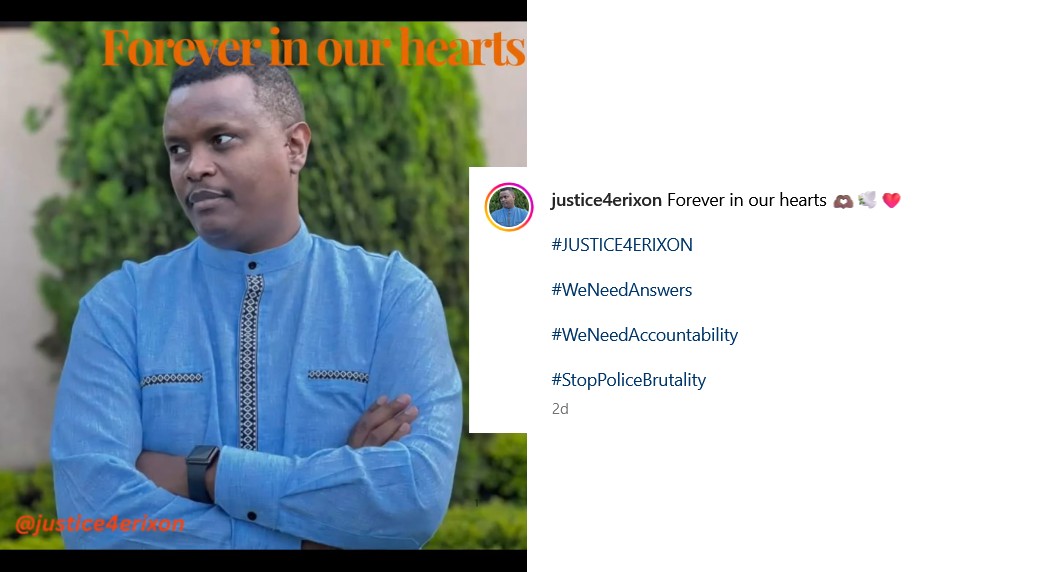
The death of Erixon Kabera in Hamilton on November 9, 2024, following a police shooting, has become a focal point not only for community grief but for an ongoing and complicated legal and forensic investigation process. Beyond the raw emotions, Kabera’s case reveals the intricate systems that govern police-related deaths in Ontario, highlighting the challenges families face in understanding what truly happened and how the justice system responds.
When someone dies following police interaction, the investigation process follows a defined but complex pathway involving multiple agencies, each with distinct roles to ensure transparency and integrity. First, the Special Investigations Unit (SIU), an independent civilian agency, conducts a criminal investigation to determine if any officers should face charges. Following that, the provincial coroner’s office assumes custody of the case files and evidence as the matter proceeds to an inquest — a public, judicial process designed to clarify the circumstances surrounding the death.
Asha James, the lawyer representing the Kabera family, explains this handoff in the legal process: “Most of the SIU file is turned over to the coroner by way of a warrant. It becomes part of the coroner’s file as we move into the inquest process. The coroner’s office is a provincial agency, not associated with any police service, and they work with forensic science units separately to get autopsy and toxicology reports.”
This separation between investigative agencies is crucial. “This is how all criminal investigations happen, not just those involving police,” James says. “Having this centralized, independent forensic analysis reduces the opportunity for tampering or conflicts of interest.”
Despite the independent investigations, families often feel the answers are incomplete or unclear. The Kabera family, supported by James, has voiced frustration over the ambiguity in the SIU report regarding the critical moments in the hallway where the shooting occurred.
“The SIU met with the family prior to releasing the report and answered the questions they could. But the real issue is a better understanding of what specifically took place in that hallway — how the interaction began, how Erixon presented himself,” James states.
She highlights major gaps: “There’s no clear dialogue recorded. Erixon came out of his apartment, saw two officers, pointed a replica gun at them, and they started shooting. That makes no sense. The narrative that an officer returned fire, believing Erixon had fired the weapon, is unclear. What led to that belief? Was it a sound? There’s no evidence of a bullet grazing an officer as claimed. This is the kind of clarity we’re missing.”
The forthcoming inquest will be the venue where officers and witnesses will be cross-examined, providing a public forum to address these critical questions.
“The inquest is not scheduled yet,” James notes, “but it will allow us to unpack Erixon’s mood and behaviour in the days before the incident. What would cause someone to walk into that hallway with a replica gun? The length of the hallway and the distance over which the interaction unfolded are strange details the SIU report doesn’t clarify.”
Forensic details also remain partially unknown. The SIU report confirmed a DNA match of Kabera’s on the replica gun but did not specify the percentage or significance of the DNA found.
James explains the nuances of the shooting: “If someone is shot and falling, their body might turn or roll, so being shot in the back doesn’t necessarily mean they were retreating. The report doesn’t provide enough context to label the three shots as inappropriate or excessive.”
James is clear about the gravity of police authority. “Police are authorized to use lethal force in certain situations — a huge power that should never be used lightly. If something was done wrong, we want accountability. Even if the force was justified, we want to know if there were ways to avoid it, to create a different outcome.”
Kabera’s family, through James and Kabera’s brother Parfait Karekezi, also questions inconsistent police communication regarding the replica gun. “The SIU was on scene by 10 p.m., but police tweets [on the platform X] initially mentioned a ‘gun exchange,’ then deleted that. They only confirmed finding a replica gun three days later, after public outcry,” Karekezi says. “Why the delay? Why the confusion?”
Karekezi further emphasizes Kabera’s character to contrast with the official narrative: “Erixon was the first person that came to mind when you’re facing difficulty…He was like the dad of the community and family, a person that people turn to.”
Andy Ganza, Kabera’s best friend, shares his concerns about the lack of clear information: “There’s nothing in here as to whether or not Erixon appeared to be someone in distress, in medical distress, or any kind of emotion at all…He came out of his apartment, saw two police officers, pointed a replica gun at them, and they started shooting…For me, that is where I have concern.”
Adding to the challenges of understanding the case, Ontario Forensic Sciences did not respond to repeated media requests seeking clarification on the forensic details of the case. Both Hamilton Police and Halton Regional Police provided only brief statements regarding the case, underscoring ongoing concerns about the lack of transparency and communication with the public when such critical incidents occur.
James stresses that families coping with such losses need transparency and communication tailored to their grief. “The SIU has tried to improve through affected persons liaisons, but investigators must balance ongoing criminal processes with the need to communicate with grieving families. These situations are hard — most families don’t expect their loved one to die in a violent police interaction, especially those without prior issues.”
Police culture and training are also critical points for reflection.
“Officers have families and want to go home safely, but there must be a balance between keeping the peace and minimizing harm — including to people in distress. De-escalation training and mental health support for officers are vital when they hold such immense power,” James says.
The inquest process itself involves a jury of community peers, who will answer five key questions about the death and can issue recommendations to police services, the SIU, and the Hamilton Police.
“Lawyers for the family and Hamilton police present evidence and recommendations; the jury decides what to accept or amend,” James explains.
Ultimately, as the legal and forensic processes unfold, Kabera’s case highlights the ongoing challenges in securing justice and transparency in police-involved deaths — especially for Black and other racialized communities. For families desperately seeking answers and communities demanding true accountability, it underscores the urgent need for thorough, impartial investigations and a deeper understanding of the events that unfolded in that hallway.