By Kezia Royer-Burkett, Local Journalism Initiative Reporter
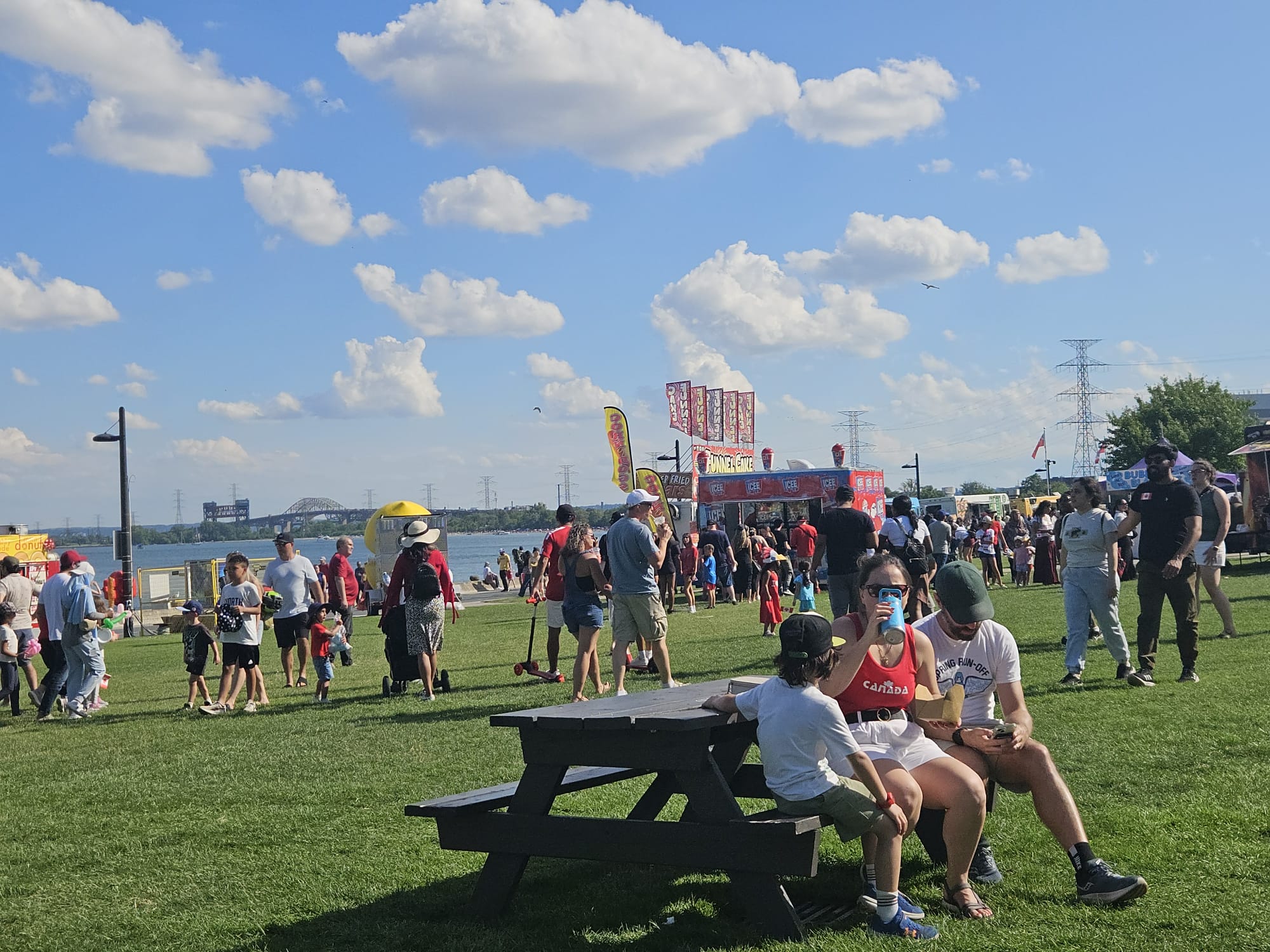
As hundreds gathered at Spencer Smith Park on July 1 to mark Canada’s 158th birthday with food vendors, live performances, a drone show, and a dazzling fireworks finale, an equally important conversation echoed beneath the surface — what does it mean to celebrate Canada Day, and who is this celebration truly for?
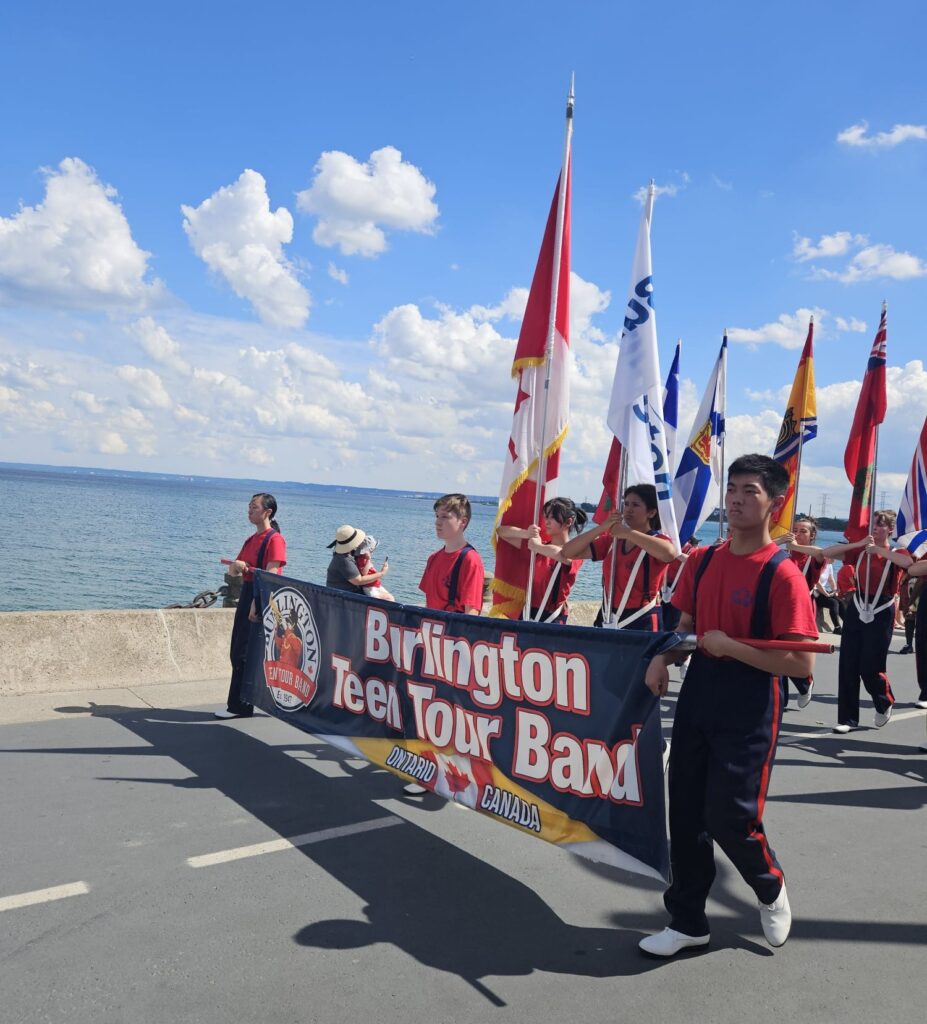
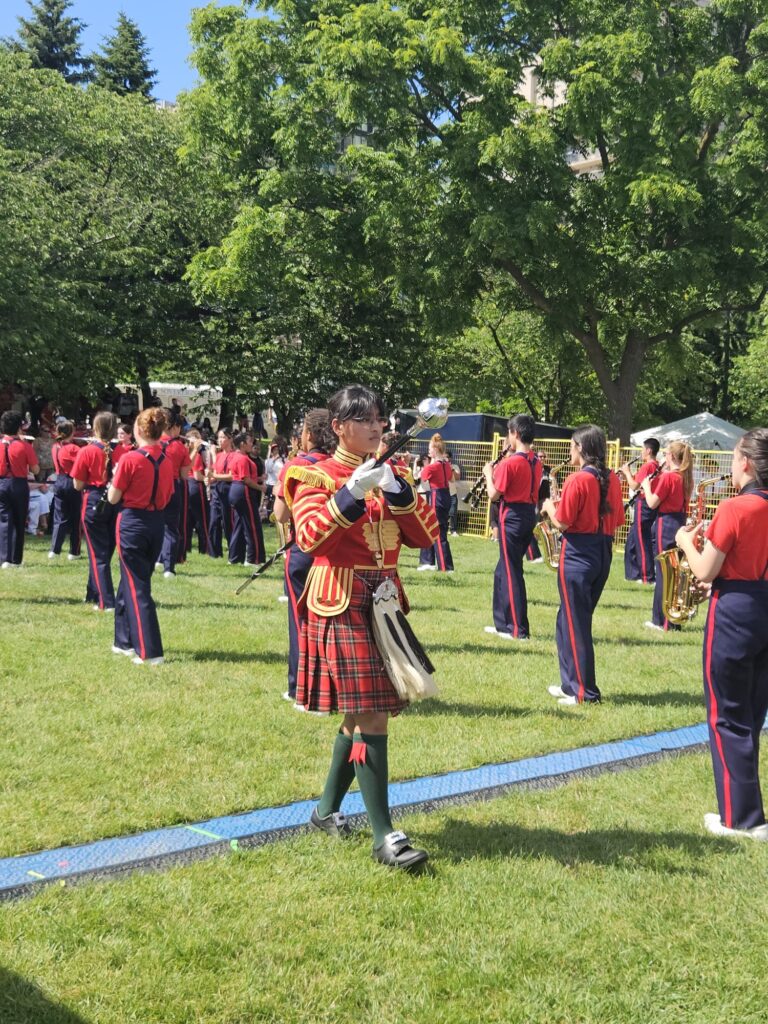
Canada Day in Burlington was a mix of joy, remembrance, and reckoning. The city’s official celebration was well-attended, with families enjoying a day off, free activities for kids, and performances by local bands like the Burlington Teen Tour Band, who led the opening procession. The band’s vibrant sounds echoed through the Lakeshore area as the diverse youth performed together as one incredible ensemble.
On the City of Burlington’s Instagram post, comments praised the event. “Loved every second! The fireworks were incredible!” one user wrote. “So proud to be Canadian!” said another.
And yet, not everyone sees Canada Day the same way.
For many Indigenous people and allies, July 1 is not a day of celebration: it is a reminder of colonialism, land theft, residential schools, and intergenerational trauma. The growing #CancelCanadaDay movement urges Canadians to pause the festivities and reflect on the deeper truths of the country’s history. A statement from the campaign reads:
“Canada Day, celebrated on July 1st, commemorates the country’s confederation and independence. However, in recent years, a growing movement #cancelcanadaday has emerged, primarily driven by Indigenous activists and advocates. They argue that celebrating Canada Day overlooks the country’s history of colonialism, residential schools, and ongoing injustices against Indigenous people…The debate surrounding Canada Day highlights the complex and nuanced nature of Canadian identity and history.”
Burlington’s celebration opened with words of intention by White Eagle, an Indigenous leader who works closely with the City of Burlington and is a friend of Mayor Marianne Meed Ward. Rather than beginning with a traditional land acknowledgment, White Eagle shared an Indigenous land statement — an alternative that centres Indigenous sovereignty and worldview.
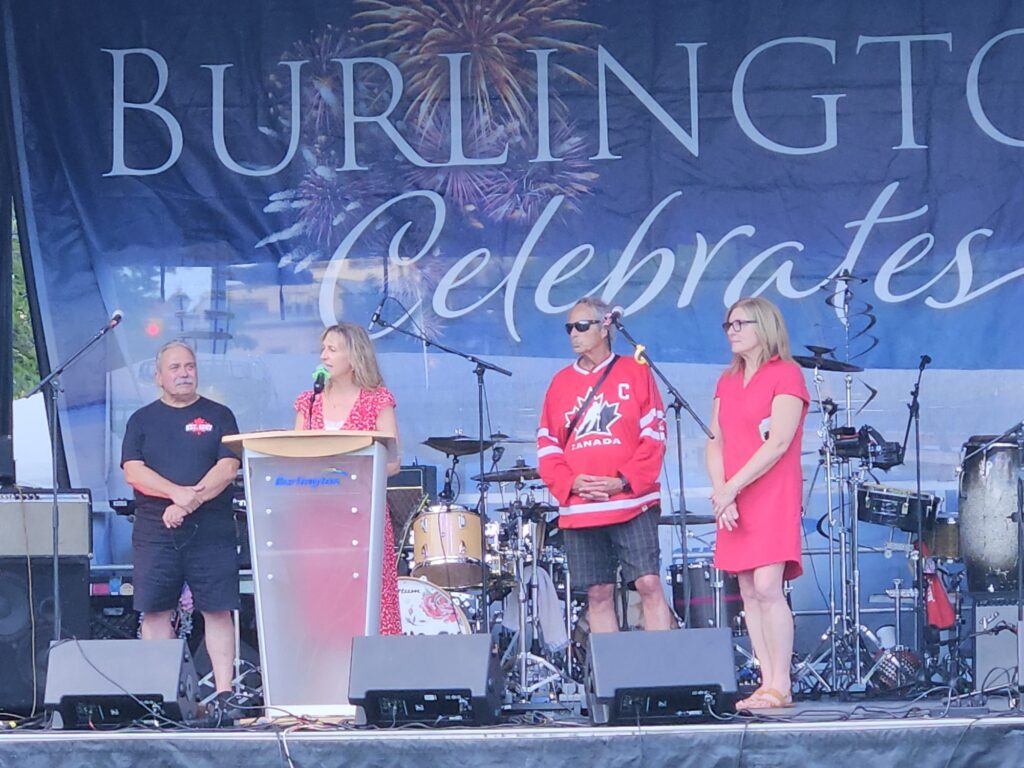
“In the Indigenous worldview, it has always been understood that the land belongs to no one. From time immemorial, the Indigenous people have served as the caretakers of Mother Earth, ensuring that her bounty stays protected and honoured. We have maintained a powerful spiritual connection with our Earth Mother through our culture and sovereignty,” White Eagle stated. “People from other lands settled on Turtle Island, which you know as North America, where they claimed land ownership with little to no recognition of established Indigenous groups. Thus, most Indigenous communities were displaced.”
She continued, “Today, we question the word ‘acknowledgment’ as it implies an agreement between Indigenous groups and the Crown to take our ancestral lands. Regardless of where Canadian Indigenous groups have their territory, this statement refers to the reverence we have — a practical blueprint for a moderating, balanced partnership between Indigenous and non-Indigenous people.”
White Eagle invited all present to create a sacred space, calling on the energies of light and healing to surround the gathering: “We are a community based on love, peace, and incoming joy. We hope that in this new year, as we go forth, that we come to know each other — and understand that we are brothers and sisters under one Creator…Any healing that needs to be done, may it lead through the energy of our grandfathers. And so it is.”
Jody Harbour, founder of Grandmother’s Voice, offered another layer of reflection on the Grandmother’s Voice Facebook page. Her words challenged Canadians to expand the definition of patriotism:
“What does it mean to be Canadian, truly? It means loving this land not just for its beauty, but for the stories it holds. It means celebrating more than flags and fireworks. It means remembering, honouring, and making space for truths that came long before 1867… Reconciliation isn’t a destination. It’s a daily choice made in community, in humility, and in hope.”
This duality of celebration and solemn reflection was present throughout the event. Mayor Marianne Meed Ward welcomed attendees, emphasizing community spirit. MPP Natalie Pierre expressed pride in being Canadian and praised the strength of community togetherness. Halton Regional Chair Gary Carr spoke of the region’s natural beauty and the importance of building core memories for children. “This is the best place to live, work, and play,” Carr said.
But some, like Councillor Angelo Bentivegna and MP Karina Gould, acknowledged the need to keep “walking the path of reconciliation.” Their remarks echoed a broader question: can Canada Day be a day that includes all Canadians, including those whose histories are marked by loss, erasure, and resilience?
Many Canadians simply see July 1 as a chance to enjoy the outdoors, connect with their neighbours, and take a well-deserved break. For others, it’s a painful reminder of unfulfilled promises. And both can be true.
Is there a middle ground, a way to celebrate Canada Day without ignoring the past?
Local Indigenous leaders like White Eagle and Jody Harbour suggest that joy and truth are not mutually exclusive. Canada Day can include joy and grief, for music and mourning, for pride and protest. It can mean teaching our children about the full history of the land we call home — not just since 1867, but long before.
In White Eagle’s words, “we all have a lot of healing to do.” And healing begins with listening.
Welcoming and listening to all voices, especially those historically excluded, strengthens the fabric of this country. As Burlington continues to host community events and embrace inclusion, perhaps the deeper challenge is to ask better questions, hold space for all experiences, and build a future rooted in truth, compassion, and shared responsibility.