By Sydney Alexandra, Local Journalism Initiative Reporter
In the wake of the COVID-19 pandemic, a significant number of Canadians reported feeling disconnected from their communities. According to a 2024 survey commissioned by YMCA Canada, 60% of Canadians said they feel a lack of community connection, with 16% stating they never feel a sense of community at all, and 44% saying they only feel it sometimes.
This growing sense of isolation has not gone unnoticed by cultural institutions across the country. In Burlington, the Burlington Museums Foundation (BMF) is working to reverse that trend. Their latest initiative, “Your Home. Your Museums,” aims to bridge the gap between residents and their need for community belonging by transforming museums into more inclusive, welcoming, and community-driven spaces that also bring heritage.
At the heart of this mission is John Doyle, chair of the Burlington Museums Foundation, who believes that museums have an essential role to play in helping people reconnect — not just to their pasts, but to each other.
“A museum is a people’s place,” says Doyle. “It’s not about dusty artifacts and silent halls. It’s meant to be a place where people belong, where they can see themselves reflected in the stories we tell. A museum should give you a sense of home. It should help you understand where you come from and where your neighbours come from, too.”
The Burlington Museums Foundation aims to redefine what the museum experience looks like, refiguring the museum as a community hub. The “Your Home. Your Museums.” initiative is about more than just attendance figures or exhibit updates. It’s a fundamental reimagining of what museums can and should be in the 21st century.
“We want people to recognize that museums aren’t just for tourists or history buffs. They’re for everyone. They’re for newcomers to Burlington trying to understand their new home, and for longtime residents who want to know what’s changed and why. They’re for kids, families, seniors…everyone who wants to feel like they belong to something bigger,” Doyle explains.
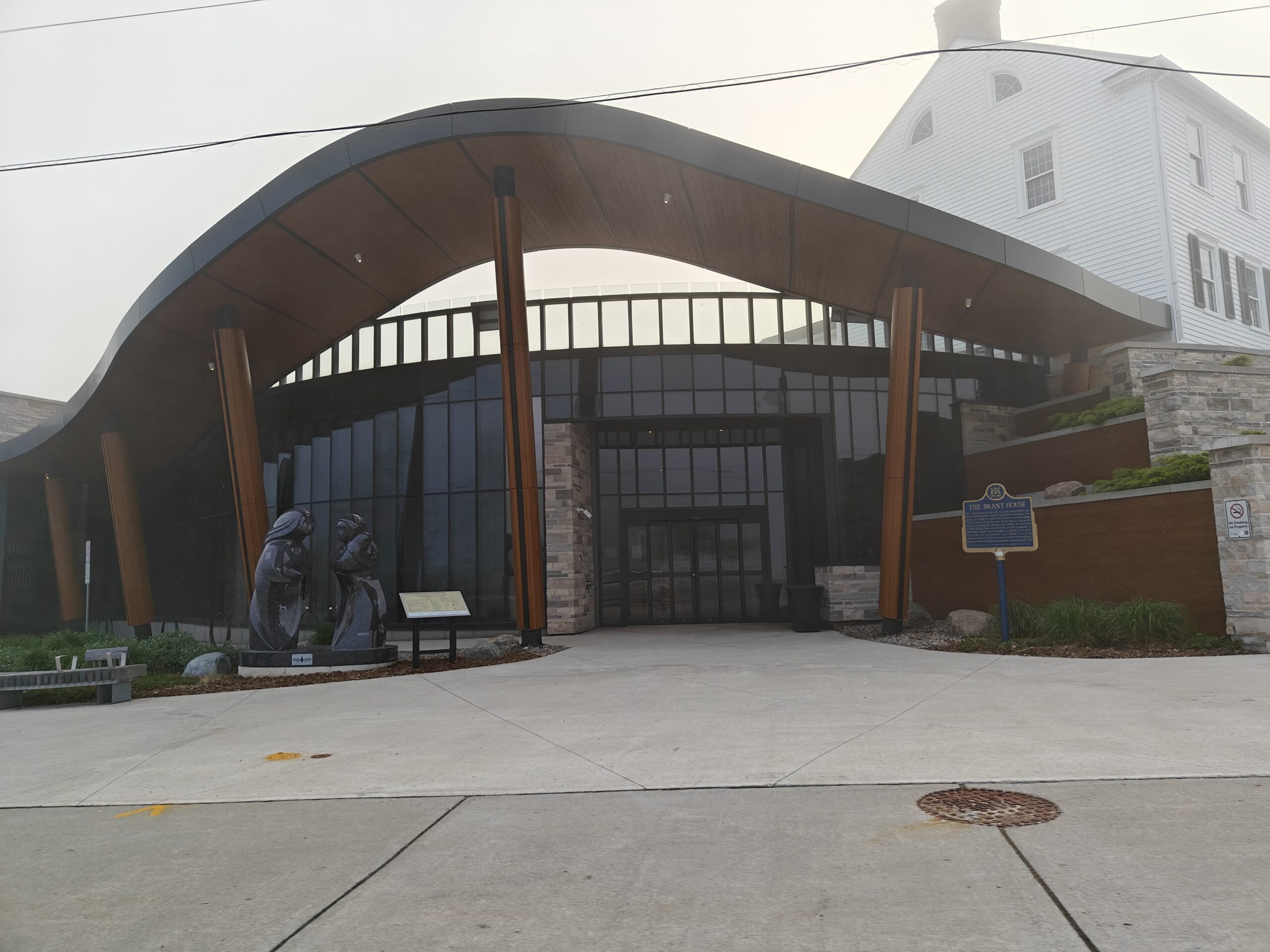
One of the central hubs for this transformation is the Joseph Brant Museum, which has recently undergone revitalization to include travelling exhibits, hands-on displays, and inclusive programming. A recent exhibition, “Refuge,” which chronicled the experiences of immigrants and refugees in Canada, proved especially impactful.
“What was powerful about Refuge,” Doyle says, “was that almost everyone could find some point of connection. We had people come through and say, ‘That’s my family’s story. That’s how we got here.’ It sparked conversations between strangers. It brought people together around a shared experience.”
That idea of sparking conversation and connection is the guiding principle behind all of the Foundation’s work.
“Museums can be the spark,” Doyle explains. “You come for the history, and you stay for the sense of connection. We want to be that place where people don’t just learn something, they feel something. And hopefully, they take that feeling back out into the community.”
Back in May, Burlington residents turned out in large numbers to attend a National Museum Day event hosted at the historic Ireland House. The event, which sold out quickly, offered family-friendly activities, heritage displays, and interactive storytelling experiences.
“It was an incredible day,” Doyle reflects. “We saw young families, new Canadians, seniors who had grown up in the area, all coming together to celebrate our shared history. And that’s the power of these events. They’re not just entertainment, they’re about building community.”
He adds that the high demand for these events is a clear sign that people are craving connection.
“We’re seeing it again and again. Our events are selling out. And that tells me that people are hungry for something real. They want to connect. They want to feel like they’re part of something.”
Another central aspect of the Foundation’s work is an ongoing effort to incorporate Indigenous perspectives and histories, something Doyle says is non-negotiable if the museum is truly going to reflect the full story of Burlington.
“You can’t talk about history in Canada without centring Indigenous voices,” he says. “That’s something we’re committed to doing more of, not just during special exhibits or awareness days, but woven into the very fabric of how we operate.”
The Joseph Brant Museum is named after Thayendanegea (Joseph Brant), a Mohawk leader and important historical figure whose life and legacy are intimately tied to the region, and especially Burlington. Doyle says the museum is working closely with Indigenous partners to ensure that Brant’s story — and the broader stories of Indigenous peoples — are told with respect, depth, and honesty.
“This isn’t just about adding a few artifacts or labels,” Doyle says. “It’s about relationship-building. It’s about inviting Indigenous community members to co-curate, to lead, to shape how we present these histories. We’re not there yet, but we’re working on it. And we’re listening.”
The BMF is currently exploring ways to bring Indigenous storytelling, land acknowledgment education, and cultural workshops into future programming.
“If we’re serious about belonging, then everyone’s story has to be heard,” Doyle says. “And that starts with the First Peoples of this land.”
For Doyle and his colleagues, the urgency of their mission is underscored by what the data are telling them. Statistics Canada reports that only 45.7% of Canadians say they feel a strong sense of belonging to their local community. That number drops even lower among young adults and newcomers. “When people feel disconnected, it affects everything from mental health, civic engagement, and even economic participation,” he says. “But when people feel like they belong, they thrive. They get involved. They contribute. Museums can be part of that equation. They can be part of the healing process.”
Doyle believes there is a direct line between historical storytelling and contemporary unity. “History isn’t just about the past,” he says. “It’s about how we got here. And when you understand how we got here, when you understand what your neighbour’s family went through, or how your city was built, you’re more likely to care. You’re more likely to feel like this place matters. And that you matter.”
The Burlington Museums Foundation is just getting started in its hopes of tackling residents’ connectivity challenges within the community. This summer and beyond, they plan to expand programming, deepen community partnerships, and explore new ways of reaching underrepresented groups.
“We don’t want to speak for the community,” Doyle stresses. “We want to speak with them. That means creating space for new voices. That means letting go of some of the old assumptions about who museums are for.”
That community-driven vision also means investing in outreach — bringing history outside of museum walls and into schools, parks, and neighbourhoods.
“Not everyone walks through our doors,” Doyle says. “So we need to go to them. We need to meet people where they are.”
As communities across Canada still struggle with the emotional and social aftershocks of the pandemic, initiatives like “Your Home. Your Museums.” are offering hope and direction. By transforming museums into spaces of connection, curiosity, and inclusion, the Burlington Museums Foundation is working to ensure that every resident feels a sense of belonging.
“We’re not just preserving history, we are preserving community. And more than that, we’re building it.”