By Kezia Royer-Burkett, Local Journalism Initiative Reporter
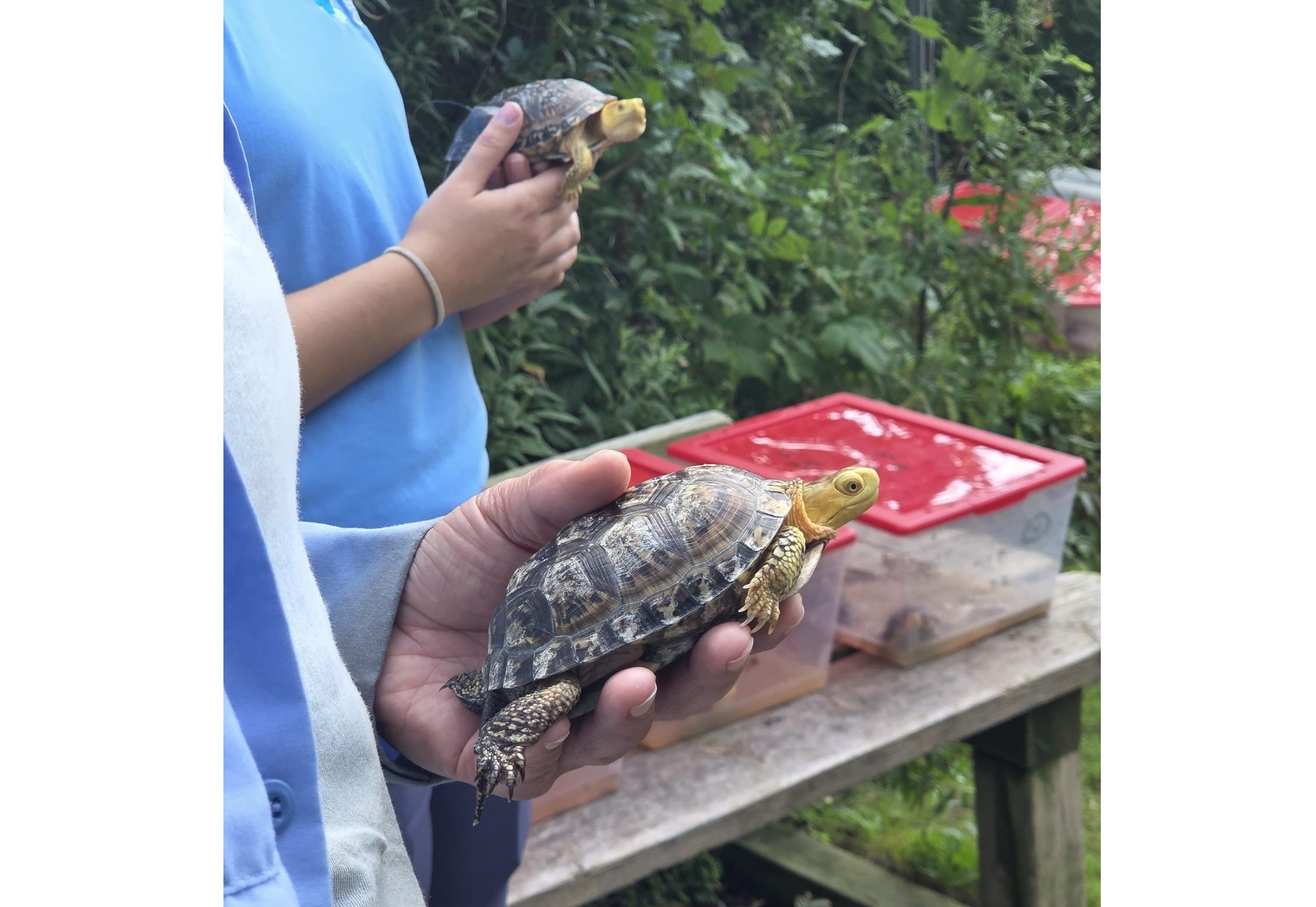
Royal Botanical Gardens (RBG) is celebrating a major milestone in its ongoing effort to restore one of Ontario’s most vulnerable turtle species, releasing 52 head-started Blanding’s turtles into local wetlands this year. The release marks the largest number of head-started Blanding’s turtles returned to the wild since RBG began its partnership with Scales Nature Park in 2020, offering a significant boost to a population that has faced years of decline. A few of the turtles were showcased at Princess Point before being returned to RBG wetlands, giving a closer look at the young animals at the centre of a long-term conservation effort.
For Tys Theysmeyer, Senior Director of Ecosystems Stewardship Policy and Programs at RBG, the release represents the result of years of work to understand and protect the region’s turtle populations.
“So this is the culmination of more than a decade of work,” Theysmeyer said, explaining that the effort began in 2012 when RBG recognized an opportunity to connect its large-scale wetland restoration work with efforts to protect turtles and other species at risk. As the organization learned more about the local population, Blanding’s turtles emerged as a particular concern because of how rare they had become in the region.
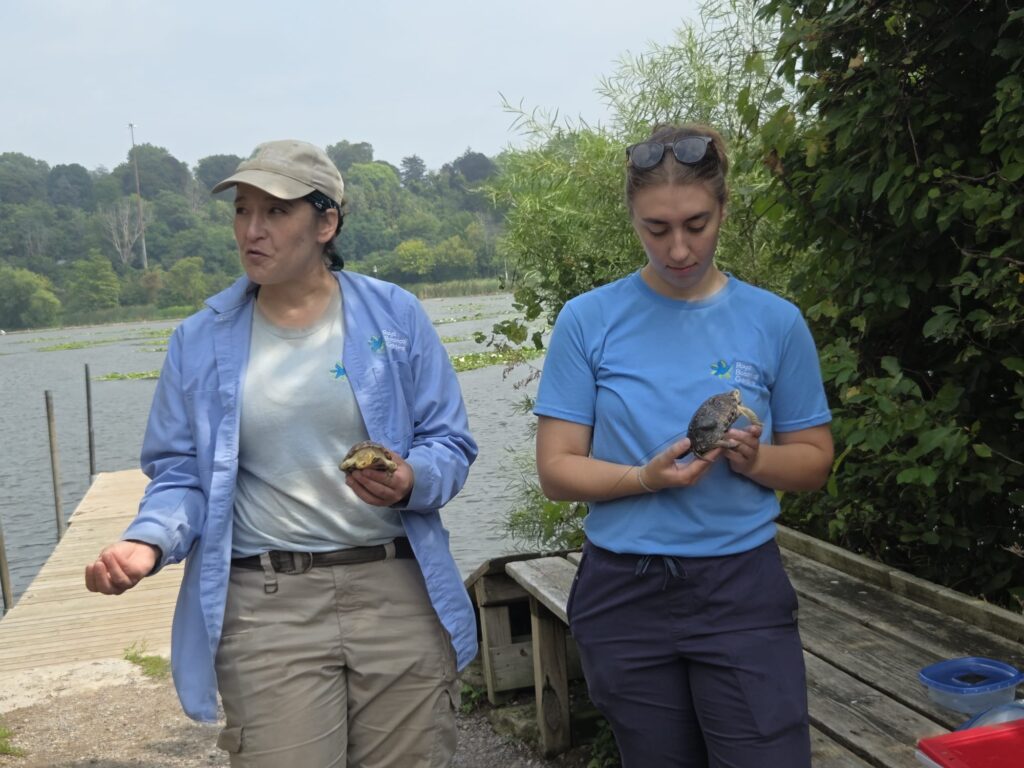
Over the past decade, the team has rescued five of the six known breeding-aged adult females from situations where they could have been injured or killed. This level of intervention has been critical to keeping the local population from being wiped out completely.
That work also highlights the devastating impact that the loss of even a single adult turtle can have on a small population. In June, one of RBG’s breeding-aged females, Carmen, was killed on Plains Road West in Burlington. Sarah Richer, Species at Risk Senior Ecologist, described the loss: “Losing an adult female when there are already so few is a monumental loss to our population.” Some of the head-started turtles released this year are Carmen’s offspring, adding another deeply personal dimension to the conservation work taking place in the wetlands.
Head-starting is designed to give young turtles a better chance of surviving the most vulnerable years of their lives. Instead of immediately facing predators and other dangers in the wild, RBG’s Blanding’s turtle hatchlings spend their first two years at Scales Nature Park in Orillia, where they are raised, fed, and monitored in a protected environment. The program has helped increase the turtles’ body mass to as much as eight times their mass at hatching, making them considerably larger and less vulnerable when they are eventually released.
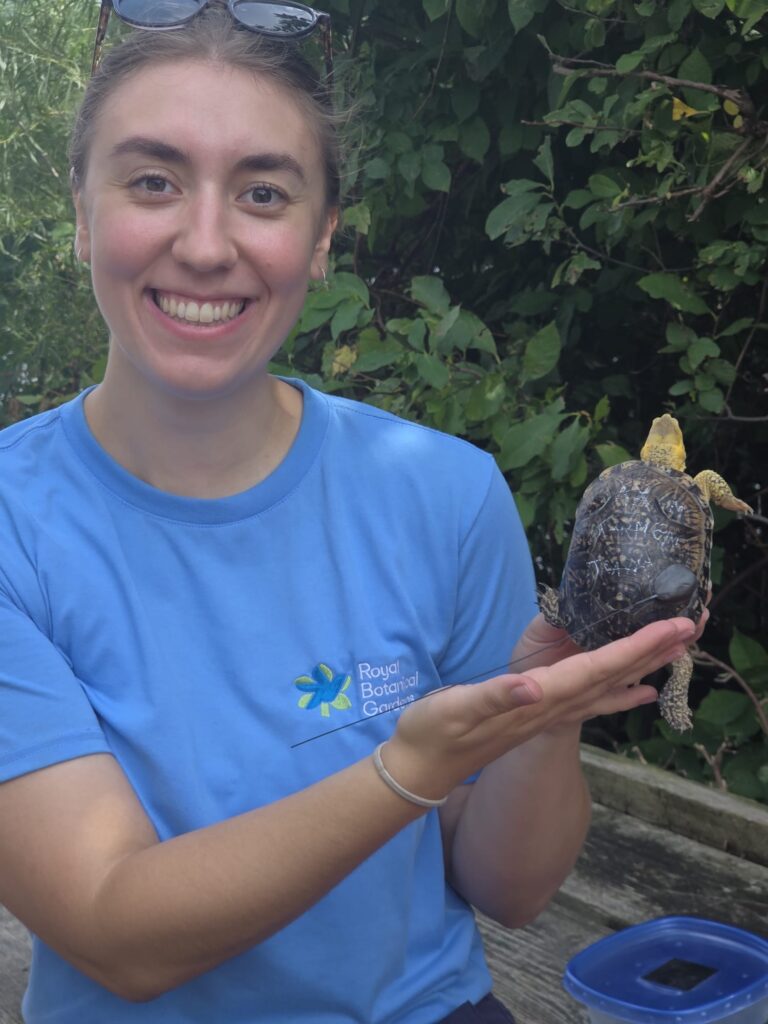
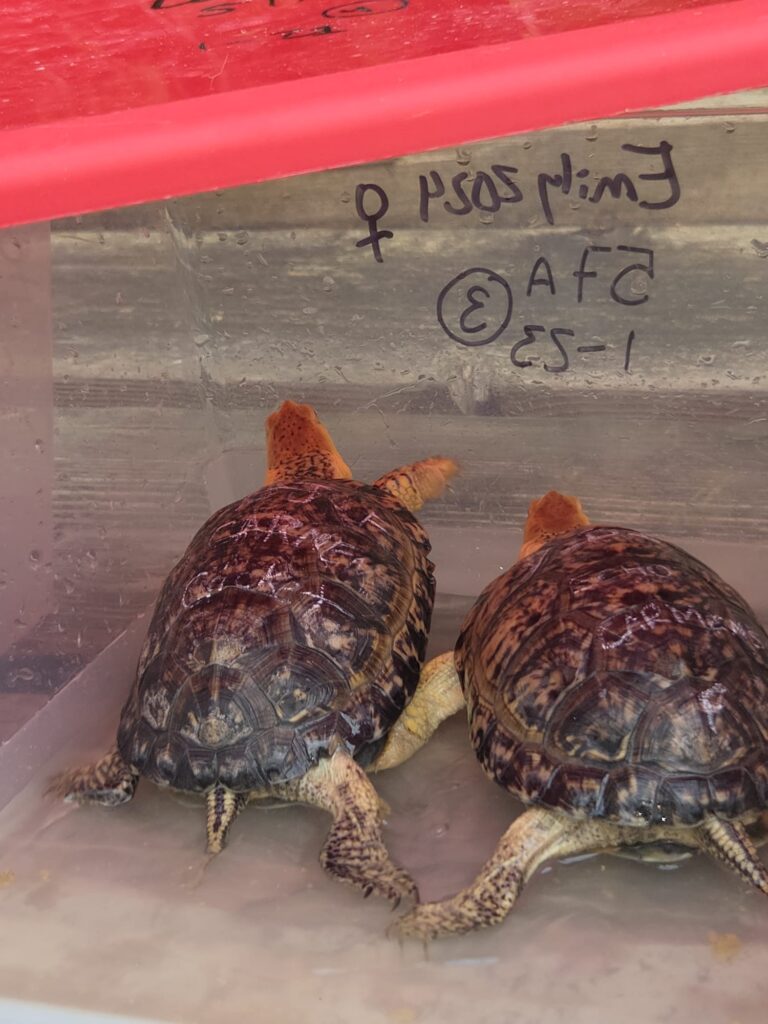
“This is our first big year of releasing these ones that have had the extra help,” Theysmeyer said. The additional protection gives the young turtles time to grow before they return to their natural habitat, complementing efforts to safeguard nests and help hatchlings survive their first days in the wild “Then, they’re big enough, and they can come back and have a real chance at survival,” he said, describing the difference between releasing a tiny hatchling into a “very big, scary world” and giving a larger juvenile a stronger opportunity to survive.
The 52 turtles released this year include both two- and three-year-olds. Theysmeyer said the unusually large release this year is the result of years of work coming together, along with an element of luck.
“The hard work can be a little bit of luck, and turtles simply just cooperating with our tracking program,” he said. “It all comes together this year.” After years of research, monitoring, habitat restoration, and careful protection, the scale of this year’s release provides a visible sign that the conservation strategy is beginning to make a difference.
The population numbers reflect that progress. In 2016, RBG estimated that there were only 20 to 25 Blanding’s turtles remaining in its wetlands. With this year’s release of 52 turtles, that estimate now stands at 99, including 13 known adults, five of which are breeding-aged females, with the remainder being juveniles. While the numbers represent encouraging progress, RBG’s work continues because the ultimate goal is not simply to increase the number of turtles released, but to establish a sustainable population capable of surviving and reproducing in the wild.
The tracking data collected from the turtles will also help guide future conservation decisions. Theysmeyer said the team will be able to study when the turtles move, where they travel before nesting, and what hazards they encounter along the way. That information can help RBG determine where additional conservation measures may be needed and whether turtles are beginning to move into areas of wetland that have been restored.
As important as the wetlands are, Theysmeyer emphasized that Blanding’s turtles do not spend their entire lives there. During nesting season, which generally takes place between May and July and often peaks around June depending on temperatures, females travel onto land and may cross roads in the process. That makes roads and transportation corridors one of the most significant threats facing turtles, particularly breeding-aged females that are already so scarce.
“Turtles don’t just stick in wetlands; they go up to nest and often by roads and often cross roads a lot,” Theysmeyer said. He believes municipalities need to consider wildlife movement when planning road projects, including the use of roadside safety fencing in areas where turtles and other wildlife regularly cross. While the province has established standards for wildlife crossings along highways, Theysmeyer said municipalities generally have not reached the same threshold.
For RBG, the hope is that the return of 52 young Blanding’s turtles will be one part of a much larger recovery story. The project combines habitat restoration, nest protection, population monitoring, radio telemetry, and head-starting to address the many challenges facing turtles across the region. After more than a decade of work, the latest release offers a reason for optimism, while also underscoring how much remains to be done to ensure that Blanding’s turtles continue to have a place in our wetlands for generations to come.