By Jack Brittle, Local Journalism Initiative Reporter
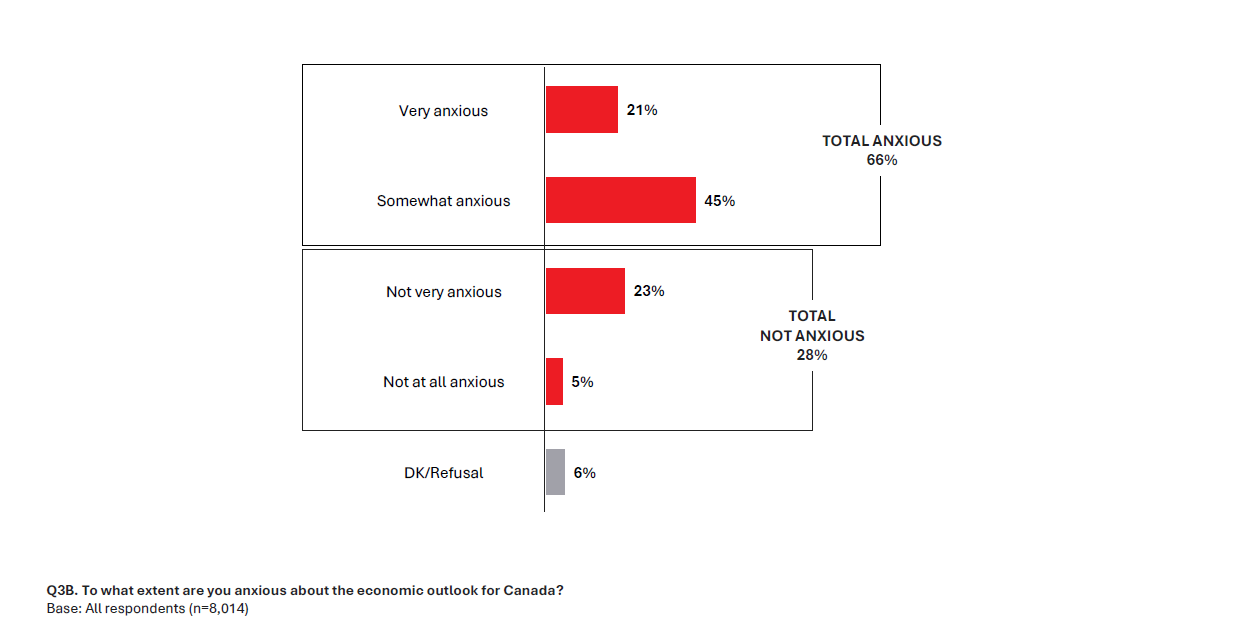
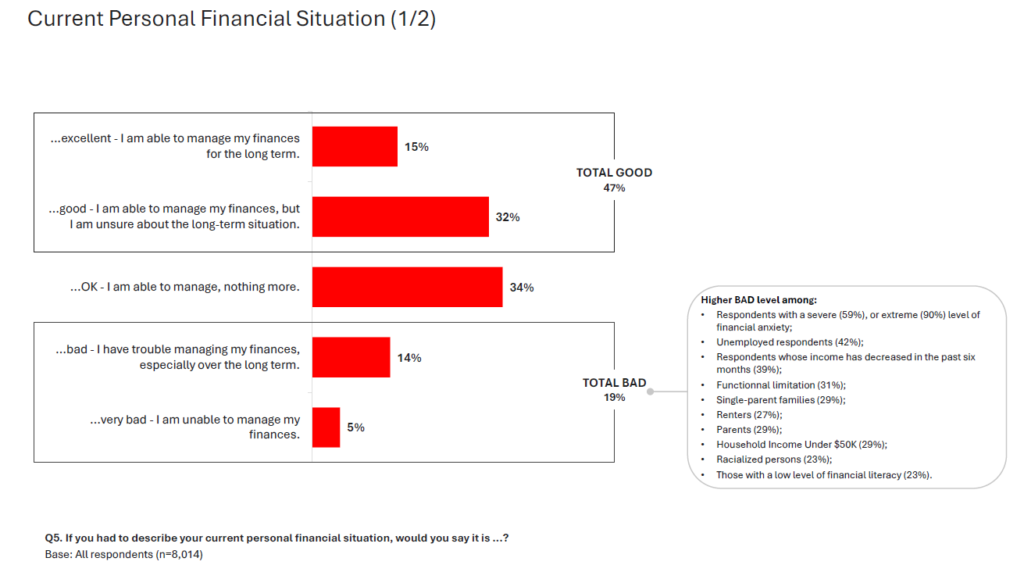
This summer, United Way Centraide Canada released the results of a financial anxiety survey conducted by Léger. According to the results, 60% of Canadians said that thinking about their finances makes them feel anxious, which, according to a United Way Golden Horseshoe (UWGH) press release, is an increase of five percentage points in just six months.
Of respondents to the survey, 46% said that they could cover basic household expenses for only one month or less if they lost their primary source of income, and 40% reported losing sleep because of financial stress.
Ontario also has Canada’s highest score on the Financial Anxiety Index, at 45.1.
Kristen Jacob, vice president of marketing and communications for UWGH, said that the organization has conducted the survey for the last two years.
“This particular survey is valuable because it gives us another sort of evidence-based tool for us to look at the national data and the provincial trends,” Jacob said. “And then we also compare that to what we’re seeing more locally across the Golden Horseshoe.”
Jacob said that things like inflation, uncertain employment, and a limited job market for youth are all factors in the results.
She said that financial anxiety also impacts other areas of life, which is why United Way’s network of support is so important.
“When someone’s worried about paying their rent or buying groceries, all of that stress can affect their mental health,” Jacob said. “It also touches their physical well-being, their relationships, and their ability to concentrate whether they’re at work or whether they’re at school.”
Jacob spoke about how the survey results play out in the Halton region.
“Halton is often considered a very affluent community, but in a sense that only masks the financial pressures that a lot of local people are experiencing,” Jacob said. “More than 34,000 Halton residents are living below Canada’s official poverty line. There’s a consistency that we’re seeing between that instability and the increasing pressures on our agency partners where people are waiting for support.”
Jacob said that 97% of United Way-supported organizations in Halton have reported increased demand for their services, and that over half have wait lists.
Meaghan Richardson, director of development for Food for Life, a United Way partner agency, said that the findings resonated with her.
“These numbers are scary, but they’re not overly surprising,” Richardson said. “We’ve seen a significant increase in the number of people who are coming for food support, a lot of them for the very first time. About 30% of people we’re supporting are actively employed and working as well. And that’s something that we’re hearing across the sector: folks who have never needed to come for support are starting to.”
Richardson said that one of the reasons for the uptick in support is a gap between the minimum wage and a living wage.
“The living wage is designed to include all kinds of facets for what you would need to stay above the poverty line,” Richardson said. “It’s a reasonable, but certainly not an exceptional way of living. Having one car, being able to get to work, that sort of thing. That number is about $26 or $27 an hour in our community. Minimum wage is around $17.”
Richardson also said that the cost of living is increasing across the board.
“Overall, costs are increasing faster than incomes,” she said.
Richardson said that Food for Life’s last survey revealed that 77% of respondents have between $0–200 to spend on groceries after they cover other expenses.
“We’re really using food as a way to prevent some of those deeper poverty challenges from creeping up,” Richardson said. “And that’s where talking about financial impact through the community organization work is so important because it touches on someone’s financial stress and opportunities. But it also creates some of that wraparound work that’s so important. You never quite know what you’re preventing when you’re providing someone food. But oftentimes you’re stabilizing households and families, and that’s really key.”
Richardson encouraged people to volunteer with United Way agencies and give financially if they are able.
“Oftentimes people think that these have to be large donations to make a difference,” she said. “In Food for Life’s case, every $10 that we get actually turns into $71 worth of food going out to someone.”
Jacob said that community organizations are part of the solution.
“When we think about United Way and how United Way fits into this, it really just reinforces what we’re seeing locally,” Jacob said. “When people can access support early, they have a better opportunity to regain stability and be able to get their lives back on track in a way that gives them that sense of stability back in their lives.”
Jacob said that among people who access community organizations, 40% said the support positively affected their financial situation and 36% said it reduced their financial anxiety.
“It helps to mitigate and keep a lot of these circumstances from blowing into larger crises,” Jacob said. “‘The earlier, the better’ is really what’s needed when it comes to a community support perspective.”
To read the full survey results, click here.