
By Maisha Hasan, Local Journalism Initiative Reporter
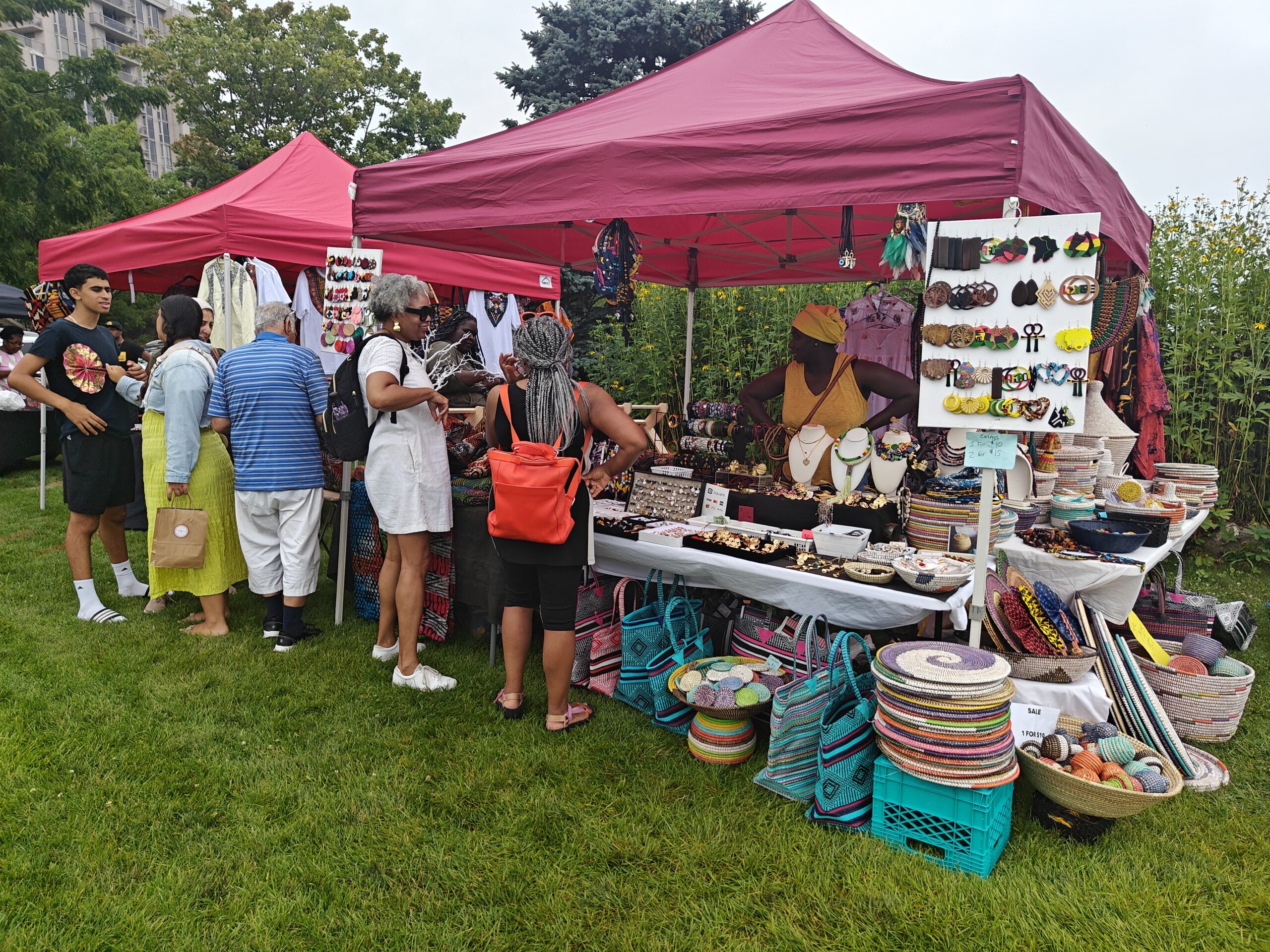
For the second year in a row, Halton Black History Awareness Society (HBHAS) has had to cancel its signature Emancipation Gala and Halton Emancipation Celebration Festival — and not due to lack of trying.
Dennis Scott, the chair of HBHAS, explains that a multitude of reasons contribute to funding decisions by granting agencies.
“I’ve had grantors say they’re already supporting another Emancipation festival, that they don’t consider a gala being a part of what they fund…or that we’re a more multicultural board rather than an all-Black board,” Scott said.
Ironically, HBHAS initiated the process of Burlington becoming recognized as the first city in the world to designate August as Emancipation Month. HBHAS’ Emancipation Day and Emancipation Month celebrations, alongside its anti-racist and intercultural understanding programming, were central to the initiative; Scott and his wife, Lisa, are described as being “instrumental in having Burlington be the first municipality in the world to officially designate August as Emancipation Month” by the City of Burlington.
Recent rollbacks of DEI initiatives by the United States could also be a factor in funding decisions, Scott suggested. The US has slashed DEI programs across the country; some law and employment experts have described actual or potential ripple effects across North America.
The struggle for support sometimes even comes from within, with people’s own misconceptions about Canadian Black history. Scott said that while slavery existed in what is now Canada for centuries before being abolished in 1834, it is not a universally known fact.
“I hadn’t been taught my Black history until I was 50, and I had to take over this festival. Canadian Blacks don’t have an identity, unfortunately, such as West Indians or Africans or the likes of that. Some Blacks in North America don’t even believe that the Blacks were slaves in Canada,” Scott said.
HBHAS serves as a resource for the whole of Halton, with multiple programs dedicated to anti-racist and Black history education, as well as art events showcasing the work of local Black artists.
Programs like Cultural Dynamics Leadership Training, in collaboration with the Halton Regional Police Service and other partners, aim to deconstruct personal and institutional biases. There is also an ongoing Emancipation Art exhibition, open until September 13 at the Helson Gallery in Halton Hills.
Scott said that HBHAS’ relationships with over 20 partners from various sectors have helped the organization build its reputation for education and advocacy, particularly in the realm of local Black history. Scott and his wife, Lisa, were honoured with a Key to the City for that work by the City of Burlington in April 2026.
“One of our strongest supporters is the Burlington Performing Arts Centre, which communicates with us in regards to how to best diversify their presentations. We’re also on the Halton Regional Police Service’s multicultural roundtable where they’re proactively trying to implement programs and systems to alleviate hate and crime and the likes of that,” Scott continued. “Those are just a couple of the many things that we’ve been doing, and I think it’s very essential for this community because I’ll be candid, when I came into Burlington 32 years ago, it was known as ‘White Burlington,’ and it was known as ‘White Halton.’”
Other cities, like Milton and Oakville, have a stronger sense of Black community than Burlington, which Scott attributes to their histories.
“Blacks were brought into those areas, similar to Owen Sound. Owen Sound’s on the tip of Georgian Bay, where those bounty hunters came…that is the factor, I think, that differentiates the amount of Blacks who are in Oakville and the amount of history they’ve done there versus here,” Scott said.
Oakville is well-known as an Underground Railroad terminus location, owing in part to its strategic position and status as an official Port of Entry into Canada. Enslaved people were hidden or stowed away on board ships bound to Oakville from the US. Formerly enslaved people who found freedom and success, such as Samuel Adams and James Wesley Hill, then helped new arrivals establish themselves in their new home.
Despite the Emancipation celebrations being cancelled once again this year, Scott is still holding out hope for next year and is working with MPs, city councillors, Burlington’s Mayor Marianne Meed Ward, and other Halton mayors to seek support.
“I know we’re getting a lot of negative feedback, in regard to the fact that we are not producing a festival this year and the same last year…we are looking at resurrecting the festival next year. I’ve had an individual who works for the city say that she will work with me…[on] the grants, and all that kind of stuff. And as I mentioned, we have a lot of support from people in all sectors in regards to having it again as well,” Scott said.
While the celebrations are on hold, HBHAS continues its work to educate Halton residents about Black history and promote greater understanding through its year-round programming.