By Jack Brittle, Local Journalism Initiative Reporter
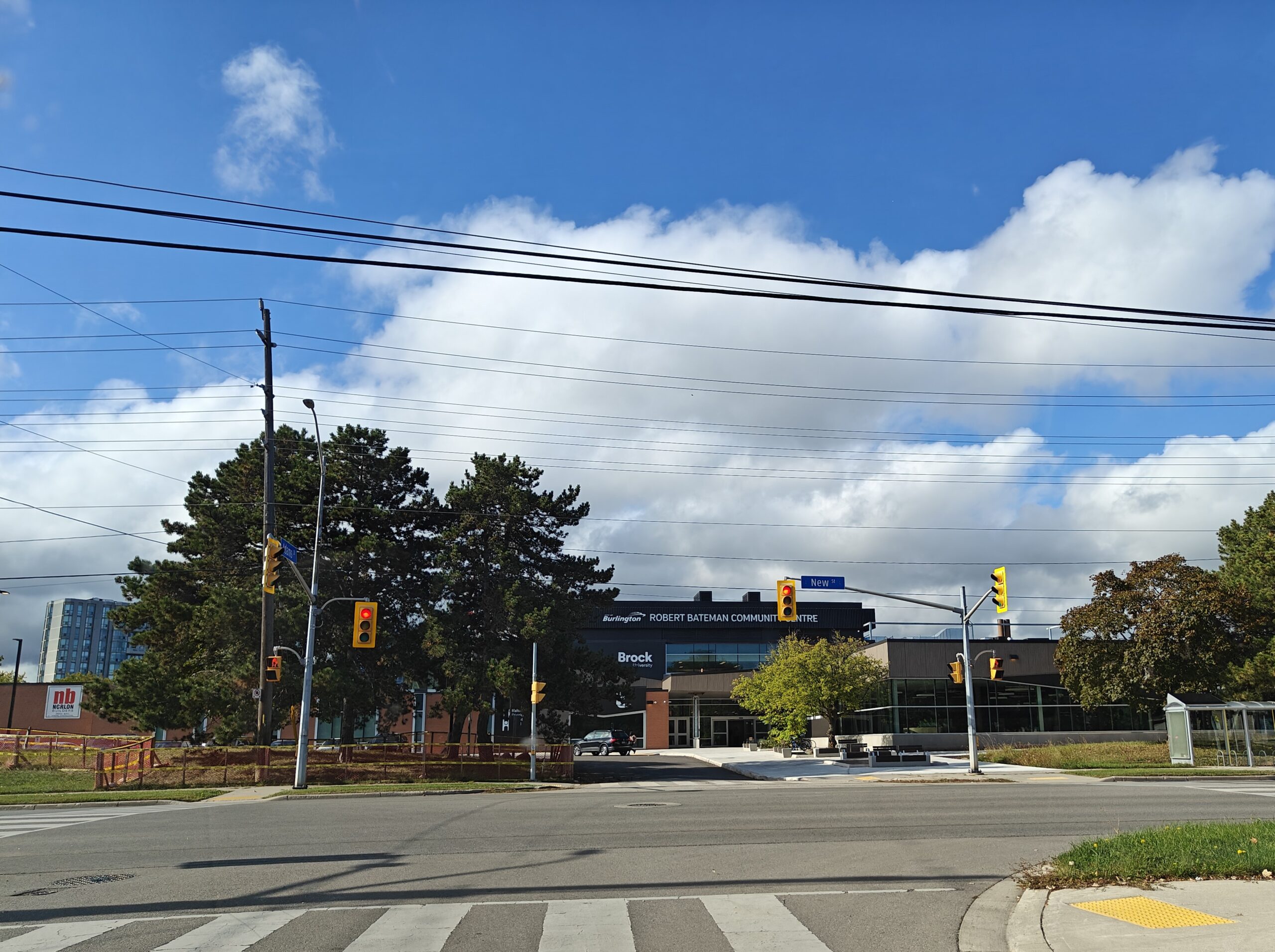
Last month, the City of Burlington released an Information Report Summary providing an update on the Robert Bateman Community Centre (RBCC) and its second phase of its development.
The RBCC opened in the fall of 2025 and features spaces occupied by Brock University, Burlington Public Library, TechPlace, and the Halton District School Board, as well as city departments and service centres.
The summary explained that Phase 2 presents the city with an opportunity to “complete approximately 20,000 square feet of remaining shell space while enhancing indoor programming capacity, outdoor activation, and key site functions.”
Mayor Marianne Meed Ward said that she is interested in focusing on “community-driven, grassroots concepts for the space.”
“That will be part of the work that they [City staff] do with the community as they develop the concepts,” Meed Ward said. “I’ve had many people come forward in the community and say they need space for arts and culture programming, Indigenous programming or sports facilities. So there’s a whole bunch of different interests that our community members have. And I really want to hear from residents what those priorities are.”
Ward 5 Councillor Paul Sharman, in whose ward RBCC sits, spoke about the debate centred around creating either dedicated or programmable space with the remaining square footage.
“In the past, community centres would dedicate rooms to different uses,” Sharman said. “And then we discovered something as a result of what we did with the Orchard Community Hub. We made it completely programmable by community members, and what we found out was that the programmable space in that hub was used significantly more than dedicated space in the other recreation centres, which have lots of downtime and high capacity.”
“Having lots and lots of space taken up by dedicated rooms, but most of the time, not having it used just means we’re wasting money, time and space,” Sharman continued.
Sharman said that the competition for programmable space in the centre is “fierce.”
Meed Ward spoke about what she thinks of the RBCC so far.
“This is a fantastic model of partnership in our community because it brings together both community uses and paying tenants,” Meed Ward said. “And it provides a real education, learning and innovation focus. All the paying tenants help to contribute not only to the original cost of capital for the project, but also ongoing rent.”
The report mentions that community input has “pointed to opportunities for site activating elements such as food services” and also “observed parking demand.”
“I think our focus now…needs to be on the balance of the community uses,” Meed Ward said. “We need to partner with organizations, nonprofits, educational institutions, businesses, whoever that may be in building new community facilities. We can’t do it just on our own.”
The report said that city staff will prepare three concepts for Phase 2 of the development, “one emphasizing primarily community-focused space, one prioritizing tenant-focused or leasable space, and one blending community and tenant uses.”
The finished concepts will be presented to council in Q2 of 2027 along with conceptual design drawings and cost estimates provided by the RBCC consultant architect.
To read the entire Information Report Summary about Phase 2 of the RBCC, click here.