By Kezia Royer-Burkett, Local Journalism Initiative Reporter
Burlington mayoral candidate and Ward 2 Councillor Lisa Kearns says her vision for the city is rooted in listening to residents, creating more accessible ways for people to participate in local government and ensuring that voices that are often overlooked have a meaningful place in Burlington’s future.
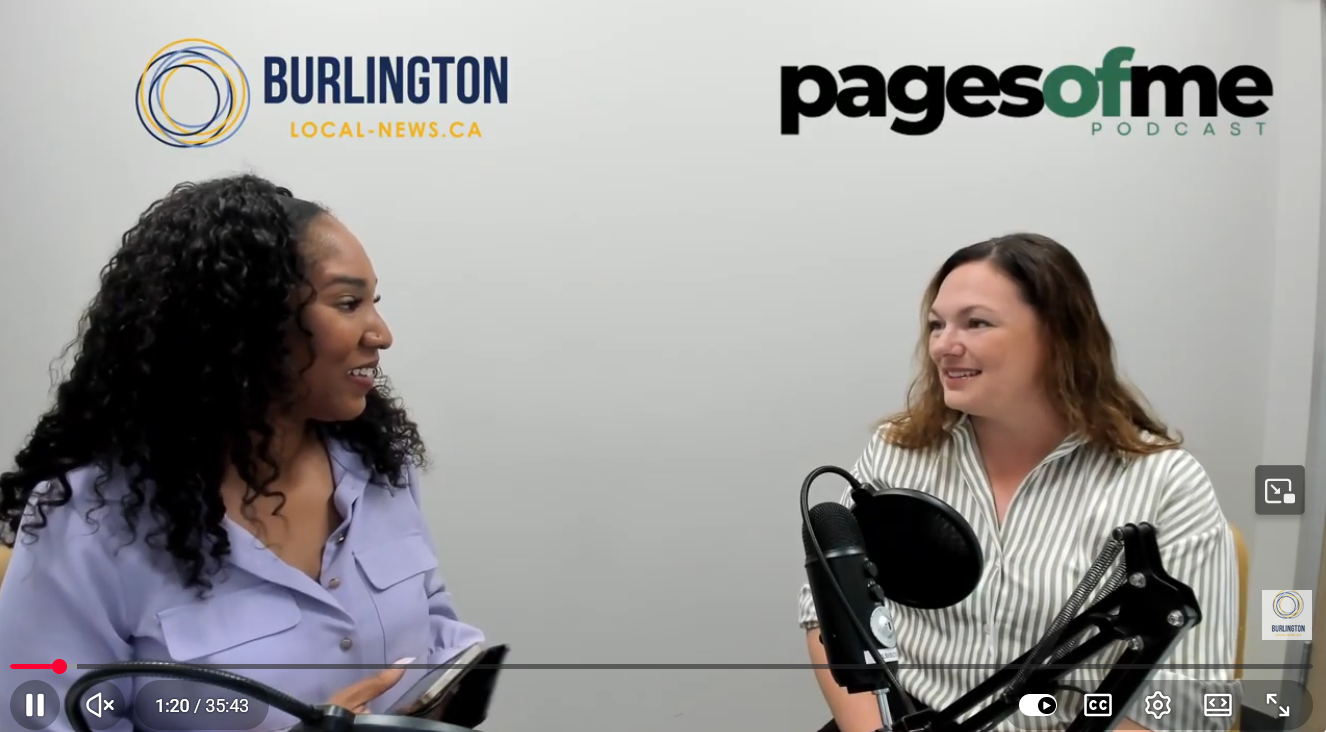
Kearns discussed her childhood, family, political career, and vision for Burlington during a recent episode of Pages of Me: Election Edition, a podcast hosted by Burlington Local-News.ca journalist Kezia Royer-Burkett. The election edition of the podcast focuses on the personal stories and experiences of candidates running in Burlington’s 2026 municipal election, looking beyond campaign platforms and political talking points.
For Kearns, some of the experiences that shaped her took place outdoors, where she says many of her childhood memories were created with her family.
“I think for us the core memory and what really reflects and shaped my childhood is that we spent a lot of time in nature,” Kearns said, describing family hikes, camping trips, and time spent in local parks.
She recalled hiking to Hamilton’s Devil’s Punchbowl as a child, describing the experience as one that involved “a little bit of fear, but resilience and a sense of accomplishment.”
Those experiences continue to influence how she raises her own children, she said, with the family still spending considerable time outdoors.
Kearns also sees Burlington’s parks, trails, and natural spaces as an important part of the city’s quality of life, but said quality of life cannot be reduced to a single issue. “There’s so many voices in our community, and some are often a little bit louder, and some are a little bit more forgotten,” Kearns said.
She said her understanding of quality of life has been shaped by seeing how people across the city experience Burlington differently.
“It doesn’t actually mean that one person’s having a better life than another person because some are blessed with richness of community, of family, with love,” she said. “Some may feel that they have everything they ever wanted and still feel empty and hollow and be struggling with mental health.”
For Kearns, protecting quality of life means making sure residents have access to the basic support they need, while also maintaining the infrastructure, public spaces, and community connections that allow people to feel like they belong. She pointed to public transit, access to the waterfront and trails, development in the downtown, and the ability of residents to have a meaningful voice in city decisions as examples of issues that can affect how people experience their city.
“The worst feeling you could have is that feeling of despair or hopelessness, where there’s no path out,” Kearns said. “I see a lot of people volunteering their time, talents, and treasures to create paths to helping other people reach their potential, and that is that quality of life.”
If elected mayor, Kearns said she would focus less on defining whose voices should be heard and more on changing how residents are able to participate in municipal government.
“I think the first thing that we need to do is not define who, but define how,” she said.
Kearns criticized the accessibility of traditional municipal participation, noting that evening council meetings can be difficult for residents who are working, attending school, or managing family responsibilities. “A lot of people feel squeezed out of the city and the conversations with the city,” she said.
She said Burlington’s advisory committees could also be reworked to give them a stronger role in identifying priorities and helping move ideas into action. “We can listen to them, we can allow them to make priorities and then act on those by the end of the year,” Kearns said. “Being more succinct with community input in, and then results from your city out.”
Kearns also spoke about the demands of being mayor and the importance of maintaining a balance between public responsibilities and family life. She said her family has already had conversations about what a mayoral campaign and potential mayoral term would require. “Balance between work and family has only been my first priority ever,” she said.
Kearns said her experience working in the corporate sector while raising young children has taught her how to manage competing responsibilities. She also described the flexibility of elected office as a privilege that allows her to protect time for family commitments. “I can’t do my best for the city if I don’t know for certain that my family’s needs are met,” she said.
She also pushed back on the idea that work-life balance is primarily a challenge for people in highly visible positions.
“I think everybody right now is struggling with work-life balance and life’s obligations are piling up pretty quickly,” Kearns said. She suggested that communities can support one another through small acts of kindness, particularly for residents working multiple jobs or caring for family members.
Kearns’ approach to decision-making was another major focus of the conversation. Asked whether residents had ever changed her mind on an issue, she said she tries not to approach council decisions with a particular perspective in mind. “I don’t come to any issue with a predetermined outcome,” she stated.
She pointed to Burlington’s decision about whether to allow retail cannabis as an example. Kearns said she personally did not support cannabis, but ultimately listened to the community before making her decision. “I had an opposing personal opinion, but I listened to the community,” she said, pointing to a community survey in which she said 72% of respondents supported allowing retail cannabis. Kearns said she considers community feedback, correspondence, delegations, staff analysis, and other information before making decisions.
“I’m a sponge that pulls in all of the opinions, runs them through frameworks,” she said, explaining that she considers factors including safety, economic feasibility, community impact and whether the city can deliver the outcomes residents expect.
Kearns also addressed inclusivity and representation in Burlington, arguing that some community voices remain underrepresented and that municipal funding should better reflect the diversity of the city. She pointed specifically to Black and 2SLGBTQ+ communities and questioned whether current funding levels adequately support their programming.
“I feel like those two communities have been the most underrepresented,” Kearns said, referring to Black and 2SLGBTQ+ voices. She also pointed to the cancellation of the Halton Black History Awareness Society’s Emancipation Festival as a particularly disappointing moment for the city. “That is a very sad moment in our city that I think needs to be corrected in the next term,” Kearns said.
As Burlington heads toward the 2026 municipal election, Kearns says her campaign is ultimately about creating a city where residents feel heard, included, and able to participate in decisions that affect their lives. For her, that begins with changing the relationship between residents and city government.
Toward the end of the conversation, Kearns was asked to describe the era of life she believes she is in right now. Her answer reflected the many different roles she is balancing, from councillor and mayoral candidate to mother, community advocate, and someone continuing to pursue personal growth.
“I feel like I’m in my ‘everything’ era,” Kearns said.
She described mornings that can begin with sunrise yoga with a Burlington-based business, followed by a Chamber of Commerce event, local advocacy work, a campaign call, executive coaching, and then returning home to make lunch and tidy the dishes. “I feel like right now, I think it would be my hat era,” she said. “…every minute is so different.”
For Kearns, the pace of her current life means constantly shifting between responsibilities and responding to whatever comes next. She joked that the experience has evolved from “Whack-A-Mole to tai chi,” describing the need to keep moving, adapting, and flowing through the different demands placed on her.
Whether discussing municipal policy, community advocacy, family, business, personal growth, or the possibility of becoming Burlington’s next mayor, Kearns’ “hat era” may ultimately be an apt description of the candidate herself. She is navigating many roles at once, while arguing that leadership requires the ability to listen, adapt, and keep moving forward.
To watch the full episode of the Pages of Me podcast, click here to go to the Burlington Local News YouTube channel or watch below.