By Maisha Hasan, Local Journalism Initiative Reporter
It is almost inevitable that when someone visits Burlington, they will happen upon the name Joseph Brant — the hospital, museum, the main street and pier, all named after him. They may wonder: who was Joseph Brant?
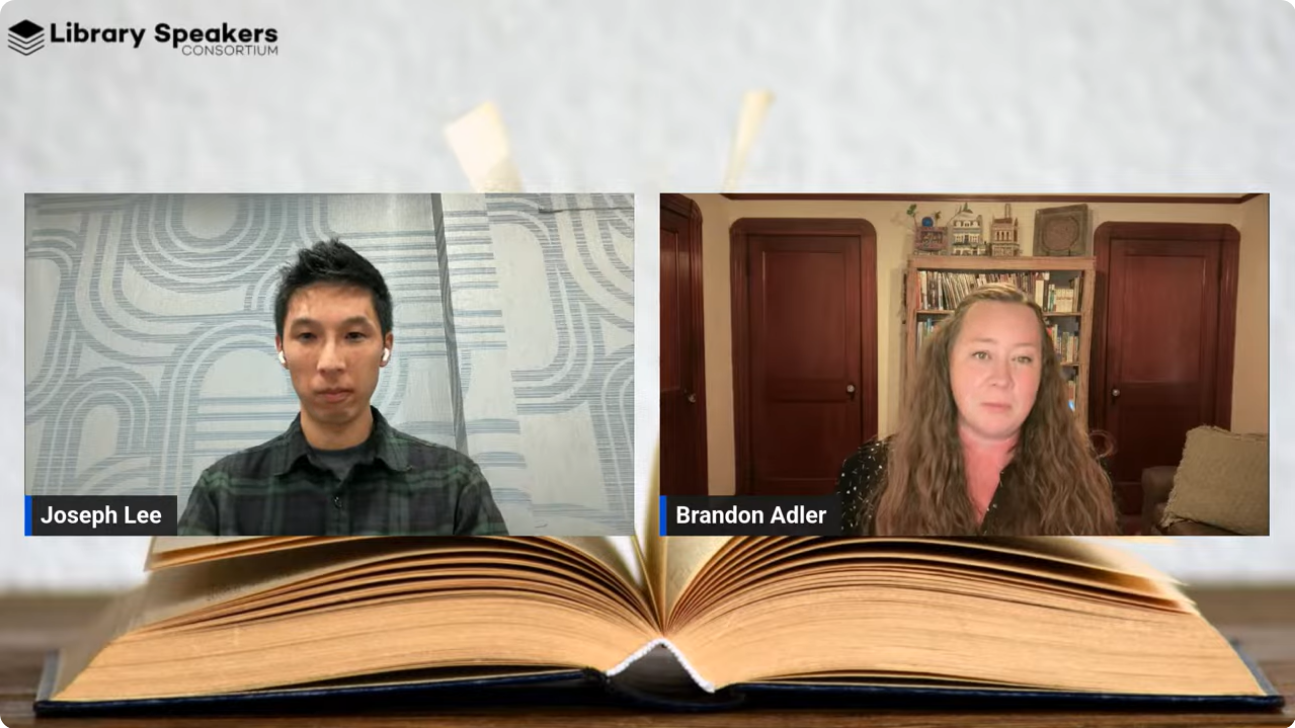
As part of the city’s Heritage Week, Burlington Public Library hosted a talk last week on military and political leader Joseph Brant with Dr. Rick Monture, a professor at McMaster University’s Indigenous Research Institute, and a member of the Mohawk Nation, Turtle clan, from Six Nations of the Grand River Territory.
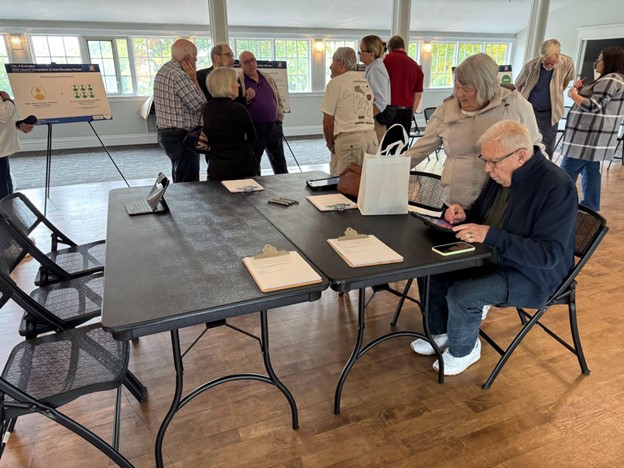
To a packed audience, Monture shared who Brant was, beyond his titles, and how he stood for Indigenous traditions and philosophies. Brant’s story has come to represent more than just one man’s life.
“He wasn’t an emergent leader, that one guy who we all rallied around. He was the person who encapsulated his healing and the people. Indians dealing with the British, the Americans, and the later Canadians. I just want to impress upon everybody that he’s not just a single chief that was our leader. He was one of many leaders, but he’s the one who sent the message,” Monture said.
Monture continued, describing how it was the women in the community who chose leaders, basing their choices on their observations as they watched the young boys grow into men.
The women, Monture described, would be the ones who observed Brant, to see if “he was a good family man, he was good to his wife, he was good to his parents, and he was a peaceful, calm person, he had a rational, good mind.”
“It’s our women,” Monture continued, “who raise our leaders that have the ultimate authority.”
Brant, whose Indigenous name was Thayendanegea, was chosen by the women in his community to be one such leader. Brant went on to learn the English language, including reading and writing.
That community aspect of leadership, the core structure of the Mohawk community, was based on the Kaienera’ko:wa, or the Great Law of Peace, whose values Brant championed. The Kaienera’ko:wa is the ancient constitution of the Haudenosaunee Confederacy, under which all six Haudenosaunee Nations (the Mohawk, Cayuga, Oneida, Onondaga, Seneca, and Tuscarora Nations) work together in peace, strength, and good-mindedness.
“He’s always looking for ways to build that house, keep that house peaceful, whether it’s amongst our people or whoever…That’s always been the imperative amongst our people in his time, prior to the American Revolution,” Monture said.
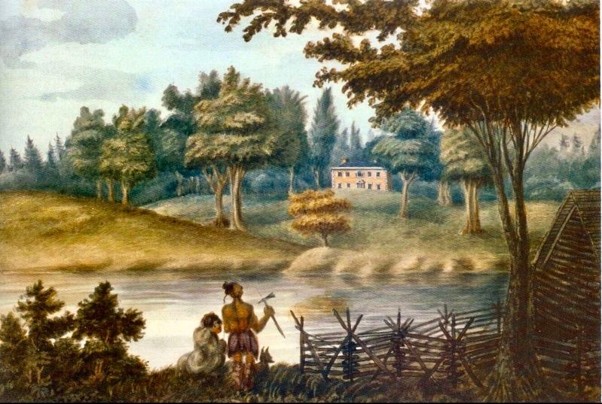
As for Joseph Brant’s actual house, it was only when Brant was 59 years old that he settled in Burlington, in a house built in the late 1790s. The house no longer stands today, but a replica is in its place as part of the Joseph Brant Museum.
Brant lived in the house only for about five years before he died. The journey of the house, from hotel to military hospital to a museum housed in a replica of the original and up to its 21st-century expansion, has had its twists and turns, much like Brant’s life.
“He was a seasoned veteran. He very likely shot and killed men. He saw trauma. He was in conflict. He faced death many, many times. He was known as a fierce warrior…you’re raised up in this kind of tradition of peace, law, and stuff, but you also find yourself in conflict and death and violence,” Monture said.
Despite his rocky history, Brant was a role model and leader within the community, maintaining relations with the British prior to the outbreak of the American Revolution.
At first, the Mohawk didn’t want to become involved with the British and Americans, finding an in-between position. After some time, they realised they could no longer be neutral, siding with the Crown.
Brant was sent over to England to meet with the king and other diplomats to gather information and act as an emissary for the Six Nations Confederacy. This visit was sufficiently unusual that the English papers reported on it.
Monture quoted a contemporary British description of Brant: “‘His manners are gentle and quiet and in those who study human nature, he affords a very convincing proof of the tameness which education can produce upon the wildest race.’”
Although he is seen as a hero, a key figure in the American Revolution, Monture challenged the idea of viewing history through the lens of the individual hero.
“The Western world seems to really want to venerate heroes, individuals, and do great things. The president of the United States right now is trying [to force] himself into that kind of narrative, right? But our people, we don’t look at things like that…our people are called the collective. Is the collective doing well? Great. It takes the collective to do that. It’s not about individuals leading the way,” Monture said.
Brant’s life was deeply connected to Burlington, but Monture’s talk offered a broader perspective on his legacy, emphasizing the collective strength, traditions, and philosophies that shaped his leadership.