By Jack Brittle, Local Journalism Initiative Reporter
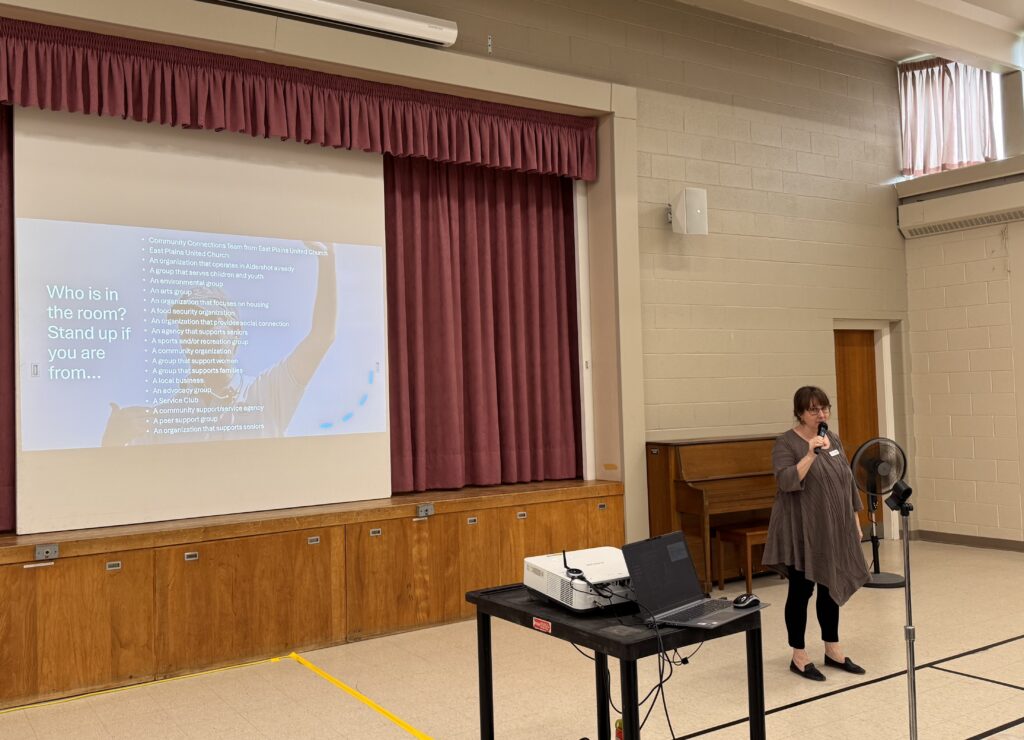
Community needs in Aldershot, from housing affordability to supports for seniors, were the focus of a recent gathering aimed at turning data into local action. The discussion took place on April 16 at Community Development Halton’s “Community Connections” event at East Plains United Church (EPUC) entitled Community Connections. The event was designed to encourage discussion and debate among Aldershot citizens about needs in the community, while also showcasing the potential of EPUC as a gathering space for local groups and organizations.
Members of various community groups were present, including those from Partnering Aldershot, Food for Life, the Burlington Men’s Group, and many others.
Karen Maerz, member of the EPUC, said an ad hoc board was established in June 2025 to “investigate how the church space might become more of an active and welcoming presence in the community.” The group began to meet weekly and eventually became known as the Community Connection Team at EPUC.
“We’re called to respond to community needs by working in partnership,” Maerz said. “We want to build relationships and foster meaningful engagement. And really, that’s why we started our connection with Community Development Halton.”
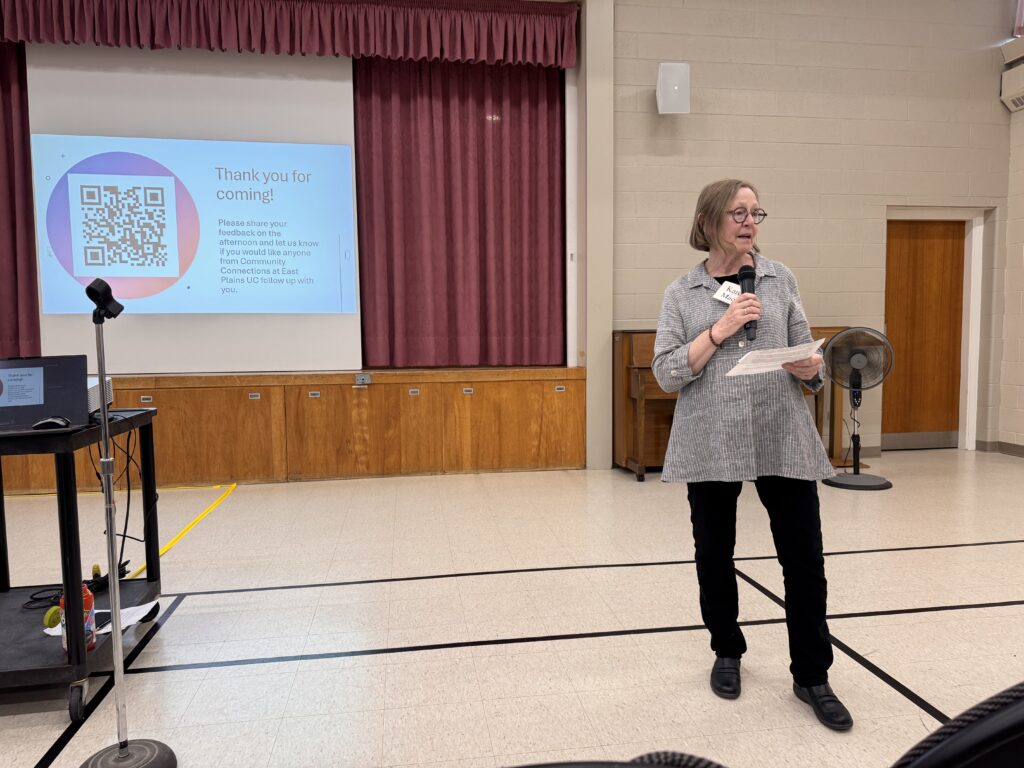
After Maerz’s introduction, Rishia Burke, executive director of CDH, presented a deep dive into Aldershot community data.
Burke said that Aldershot’s population growth has been modest since 2016, and that seniors now make up 31% of residents. The presentation highlighted “an increasing demand for services that support older adults, social connection, and aging in place.”
Burke also pointed out that 43% of renters in the neighbourhood spend more than 30% of their income on housing. She said that Aldershot is experiencing a housing transition and growing affordability challenges.
Aldershot is also becoming more diverse. One in four residents is an immigrant, Burke noted, and the racialized population has grown to 17% in 2021, from 12% in 2016.
The presentation ended by summarizing CDH’s findings around community needs that are currently being addressed by organizations.
“Aldershot benefits from a relatively strong base of community services, particularly in family and individual supports,” read the slide. “However, there are comparatively fewer services focused on basic needs and mental health, which may become increasingly important given rising housing costs, poverty trends, and an aging population.”
CDH found that of the 59 community organizations/programs in Aldershot, only seven focus on basic needs such as housing, shelter, and food. Five provide organizational or community information services, and only two offer specialized mental health and substance use support.
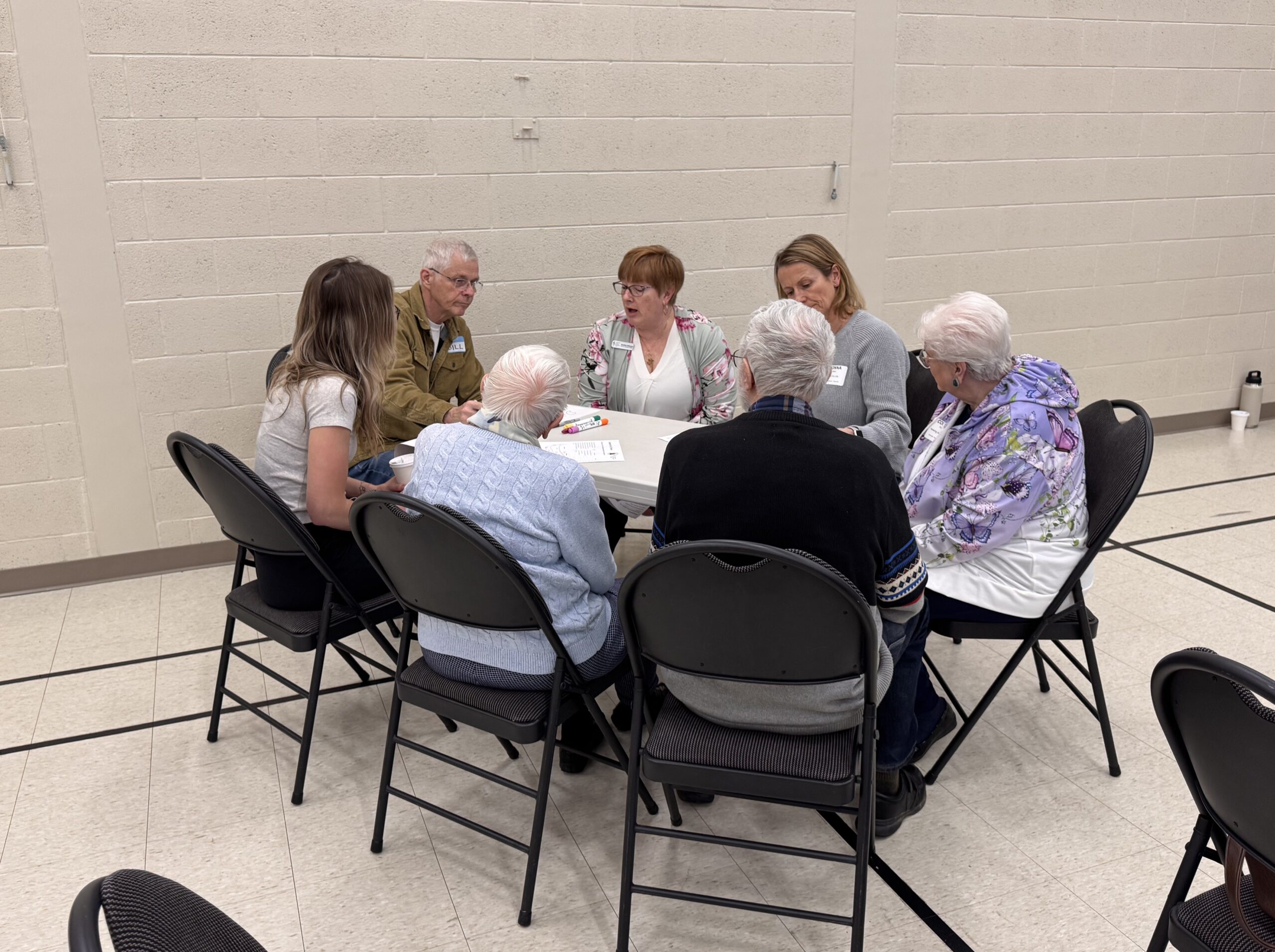
After the presentation, attendees were split up into groups and asked to answer questions about the data. Topics included what stood out to attendees, what is missing in Aldershot, which programs could be amplified, and how EPUC could help support further connections.
Maerz spoke about how the idea for the event came about.
“We have a lot of space here at this building, and it’s not necessarily being used to reach the community,” Maerz said. “So we really wanted to explore that. But rather than just putting a sign out front saying ‘Come rent our space,’ we wanted to determine what the needs of Aldershot are. Let’s find out what the community needs and wants, and then offer that to them, rather than us deciding.”
Maerz said that EPUC wanted to partner with CDH because they’re a data-driven organization.
“We knew that they were able to reach out to many different organizations all across the city of Burlington,” Maerz said. “We realize we’re going to meet community needs by partnering.”
EPUC currently rents out its basement to a local childcare group and has a partnership with the Burlington Symphony Orchestra to let them rehearse at the church.
David Craig, a member of the Community Connection Team at EPUC, spoke about how the church also benefits from collaboration.
“It’s an old church,” Craig said. “It’s been here 180 years. It’s been renovated many, many times, but like any brick and mortar, it needs upkeep, and that doesn’t come cheap in this day and age. So we try to offset declining parishioners by renting some of our facilities out, and that helps the church maintain its building.”
Burke said that statistics don’t tell the whole story of a community and that bringing people together in one room can’t be replaced by virtual meetings.
“The essence of collaboration in the room was here to begin with, which I thought was really lovely,” Burke said. “So I feel like there’s a lot possible, and I’m excited for this church to open its doors and come on a journey with the community.”