By Emily R. Zarevich, Local Journalism Initiative Reporter
“Something in my body was feeling off, and the signs were getting bolder, clearer, louder. … But here’s the thing about life — the things we don’t confront never leave us. They return to haunt us.”
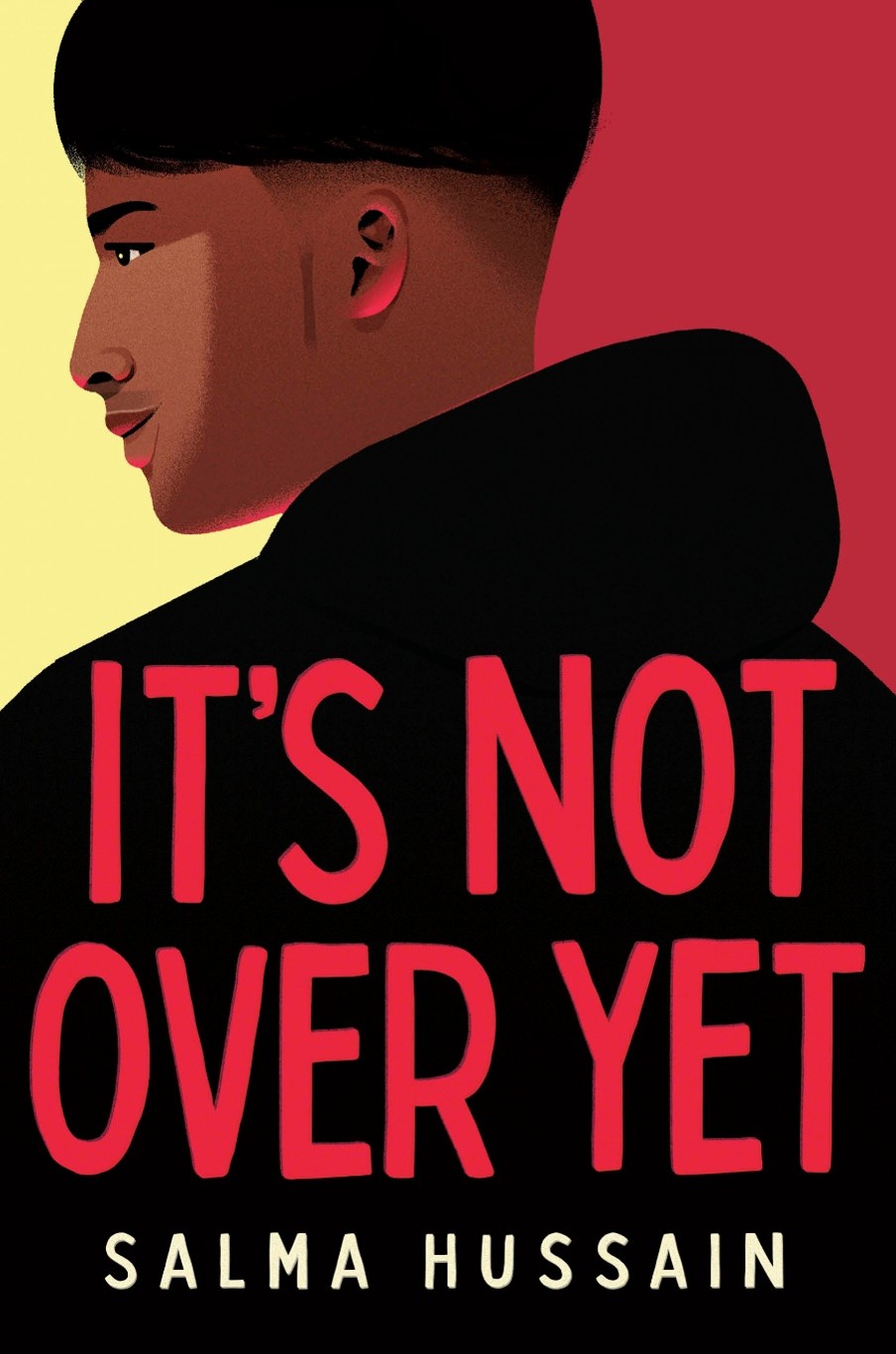
Salma Hussain, a local Greater Toronto and Hamilton Area author, has teamed up with Tundra Books to tell the intimate story of a teenager whose life is upended by a life-changing brain tumour diagnosis. It’s Not Over Yet is an upcoming young adult novel that delves deeply into the complicated grieving process of a teenager who is not only facing a major health crisis, but also grappling with the knowledge that surgery will leave him with a disability. Wali Khan is told by his doctors that he will lose half of his hearing when the tumour is removed. For a young person who revels in audio-based entertainment like music and film, this is a striking blow and a terrifying new adjustment to make.
Wali is 15 years old and at the point in his life where everything is shifting. He has dreams of succeeding in the tenth grade and beyond, academically and socially. He’s from an interfaith, Pakistani-Torontonian household where his parents nervously teeter between their cultural traditions and twenty-first-century Canadian modernity. Wali’s smart and spirited older sisters are a pair of rebels, and Wali himself goes through a major life milestone as a teenager when he betrays his mother’s trust for the first time to sneak out with his siblings for early morning shawarma.
Hussain’s Wali as a narrator is funny, insightful, artistically inclined, and realistically flawed. He is justifiably angry and bitter about a diagnosis that seems to have brought a screeching halt to all his grand plans for straight A’s, popularity, and the beginning of a lucrative career in filmmaking and film reviewing. Hussain doesn’t allow her readers to forget for even a moment that Wali, despite having many mature traits, is still a teenager at a crucial stage of emotional and mental development. He has powerful mood swings and sometimes takes his frustrations about his declining health out on his family. He has anxiety and obsessively Googles his symptoms for a level of reassurance that is, frankly, impossible to achieve. He is incredibly relatable and a strong representation of his age group.
Hussain does her young protagonist justice by having him tell the story of his health crisis in first person rather than allowing a third-person narrator to speak for him. First-person feels particularly well suited to a story like It’s Not Over Yet. Illness, surgery, and the first encounter with the daunting concept of mortality are life experiences that are too intimate, too vulnerable, and too loaded with emotional volatility to be relayed impersonally. We are in the age of Substack, Medium, and Patreon. In our modern storytelling culture, people retain the right to tell their own stories, in their own voices.
Hussain perfectly captures many of the stark realities of an individual who is actively seeking medical treatment for a chronic illness or condition. Navigating a health care system, even a publicly funded one like Canada’s, is difficult. Friends, family, and community members treat you differently than before your health issue was identified. Suddenly, there are things you can do and things you can’t do anymore. Dreams and goals are put on hold. You’re forced to put your life in the hands of strangers when you go under for surgery, which takes incredible courage and trust in professionals, a not-always-easy endeavour. And the reason why Wali’s brain tumour went undetected for so long was an early misdiagnosis by a well-meaning but inattentive family doctor.
“He was funny and kind, but a dinosaur nonetheless who probably should’ve retired a decade or two before he actually did and let a new doc take over. … He chalked up my vomiting to a sensitive gut, possibly anxiety, and most likely due to excess screen time as he believed screens to be the root of all evil.”
Hussain is very good at accurately incorporating how technology and social media have crept their way into young people’s daily lives. A music and film connoisseur, Wali uses Spotify, TikTok, Instagram, and other platforms for recreational purposes, and has ready opinions on the media he consumes and what he likes and doesn’t like.
Hussain doesn’t demonize technological advances at all in her narrative, but rather represents them as an established norm. This is just how teenagers and young adults interact with various forms of creative expression now. Hussain doesn’t alienate her target audience by taking any sort of preachy anti-tech stance. Her teenage readers are much more likely to relate to a protagonist who indulges in his leisurely screen time outside of school, without being constantly guilt-tripped for it.
It’s Not Over Yet is also a proud, compassionate story about the challenges and rewards of growing up in a multicultural city like Toronto. Wali spends a lot of the narrative musing on his parents’ backgrounds and Muslim and Christian faiths. He tries to work out what aspects of his cultural and religious heritage resonate with him as a second-generation immigrant. Through Wali, Hussain voices her own affection for the metropolis that allows immigrant families so many opportunities to thrive.
“People love to complain that Toronto’s aesthetic is so mid, but there’s nowhere else I’d want to live. One of the best things about Toronto is that each neighbourhood is so different.”
Tundra Books will bring out It’s Not Over Yet on October 13, 2026. In the meantime, interested readers can check out Salma Hussain’s other published young adult novel, The Secret Diary of Mona Hasan, which is about a young Muslim girl navigating war, immigration, and puberty in the early 1990s.