
By Claudette Sims, Halton Master Gardener
Bulbs
Deadhead spent spring bulbs like tulips and daffodils, but leave foliage intact until it has died to replenish bulbs. Tender bulbs like dahlias, gladiolus, and calla lilies can be safely added to your garden (or containers) after your last frost date. If you’ve started them indoors to get a jumpstart on growth, make sure to gradually bring them out for a few hours a day for several days to help get them acclimated before planting them in the ground.
Perennials
Divide and transplant overgrown fall-blooming perennials on an overcast day before they fully emerge. Check this extensive spreadsheet of individual perennials for when and how to divide them. Add wire supports or stakes around tall perennials as they grow.
Veggies
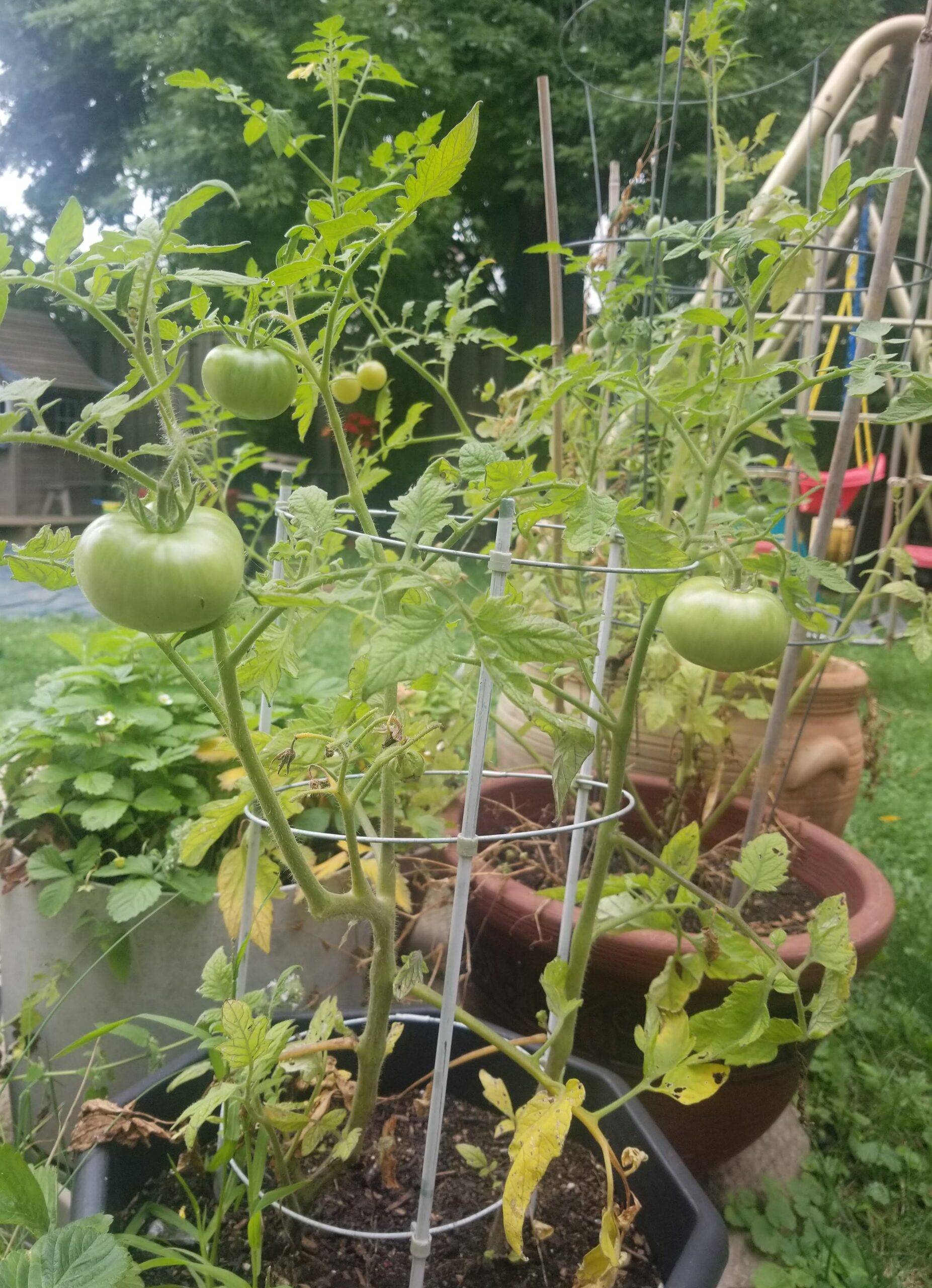
As the weather warms, tomato seedlings can be transitioned to the garden slowly, starting with a sheltered location, from 1-2 hours on day 1, and increasing each day to full sun. Plant in the garden when they’re about 6” high (15 cm) and all danger of frost is past. Plant deeply, right up to the bottom leaves. Transplant tender seedlings like cucumbers, eggplants, peppers once the soil has warmed up and the daytime temperatures are consistently above 18°C (65°F). Corn needs warm soil to germinate. Sow corn seeds when oak leaves are the size of a squirrel’s ear!
Lawn
Early to mid-May is a great time to revive your lawn, especially if it is looking thin and weak. Over-seed, especially in thin areas and then top dress with a ½ inch (2 cm) of fine textured compost/manure. Choose a grass seed or mixture that suits your light conditions. Areas with moss may indicate soil has been compacted and nutrient level is likely low. Consider embracing the moss and allowing it to grow, or transition that area to a noninvasive groundcover, especially under tree canopies.
Trees
Stop pruning oak trees to prevent deadly oak wilt disease. Inspect all trees for scale, fungus or other disease. Add traps or barrier bands around trees to trap spongy moth caterpillars, which emerge from April to June. Protect tree trunks from mechanical damage by replacing lawn with mulch or plants. Spread mulch 5–10 cm (2–4 in) deep and keep away from stems and trunks. Check that stakes are not damaging the bark and remove any supports or ties after 2 years so trees can move naturally and develop trunk strength. Follow these instructions to successfully plant a new tree!