By Jack Brittle, Local Journalism Initiative Reporter
Efforts to address anti-Black racism and support Black student success were a key focus at the Halton Catholic District School Board’s (HCDSB) March 24 meeting. Sita Jayaraman, senior manager of human rights and equity for the board, presented a report to trustees on HCDSB’s efforts to promote Black Excellence.
John Klein, HCDSB director, said that the board has been “called and challenged” by the province to do better in this area. The presentation gave a “strong sense of the inroads we’ve made to advancing the priorities of the Multi-Year-Strategic-Plan,” Klein stated.
Jayaraman spoke about the progress the board has made.
“We’ve done a lot of work to dismantle systemic anti-Black racism at our board for a number of years now,” Jayaraman said. “Through professional development, data collection, policy review, addressing hidden bias, and creating identity-affirming spaces for Black students at the board and school levels.”
The report focused on the Graduation Coach Program for Black students as well as the 2026 Black Excellence Symposium, which was titled “Empowering Leaders for Life.” The Graduation Coach Program is available at two HCDSB secondary schools in Milton, St. Francis Xavier and St. Kateri Tekakwitha.
Jayaraman said that when the board receives funding through the Ministry for the graduation coach, they also outline key objectives and priority areas that HCDSB needs to work on.
“One of the key areas is building trusting relationships with Black students, families, and communities,” she said. “To achieve this objective, one of the key things that the graduation coach has done is to support the Black Student Union’s weekly meetings.”
Jayaraman said that the meetings “provide students a safe space to celebrate, explore, and affirm their Black heritage and culture.”
The Black Excellence Symposium, as well as a parent symposium, was created to help build trusting relationships with Black students, families, and communities.
HCDSB also partnered with Rising Stars, a community organization dedicated to youth empowerment, to build mentorship pipelines with feeder schools, as well as to encourage teamwork and build leadership skills.
Jayaraman said that because the graduation coach is a 12-month employee, she has been able to provide programming for students in the summer as well. This includes a Black Joy Gala and a youth leadership program with the Canadian Caribbean Association of Halton (CCAH), which counts towards students’ mandatory community service hours.
CCAH also facilitated a trip to Queen’s Park for students.
“[This was] a great opportunity for our students to go meet civic leaders and community partners, explore careers and become aware of careers in politics and public service,” Jayaraman said. “As well as enhance that sense of belonging of Black students in civic spaces.”
Students were also able to take a trip to McMaster University and meet with the National Society of Black Engineers.
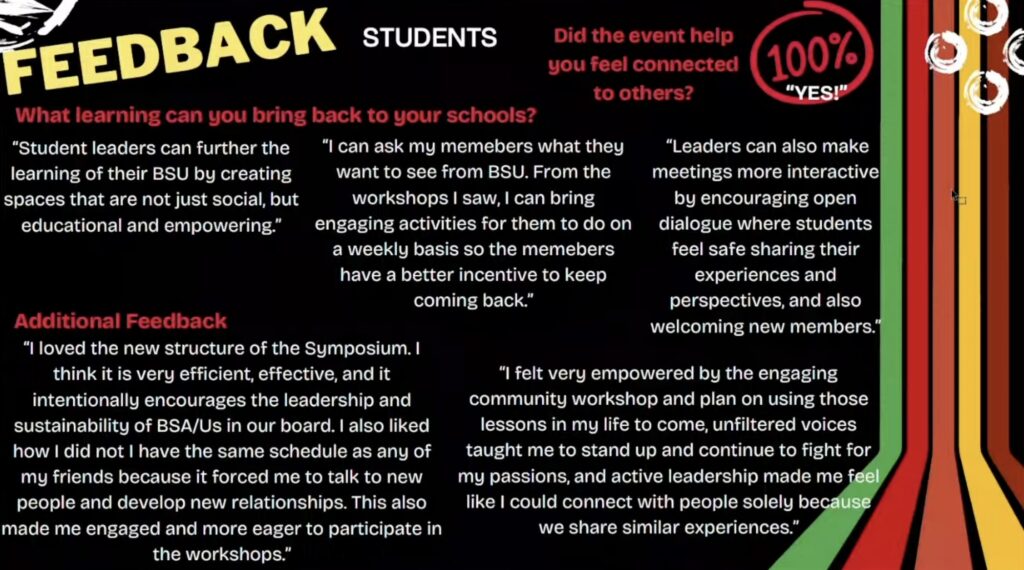
Amanda Gonsalves, a curriculum consultant on equity and inclusive education, spoke about the third annual Black Excellence Symposium, which took place at the Thomas Merton Centre on February 12.
The report said the event marked a shift in focus compared to the last two years, “moving from celebrating identity to actively cultivating student leadership and systemic change.”
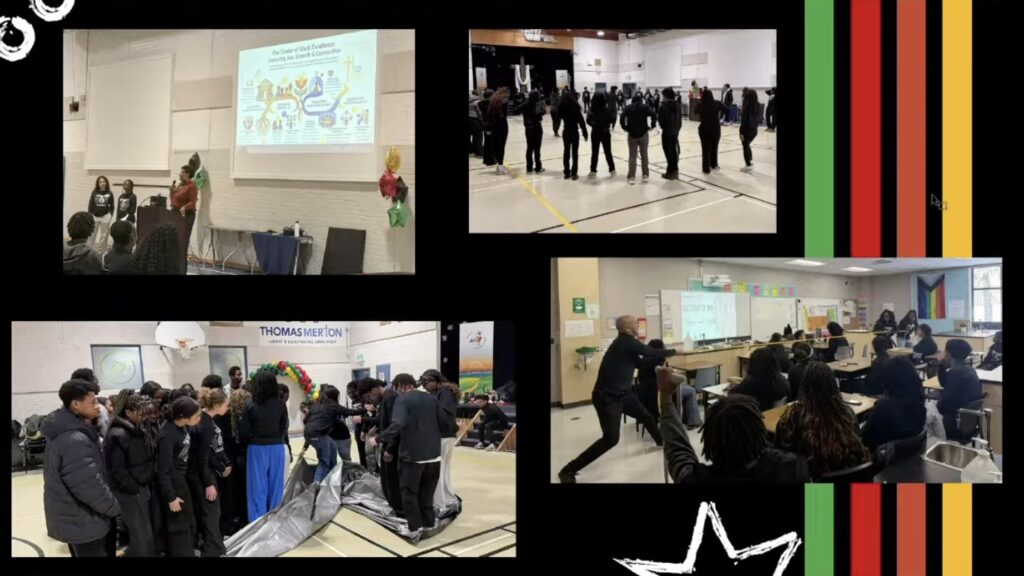
The symposium intentionally featured a smaller number of participants this year.
“The folks that we invited were either students who have a leadership role in their spaces or are aspiring leaders,” Gonsalves said.
The symposium featured six workshops, only one of which was compulsory.
According to Gonsalves, the workshops focused on “community building and understanding the importance of communication.”
“Some were about the importance of campaigning and running a successful campaign and understanding the logistics of running school events,” she said. “There was a session on understanding how to use online platforms for sustainability, as well as one about distinguishing names, so the difference between student unions and student associations. There was also a space that was specifically for students to talk about issues related to their identities.”
Gonsalves spoke about the importance of the symposium.
“In our school board, we know that anti-Black racism is prevalent in all schools,” she said. “There are countless bodies of work that speak to this, and we know that because of that, there is harm and trauma that is felt from our students and their families. Events like this are critical for allowing students to come together. It’s critical for students to engage with Black mentorship and for fostering a sense of inclusion.”
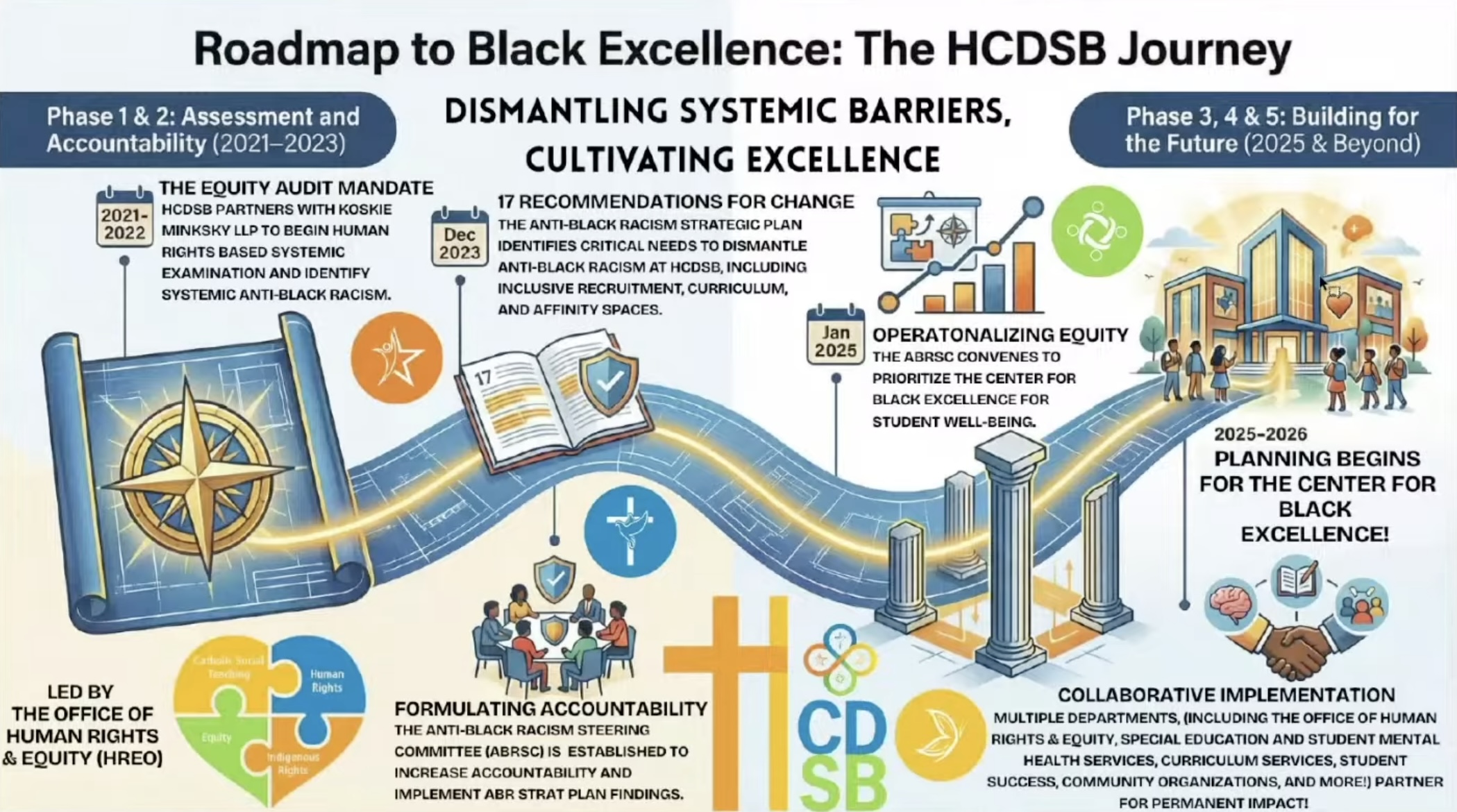
Jayaraman spoke about some of the achievements that the board has made in accordance with the Anti-Black Racism Strategic Plan Report, released in 2023.
“One of the key recommendations was the formation of an Anti-Black Racism Strategy Steering Committee, and for the steering committee to be that body that lends vision to the implementation of the recommendations,” Jayaraman said.
She said that the committee was struck in January of last year and has been meeting ever since.
The committee also created a draft plan for combatting Anti-Black Racism, which includes the creation of a Centre for Black Excellence.
The symposium included a workshop that focused on collecting feedback on the Centre.
Janet O’Hearn-Czarnota, HCDSB vice-chair and trustee for Halton Hills, said that the work that Jayaraman and Gonsalves are doing fits perfectly with the board’s pillars. “’Achieving, believing, belonging’…you’ve hit every single one of them,” O’Hearn-Czarnota said. “I mean, talk about combining everything, our multi-year strategic plan and having the students give such positive feedback, how can that not be a win? I know we have a long way to go, and we need a lot more money to spend, but it’s a great start because we were here in December 2023, and we’ve come a long way.”