
By Emily R. Zarevich, Local Journalism Initiative Reporter
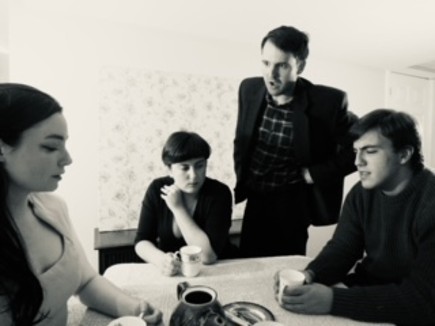
Scene: A cozy English flat on a regular Sunday morning. Two young men, Jimmy Porter (Gregory Waters) and Cliff Lewis (Adam Iachelli), sit in their armchairs reading the most sophisticated of the English newspapers. Jimmy’s wife Alison (Nell Hayutin) attends to the day’s ironing at the ironing board and conducts her work in relative silence. The war is over, the country’s young men are no longer being conscripted, and Britain is back to its normal, everyday happenings. It sounds like a peaceful enough scene, doesn’t it?
It is, until Jimmy opens his mouth. And then out pours the crass, incessant whining of an embittered, entitled, and emotionally unstable man-child. An underachieving failure with a massive chip on his shoulder, Jimmy is relentless, an expert at being verbally cruel to his meek, long-suffering wife and the roommate he calls his best friend. He goes on and on about how the world has cheated him out of greatness and how nothing and no one is up to his impossibly high standards. For two straight hours, bewildered audiences will be wondering if he will ever, ever shut his trap. This young man is absolutely exhausting.
Behold, playwright John Osborne’s take on the “angry young man” archetype, the poster boy for the gritty, working-class-oriented “kitchen sink realism” theatre genre that quickly gained traction on British stages during the 1950s and 1960s. During this time, people were turning away from posh plays about upper-class buffoonery and looking for more serious stories that reflected the everyday reality of struggling people who actually had jobs and bills to pay.
Sunday, October 4, 2026, was the final performance of The Kitchen Sink Collective’s ambitious production of John Osborne’s Look Back in Anger, a classic that presents this harsh reality stark naked. The ten shows, directed by Jennifer Ianchelli, took place at the West Plains United Church on Plains Street in the church’s theatre. The cast was made up of a team of local actors armed with British accents, courtesy of their professional accent coach Jamie McRoberts (listed on the program). Amy Ryan and Paul Rivers joined the main trio on stage as Alison’s glamorous, confident friend Helena Charles and Alison’s fond, affluent father Colonel Redfern.
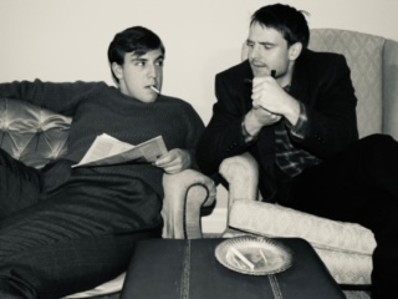
Osborne’s story of a clever but hot-tempered young man who drives everyone away with his nonstop rants and juvenile selfishness is an intense domestic drama with realistic outcomes for all involved. Look Back in Anger is a psychological dive into how a person’s psyche can be aggressively eroded by the indignity of underemployment. Jimmy is university-educated but has failed at his attempts to kick-start more lucrative careers in journalism, advertising, and performing jazz. He’s reduced to running a scrappy sweets stall with Cliff, who just can’t seem to better himself either. Both men want more, but “more” seems impossible to get.
Modern audiences will relate, despite Jimmy being so insufferable. Aren’t many nowadays fed up with not being able to move up the ladder, despite having degrees and qualifications? The class divide, nepotism, and the lack of opportunities for the disadvantaged were disheartening back then and are disheartening now. Working-class discontent is the play’s overarching theme that doesn’t get drowned out by any sort of positive, optimistic reassurances. This is a storyline where tired low earners are given permission to be openly pessimistic about their circumstances.
Jimmy, Cliff, and Alison are poverty-stricken and miserable, three unhappy bodies crammed into an overcrowded, cluttered flat full of mess and posters resembling students’ quarters (designed by Jennifer Iachelli). The crew put in plenty of work to include thoughtful details such as handmade newspapers, prints of existentialist figures such as Albert Camus, and a vintage tea set so the characters could enjoy (or try to enjoy) their afternoon cuppa before Jimmy ruins it.

Cliff is at least somewhat grounded. Alison is too beaten down and defeated to stand up for herself. Jimmy’s sanity implodes as he struggles to process the sheer rage, frustration, and disappointment at being stuck in a dead-end job where his talents and potential are wasted. But rather than self-reflect or do something proactive about it, as a mature person would do, Jimmy chooses to fling blame at everyone around him. Waters’ performance as Jimmy Porter on the show’s final night was dynamic and provocative. Carrying such extreme anger for such a long period of time is a laborious task for any actor, and Waters should be commended for not letting Jimmy’s guard down until the script calls for him to be vulnerable.
All of the actors succeeded in depicting the array of unhealthy relationships that are scattered throughout this play. A codependent, abusive marriage with little love or affection left. A male friendship where the two parties bully each other like schoolchildren. A shallow female friendship with deceptive undertones. And, sadly, a well-meaning parent who finds himself at a loss for how to help his hurting child. Where a play like Look Back in Anger may lose some viewers is the lack of reprieve from the characters’ misery, much of which is self-inflicted or caused by a lack of action. Osborne’s work stirs up much more than anger in characters and audience members alike. The playwright also makes everyone grieve, intensely.
The Kitchen Sink Collective has not yet announced its next project on its website, but Burlingtonians who want to support local theatre can keep a close eye on the Collective to see what it does next. Will it be another angry young man, or a calmer protagonist? At West Plains United Church, theatregoers can get ready for a production of Matt Murray’s Myth of the Ostrich, which will have its opening night on Thursday, October 15, 2026.