By Emily R. Zarevich, Local Journalism Initiative Reporter
A scientist should be a good storyteller. That is what David Suzuki and Tara Cullis claim, speaking from a lifetime of being teachers, activists, and public figures. A scientist should speak and write in a voice that communicates well to the masses, and not just the people who took the same major at university. Why Not Theatre in Toronto has composed such a story in the form of a realist, minimalist stage play starring the two well-known environmentalists, and it is currently touring Ontario. Directed by Ravi Jain, What You Won’t Do For Love is travelling across fifteen cities in the province to convey its impossible-to-ignore message: the global climate crisis is a conversation that everyone should be having right now.
The show stopped in at the Burlington Performing Arts Centre for one night only on Sunday, March 8, 2026, and the theatre was packed to the rafters with Suzuki and Cullis’s admirers, who welcomed the power couple onto the stage with a rapturous standing ovation. The show has also held performances at other venues such as the Algonquin Centre in Huntsville and the Richmond Hill Centre for the Performing Arts.
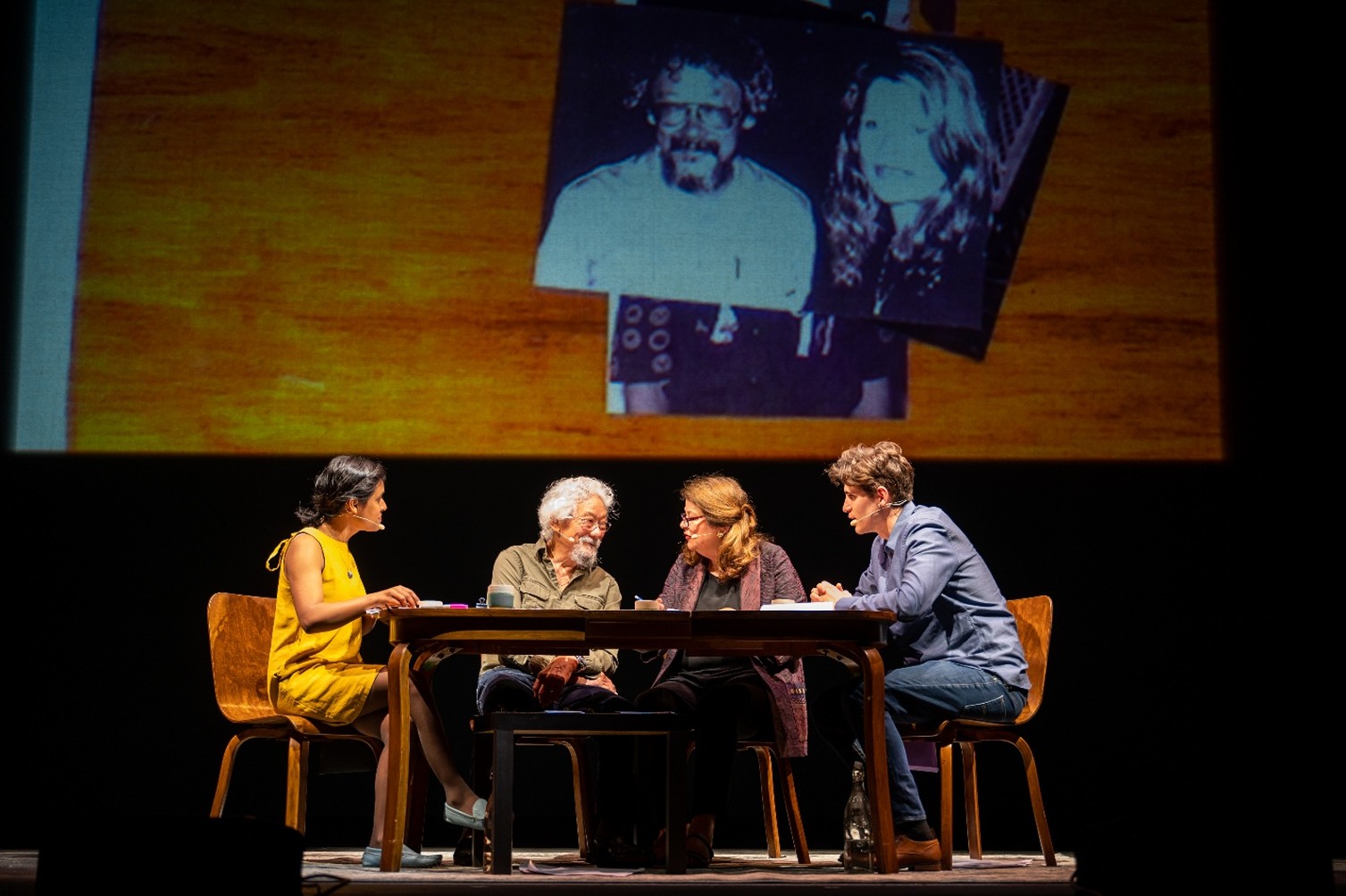
In all of its showings, Suzuki and Cullis are joined on stage by dynamic young theatre couple Miriam Fernandes and Sturla Alvsvåg. The only set is a mahogany table with four chairs. The cast doesn’t require anything else. All the power of What You Won’t Do For Love is in the storytelling and the storytelling alone. If done outdoors, dialogue like this would take place around a roaring campfire, like our ancestors used to do.
All the actors play themselves, pretending to be enjoying a leisurely dinner in the countryside. Suzuki and Cullis have been a happily married couple for fifty years and have a well-stocked supply of stories. Fernandes and Alvsvåg, also deeply in love, don’t have quite as much life experience. But they have a few stories of their own that encompass love and compassion, such as Alvsvåg’s heroic rescue of a man who nearly jumped to his death in front of a train.
Love for our fellow human beings, plus the love we should give back to the planet are the nucleus of what makes up an intellectual but amiable ninety-minute conversation amongst the cast. And they cover many topics of interest and concern: the rights of Indigenous peoples around the world to defend their land against developers. The everlasting importance of community support during an environmental crisis, such as a forest fire or a flood. The many creatures we share the planet with. Romantic Era nature poetry. Raising children responsibly.
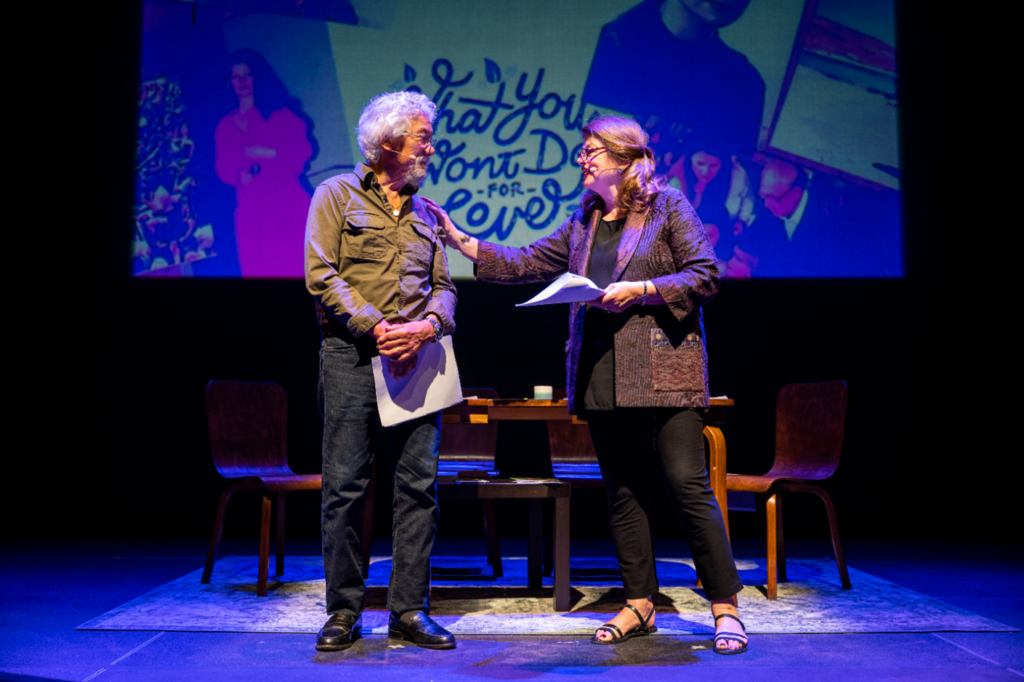
These are four very likeable people who use comprehensible language that never alienates the audience. As a couple, Suzuki and Cullis are humble, pleasant, approachable, and wise. Fernandes and Alvsvåg are charming, energetic, and eager to learn. David Suzuki is a man of culture as well as science, who firmly believes that humanity should strive for a Renaissance-style education that gives equal respect to the sciences and the arts. He points to Leonardo Da Vinci, dual artist and inventor, as the ideal. Scientists should read and appreciate poetry, and literature enthusiasts like Cullis can also, in turn, become adept at understanding ecosystems. An eloquent poem about nature that Suzuki wrote as a thirteen-year-old boy is the soundtrack for a film reel of adult Suzuki exploring a forest with his wife. It’s a tender and down-to-earth pause in the ongoing discussion.
There is one aspect of the play that is slightly ponderous. It is understandable, and it makes sense, that the play loyally adheres to its central premise: the older generation passing on valuable wisdom to the young generation. However, there were some instances where the balance between the participants in the conversation seemed somewhat uneven. The younger couple are not really given the opportunity within the short ninety minutes to share as many of their own viewpoints on climate change as the older couple, despite being the representatives of their age group. Fernandes and Alvsvåg, whose generation is expected to shoulder the burden of the climate change crisis next, express fear and anxiety for the future at many points. But the audience is mostly left wondering, what are their own solutions? Their own plans? How will they educate their children about environmental stewardship, if they choose to have children at all?
Suzuki’s paternal concern, as both a father and a grandfather, for the inheritors of a planet currently sinking under the weight of unchecked greed, is profound. He speaks fondly of activist Greta Thunberg, who is currently leading the youth charge for climate action and frequently and openly expresses her disgust for late-stage capitalism. “You shouldn’t have to do this,” he reportedly said to her when they met in person. The two young people who join Suzuki at the table on stage, on the other hand, are positioned by the play’s script to listen more than speak. They play the role of students in this quartet, and the dynamic suggests a question. Will What You Won’t Do For Love one day have a sequel where Fernandes and Alvsvåg are the main characters, offering their own hard-earned wisdom to a younger pair?
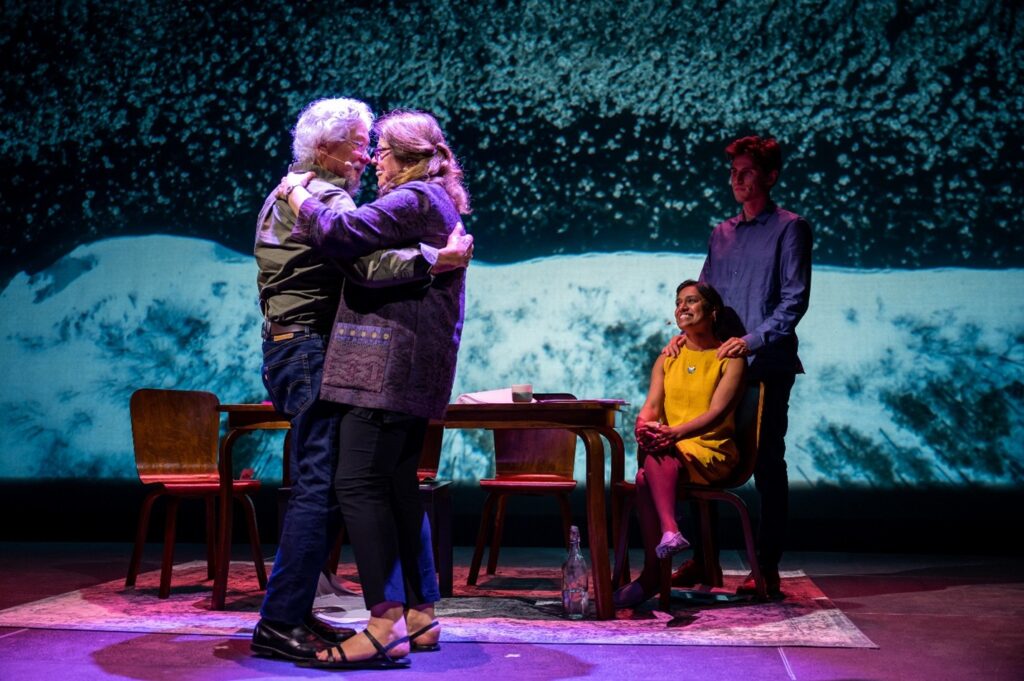
What You Won’t Do For Love’s next performance will be at the Kingston Grand Theatre on March 11, 2026. From there, it will make its way through several more Ontario cities before finally landing in Ottawa on Wednesday, March 25, 2026, for its farewell performance. Interested attendees can check Why Not Theatre’s website and their local theatre’s website for showtimes. Anyone who attends the show is advised to stay for the twenty-minute Q&A session at the end, where audience members are given the opportunity to ask David Suzuki and Tara Cullis questions about their environmental concerns. It’s an indispensable chance for self-education.