By Kezia Royer-Burkett, Local Journalism Initiative Reporter
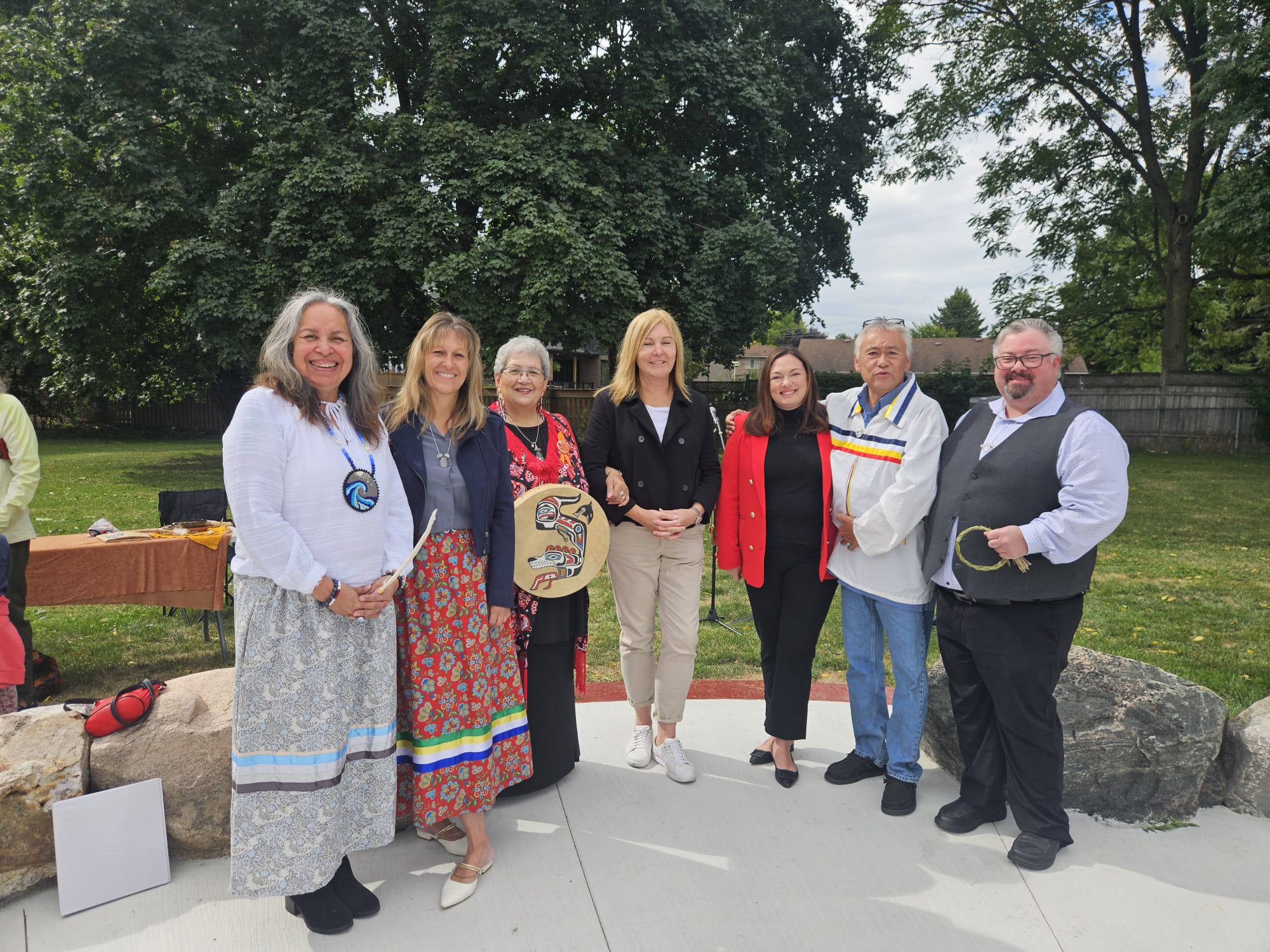
On a bright morning filled with emotion, reflection, and hope, Burlington officially opened SweetGrass Park, a revitalized space that represents both the city’s ongoing journey of reconciliation and its commitment to community unity. Once known as Ryerson Park, the space now carries a name and purpose that acknowledges Indigenous traditions and the calls to action from the Truth and Reconciliation Commission of Canada.
“It is a great honour to welcome everyone here this morning to the official opening of SweetGrass Park — a space that now carries a new meaning, new purpose, and a renewed spirit of community,” said Mayor Marianne Meed Ward, addressing community members, Indigenous leaders, and residents gathered for the ceremony.
The renaming of the park follows the lead of many institutions across Canada — schools, parks, and universities — that have changed names tied to Egerton Ryerson, a figure deeply linked to the establishment of the residential school system. For Burlington, the shift was about more than a name; it was about creating a place of learning, reflection, and healing.
The transformation of SweetGrass Park was a collaborative effort, guided closely by the Mayor’s Indigenous Advisory Circle, which includes WhiteEagle Stonefish, Kate Dickson, and Stephen Paquette. Their wisdom, teachings, and input shaped not only the vision for the park but its physical design. The city’s Landscape Architect James Lockheart worked alongside them to bring these ideas into form.
“There was a great deal of consideration that went into each and every element that you see here, from the native trees to the pollinator and medicinal plantings around the site,” said Lockheart. His design incorporated cultural symbols and sacred teachings, weaving them into a landscape intended to support both ceremonial practices and everyday reflection.
The Advisory Circle hand-selected the Grandfather and Grandmother stones, wrote the script for interpretive signs throughout the park, and ensured that every detail reflected Indigenous traditions. Meed Ward extended thanks to those who made the project possible, including Marion Rabeau, Emily Beijes, and Emilie Cote. “Your commitment to respect, engagement, and thoughtful design is evident in every corner of this park,” she said. She also acknowledged the generosity of anonymous donors, adding, “Your support has helped create a space that will serve generations to come.”
For Meed Ward, the park’s renewal responds directly to the Truth and Reconciliation Commission’s 2015 Calls to Action, specifically Call to Action #47, which urges governments, including municipalities, to repudiate colonial concepts used to justify European sovereignty over Indigenous peoples and lands. “SweetGrass Park is a tangible step forward, a place for reflection, learning, and connection,” she said. “Let this park be a place where stories are shared, healing begins, and relationships grow.”
Among those sharing stories was Indigenous educator and leader Stephen Paquette, who described SweetGrass Park as an opportunity for unity. “SweetGrass Park is about unity, and it’s one of those many teachings of the sweetgrass — that as individuals we can be easily broken, but when we come together, and we’re woven like that sweetgrass, we’re strong,” he said. “It’s an opportunity for unity, not just for our Indigenous community, but for our allies. By coming together in unity, we’re going to create safer communities, healthier communities. It’s an opportunity for non-Indigenous people to come and sit with Indigenous people and get different teachings, which is all part of Truth and Reconciliation.”
Paquette also shared his personal connection to sweetgrass. “When I was a young guy, just learning my culture at the age of 19 or 20, that’s when I was introduced to sweetgrass. I was taught that it was one of the four sacred medicines, and the one that always resonated with me was about unity. It’s used to purify our minds, our hearts. It’s used to help heal our body, to help us think in a good way, feel in a good way, and to live life in a good way. For me, that’s unique, and that’s what this park represents.”
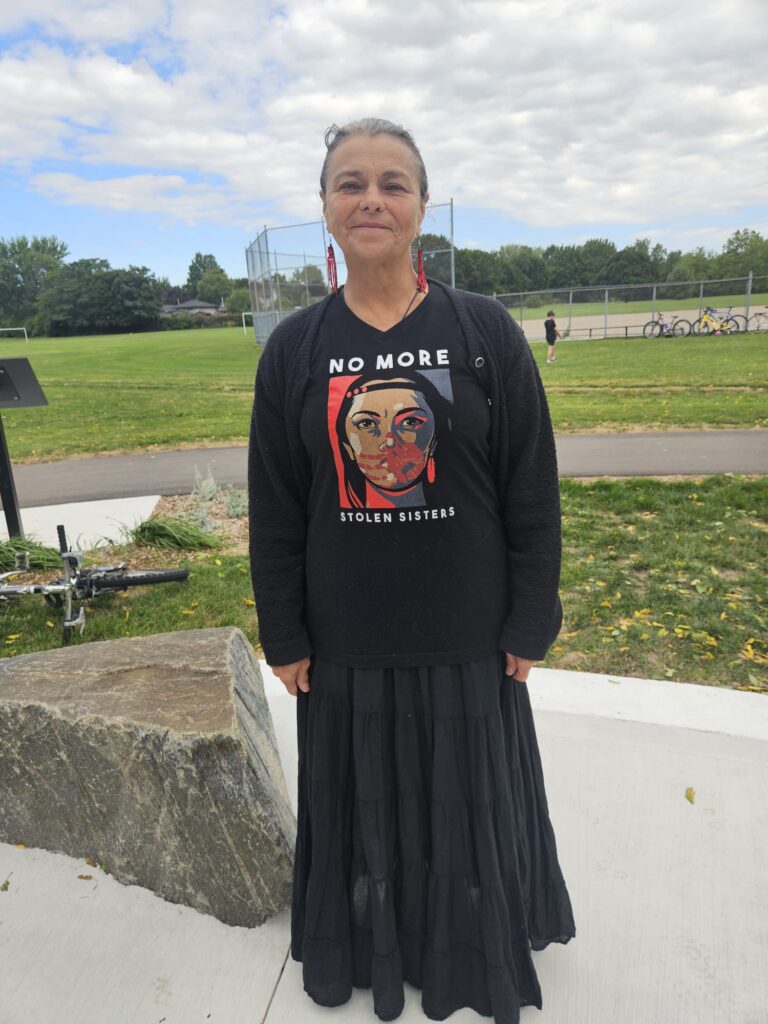
For some, the ceremony was deeply moving on a personal level. Burlington resident Carrie Chilcott, who has lived in the city since 1969, was brought to tears as she reflected on her lived experience as an Indigenous woman in the community. “My tears are not tears of sadness or sorrow, they are tears of joy and happiness,” she said. “My shoes are off, and I am grounding down to Mother Earth in this beautiful space. I know the Ancestors are here.”
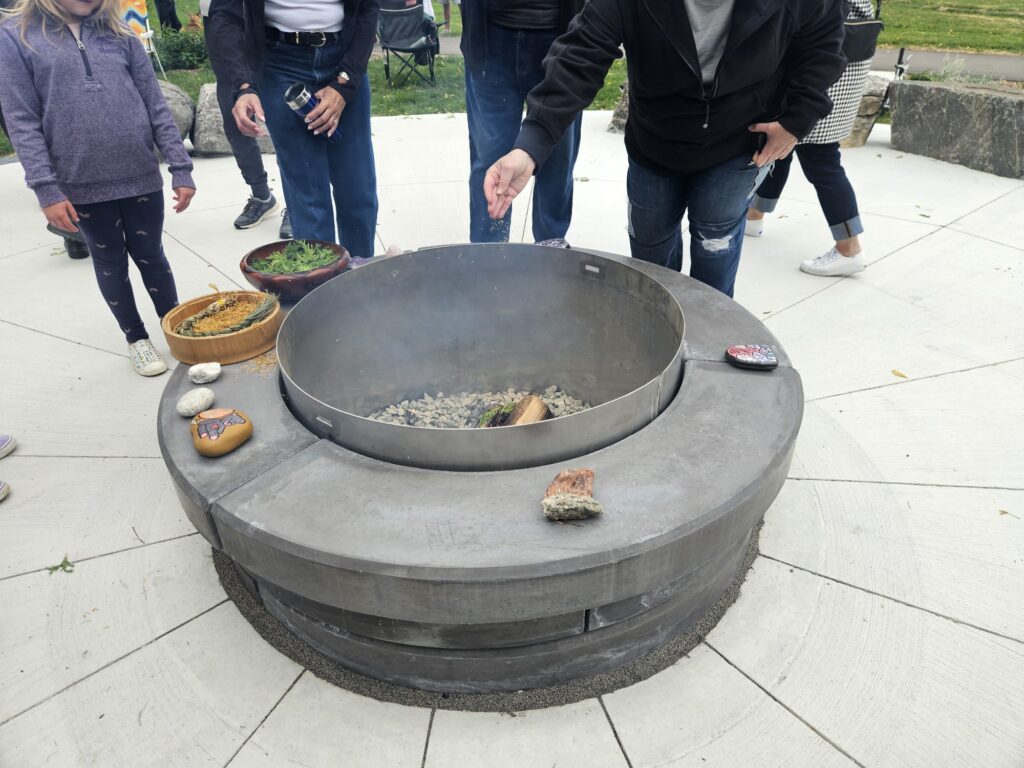
The park also features a ceremonial fire pit, which will be available for booking by community groups and organizations. Denise Beard, senior manager of community development at the City of Burlington, explained that the city is still finalizing the process, but groups can email Indigenous@burlington.ca for more information.
Throughout the event, members of the Indigenous Advisory Circle emphasized the teachings embedded in the park’s design. Kate Dickson explained, “Indigenous knowledge is holistic. It cannot be compartmentalized; it cannot be separated from the people who have it. So once you have your knowledge in place, you cannot be separated from it, no matter what.”
For Dickson, the natural elements incorporated into the park reflect the interconnectedness of life.
“Everything that exists on Mother Earth is considered our teachers,” she said. “The rocks, for example — the grandmother and grandfather rocks — within them is the soul. There would be no bird without these. They hang together, and they are part of our world and part of our lives.” She also noted the significance of the trees, or “standing people.”
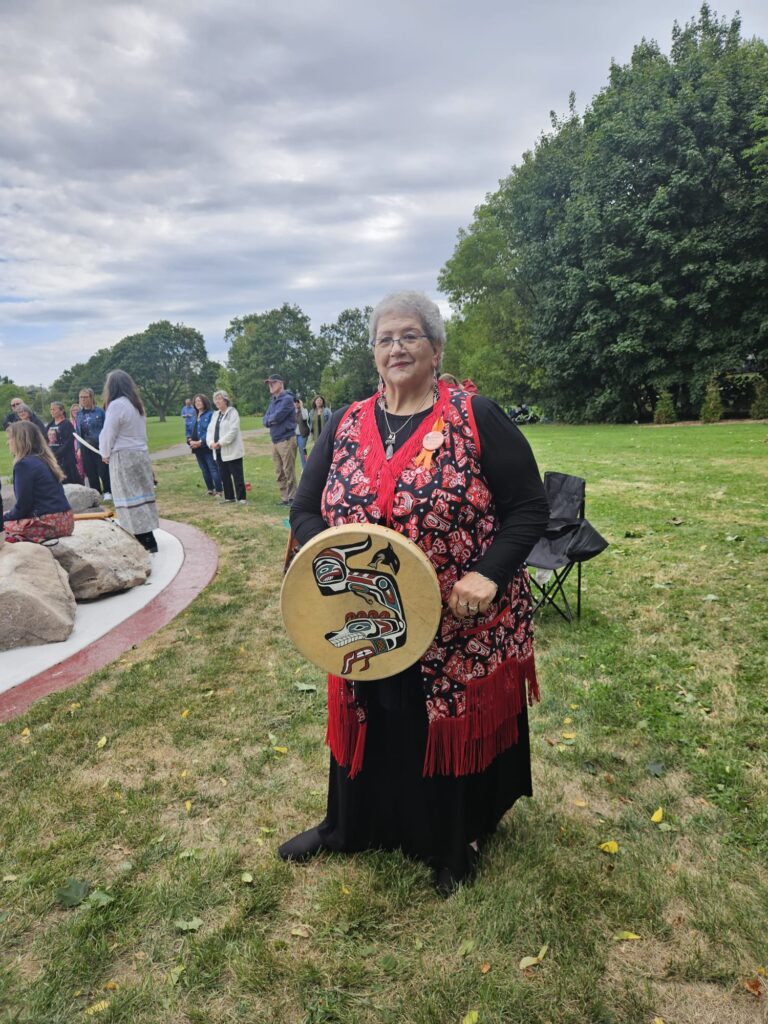

“You can understand why we don’t want an awful lot of clear-cutting with the standing people. They stand for centuries in protection of youth,” she said.
“Our stories that have come down intact through eons of time have taught us that reverence for the land which gave us birth is why we see ourselves as caretakers, not the owners of the land,” Dickson added.
The park incorporates elements of the medicine wheel, which represents the unending circle of life. Its four quadrants — east, south, west, and north — each hold teachings about directions, seasons, elements, and stages of life. Sweetgrass itself, planted within the park, symbolizes unity and strength.
The ceremonial spaces were carefully designed with intention. Lockheart described how the fire pit space was positioned based on the full moon, with 13 stones representing the cycles of the moon. A contemplation garden of sweetgrass was also planted along Tuck Creek, creating a serene space for quiet reflection.
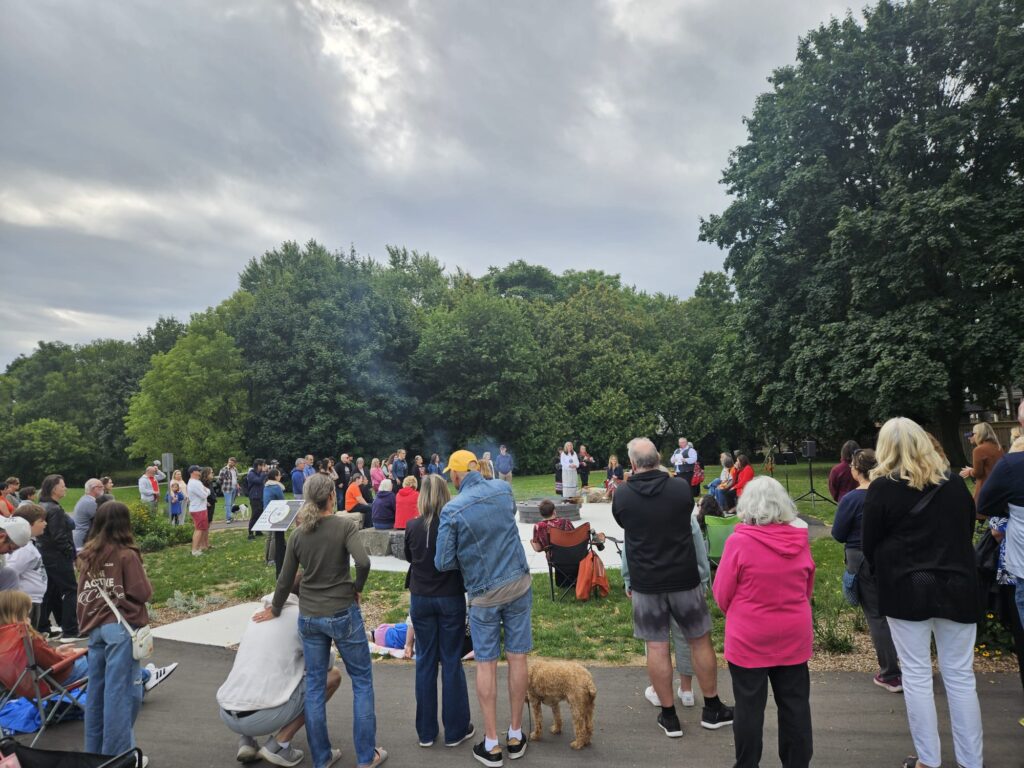
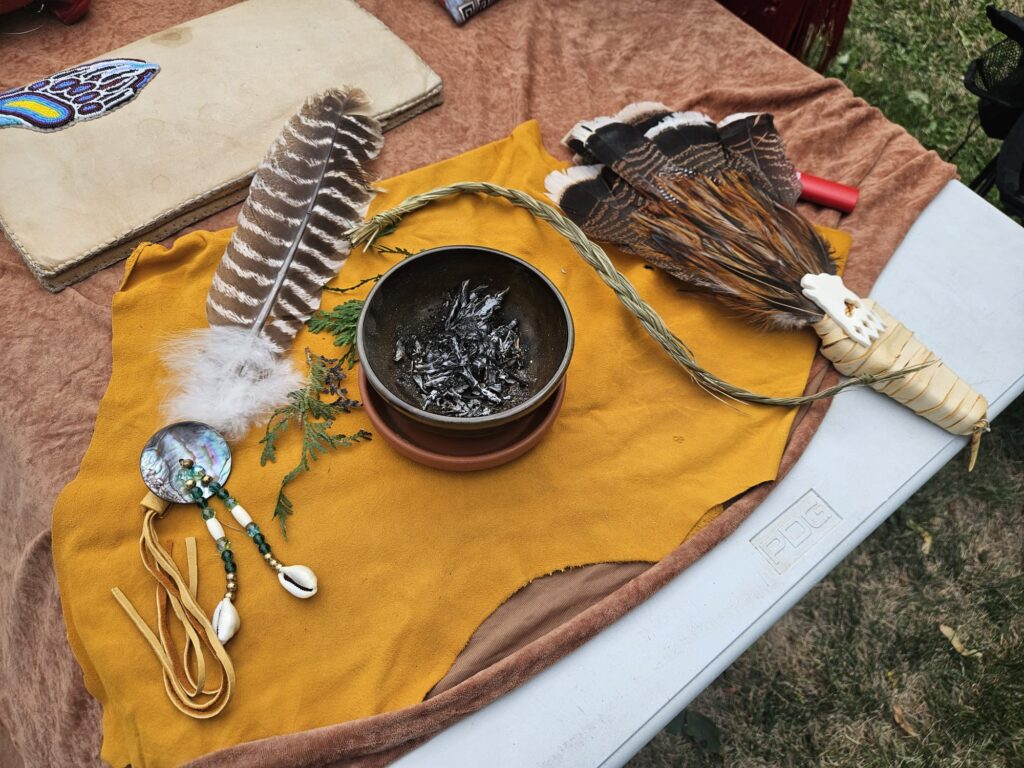
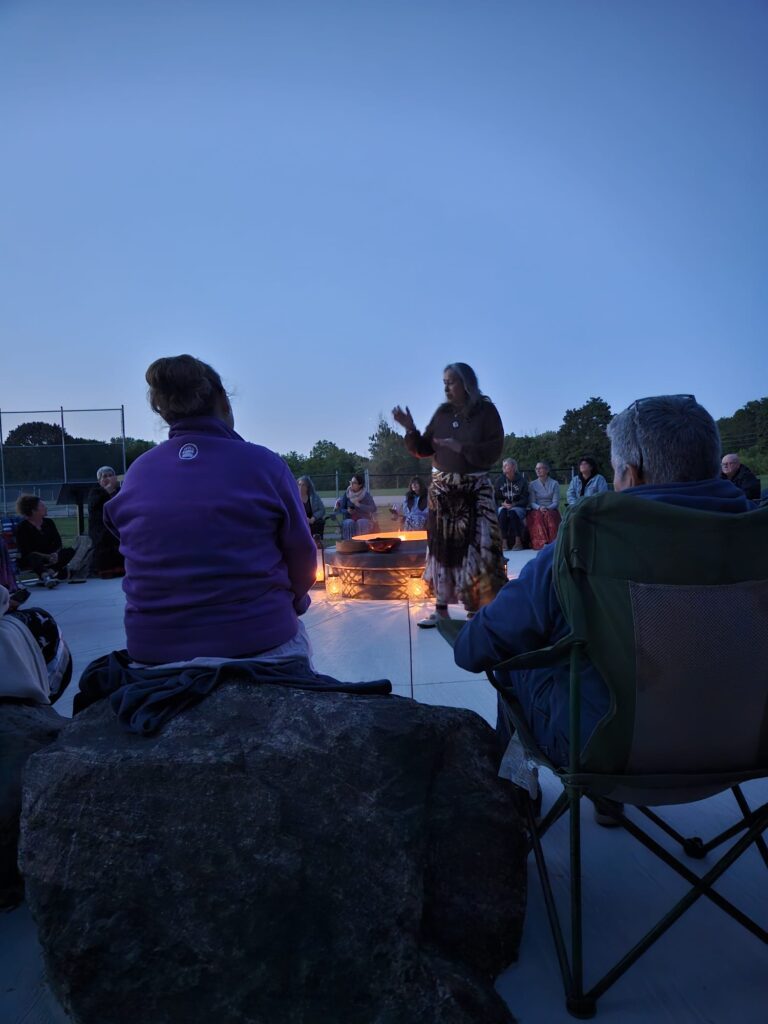
That intention came to life on September 8, when SweetGrass Park hosted its first full moon ceremony, attended by approximately fifty people. Women wore skirts as part of the tradition, and participants were invited to release something negative into the fire pit. Holding tobacco in their left hand, they set intentions of release before offering it to the fire. WhiteEagle Stonefish led the ceremony, guiding attendees through reflection and renewal.
For Meed Ward, the journey to SweetGrass Park has been a personal one as well. She recalled moving to Burlington in 2000 and not knowing any Indigenous people. Over time, she has learned through relationships, gift-giving traditions, and cultural teachings shared with her.
“I am so moved and inspired every day by the people I’ve gotten to know,” Meed Ward said. She reflected on being gifted a ribbon skirt, a moment that taught her about walking “in a good way” with community.
What began as a painful reckoning with the legacy of Egerton Ryerson and residential schools has now become a place of healing. As Meed Ward emphasized, this is not the end of Burlington’s work toward Reconciliation but a step along the journey. “This renewal is guided by consultation with the Indigenous Talking Circle and the City of Burlington’s commitment to celebrating Indigenous peoples’ traditions and unique culture,” she said.
SweetGrass Park, located at 555 Woodview Rd., now stands as a ceremonial space, a contemplative garden, and a place where Indigenous and non-Indigenous people can come together in unity. It is a reminder of the strength found in weaving together diverse voices and a testament to the ongoing responsibility of reconciliation.