By Sydney Alexandra, Local Journalism Initiative Reporter
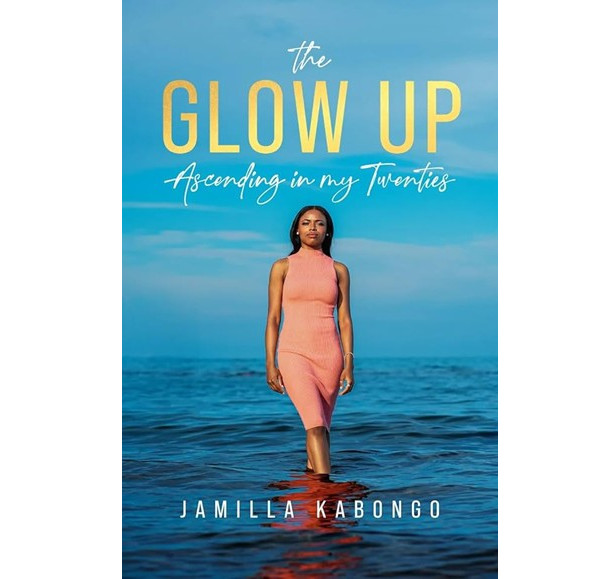
In her candid and inspirational memoir, The Glow Up: Ascending in My Twenties, Canadian author Jamilla Kabongo invites readers into the raw truths of her life: hardships, radiant victories, and the transformative growth that reshaped her path. With unflinching honesty, Kabongo reflects on the pain, resilience, and revelations that guided her toward healing and forgiveness, which have become lessons she hopes will inspire others navigating their own “glow up.”
Local organization Halton Black Voices is hosting Kabongo for a book launch event on June 28 from 12 p.m. to 4 p.m. at 454 Rebecca St. in Oakville. Kabongo will return to Halton on her book launch tour in the fall, at Indigo in Burlington Centre, on Oct. 18 from 11 a.m. to 4 p.m.
A “glow up” typically refers to a significant transformation, often centred on physical appearance. But Kabongo decided to challenge this definition, offering a profound perspective rooted in self-acceptance and inner growth. “When I think of the glow up, I look within myself: Who am I? A glow up is about figuring out who you are, being comfortable in your own skin, and recognizing not just your flaws but also your beauty. Those flaws help you become a better, more beautiful person. It’s about understanding yourself, having confidence, and then sharing that light with others.” For Kabongo, this journey of self-awareness began with confronting a long-held silence in her life: her father. She explains that healing truly began when she faced the questions she had long avoided. “He was a taboo subject for the longest time. No one talked about him, so I thought that I couldn’t really ask any questions. Eventually, I reached a point where I needed the full story.” That search for truth prompted deeper reflection, as she explored the impact of both his brief presence and his prolonged absence on her identity and emotional development.
As she began writing, Kabongo realized that much of her personal evolution stemmed from moments she once forgot. Revisiting them was both powerful and painful. “I talk about how his presence in my life for 18 months and then his absence for the remainder of my life thus far shaped me into the woman I am today,” she shares. “I also explore other adversities I’ve been through and the time in between, which pushed me to go on this journey of self-discovery and learning how to heal from the experience and to lighten up my spirit.”
While developing her manuscript, Kabongo initially struggled with the focus on her father. It wasn’t something she had planned. “It was hard at first. I only touched things on the surface. When my editors encouraged me to dive deeper and centre the story on my father, I cried. It felt like I was exposing my biggest wound to the world.”
But over time, she recognized the emotional freedom that came with telling the truth. “I stopped being afraid of how others would perceive it. I knew I wrote from a place of love, love for him, and for myself. I feel free. I know I’m whole. Even if my father wasn’t able to show up the way I needed, I know he chose me. I’m loved.”
Reflecting on her past brought other buried experiences to the surface, including the painful memory of being on the brink of homelessness at age 12. Writing about that time proved to be one of the most difficult moments of her journey. “It’s one of those moments where you look back and can’t believe what you went through. Writing it required strength. I finally allowed the little girl within me to cry.”
The process of healing didn’t end with the memoir’s completion. It sparked a new idea — a children’s version of the book, especially for children living through similar pain. “My audience has always been twenty-somethings because I believe that’s when many of us start truly reflecting. But healing earlier is even better. After speaking with teachers, librarians, and child and youth workers, I realized the conversation around growing up without a father is missing for kids.” She adds, “I think back to myself at that age and ask: what was I confused about?”
Through this evolving process, Kabongo began to better understand the deep connection between forgiveness and closure, two concepts that are often spoken about together, yet rarely fully understood. “It’s easy to hold on to anger or resentment, but forgiveness is ultimately for yourself. Holding on to pain isn’t healthy, emotionally, mentally, spiritually, or physically. Forgiving doesn’t mean forgetting, but it does mean freeing yourself.”
Still, she acknowledges that closure is not always something that arrives on command. “I’m still working on it. We often want finality, but sometimes we don’t get the answers we think we need. Healing means learning to be at peace with that.” This inner peace is at the heart of Kabongo’s message. For her, the glow up is a continuous, intentional effort to nurture joy, resilience, and self-respect. “You get to decide what to carry with you and what to leave behind. You can either hold on to baggage or choose to free yourself and move forward.”
Kabongo offers heartfelt words of comfort to anyone who may be struggling with their own trauma. She emphasizes that healing is not a one-size-fits-all journey. “Healing from trauma isn’t linear. It comes with ups and downs. There will be moments when you think you’ve moved past something, only to realize you’re not quite where you thought you’d be, and that’s okay. You have to give yourself grace and space, because trauma often has layers. Something you’ve already processed might show up differently later, and you’ll need time to make sense of it as you continue living your life.”
She encourages people not to rush into deep emotional work without care. “Start small, don’t feel like you have to dive in all at once. And make sure you have a strong support system. You don’t have to go through it alone. Talk to your family if you can, lean on friends, seek out a therapist, and hold on to the things that bring you joy.”
Kabongo defines her own glow up as a continuous relationship with self-love. “I speak to myself with kindness, and I celebrate my wins, big and small. I bring joy into my life. I’ve let go of the baggage so I can focus on loving myself more deeply.” She continues, “When you treat yourself with love, patience, and kindness, you glow, not for others to notice, but because your mind, body, and spirit are aligned. It’s all connected. And living in your purpose amplifies that glow.”
When Kabongo sat down to write The Glow Up: Ascending in My Twenties, she wasn’t just documenting her life; she was opening a door for others to join in healing themselves. In this honest, reflective, and empowering memoir, she invites readers to begin their own healing journeys. Through her triumphs and trials, Kabongo reminds us all that transformation isn’t about becoming someone new; instead, it’s remembering and wholeheartedly embracing who you’ve always been.
Tune in to The Glow Up podcast, where Jamilla Kabongo guides listeners through the themes of her memoir, chapter by chapter, sharing deeper insights and how she continues to evolve and glow beyond the page. Join her in person on June 28 in Oakville or in Burlington on Oct. 18 at Burlington Centre’s Indigo.
For more on her journey and upcoming projects, visit Jamilla Kabongo’s website.