By Jack Brittle, Local Journalism Initiative Reporter
Burlington is moving closer to finalizing its 10-year Culture Plan after wrapping up its final community session this month, with public feedback continuing to shape the draft recommendations. The plan will help inform the city’s priorities and objectives regarding arts and culture programs and services over the next ten years.
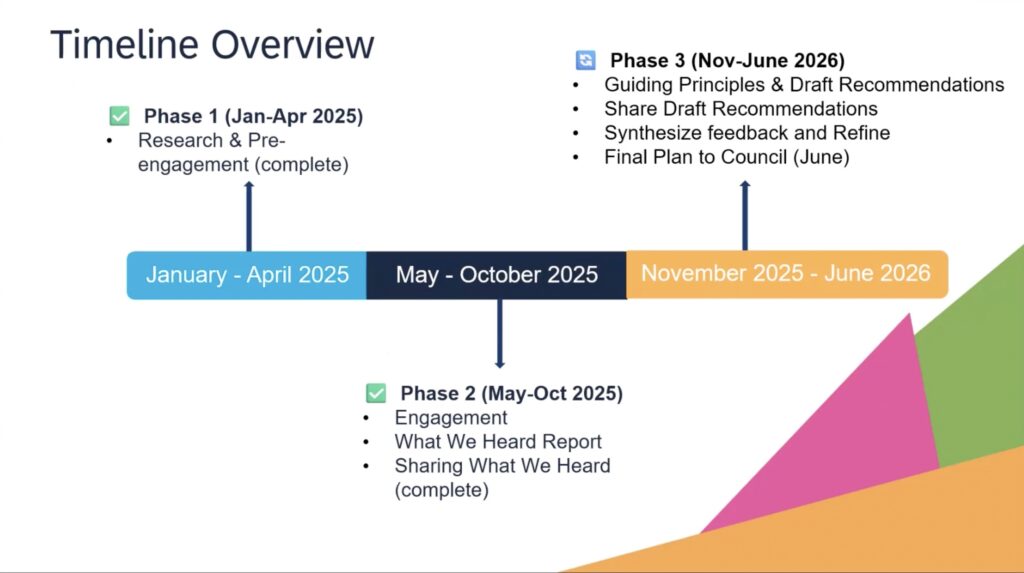
Community outreach began in May of last year and has included various workshops and pop-ups, as well as a survey that closed in August 2025.
Kim Ingram, senior manager of cultural services for the city, hosted the meeting and set the tone for attendees.
“This is a discussion, it’s not a debate,” Ingram said. “We’re here to listen, learn, and refine. There will be different perspectives in this room. And you know what? That’s a strength. The goal isn’t to win an argument. It’s to build something better together. Your input has shaped this plan so far, and it will continue to shape it.”
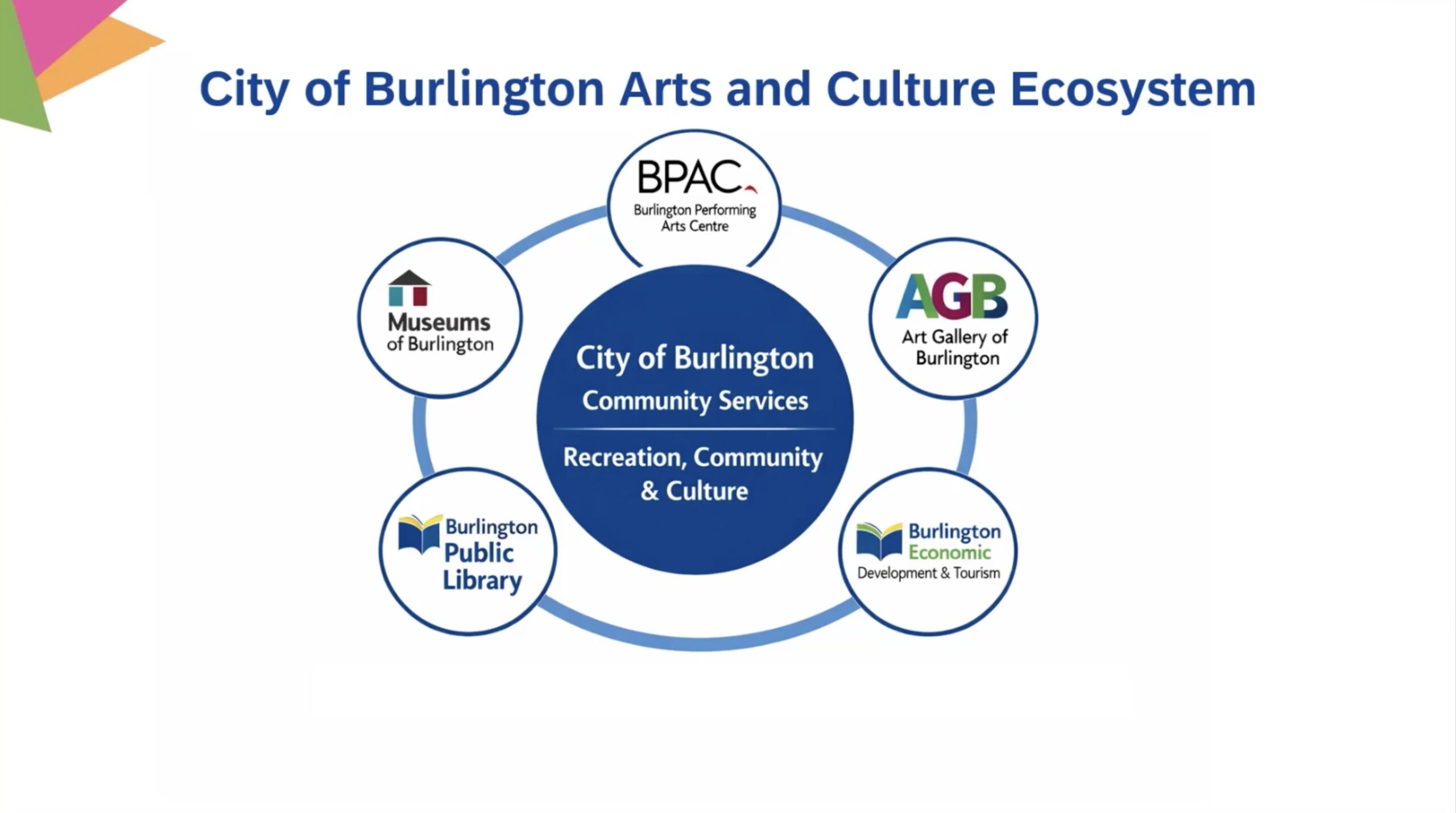
Ingram said that through the plan, the city is looking to “strengthen alignment across this ecosystem.”
According to the city, over 1748 people participated in Culture Plan community engagement, or 0.93% of Burlington’s population.
“Response rates for municipal culture plans typically range between 0.5 and 1% of the population,” Ingram said.
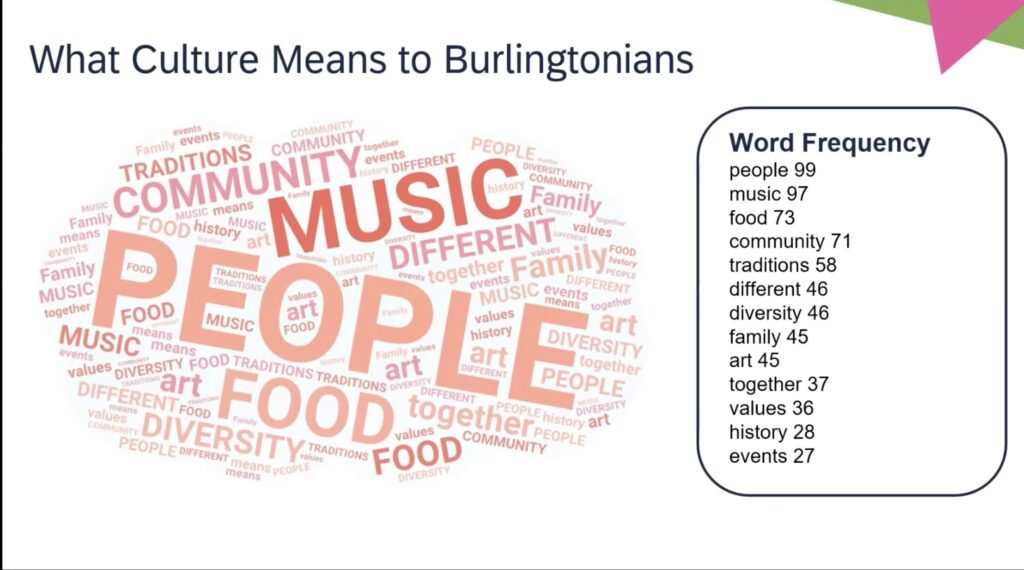
“What people said to us last year is, ‘I really enjoy experiencing different cultures through musical and culinary experiences,’” Ingram said. “That says a lot about how we can approach sharing our different cultural experiences going forward, over the next ten years.”
She then displayed the city’s biggest takeaways from the engagements with residents.
“We heard that cost is a system-wide barrier, not just for residents, but for artists and cultural organizations,” Ingram said. “Over 85% of our survey respondents said that culture was important to their overall wellbeing, and that culture is central to belonging, connection, and, more importantly, mental health.”
The top five insights listed were: funding and affordability; spaces and sustainable infrastructure; downtown and neighbourhood needs; governance and systems; and transit and access.
The city revealed the 10-year overarching goal of the plan: “To broaden the role of arts and culture in the City of Burlington beyond program and service delivery to support cultural placemaking, community wellbeing, and economic opportunity.”
A vision statement was also presented: “Burlington is a city where culture is central to wellbeing, shaping how people experience place, connect across communities, and generate economic opportunity.”
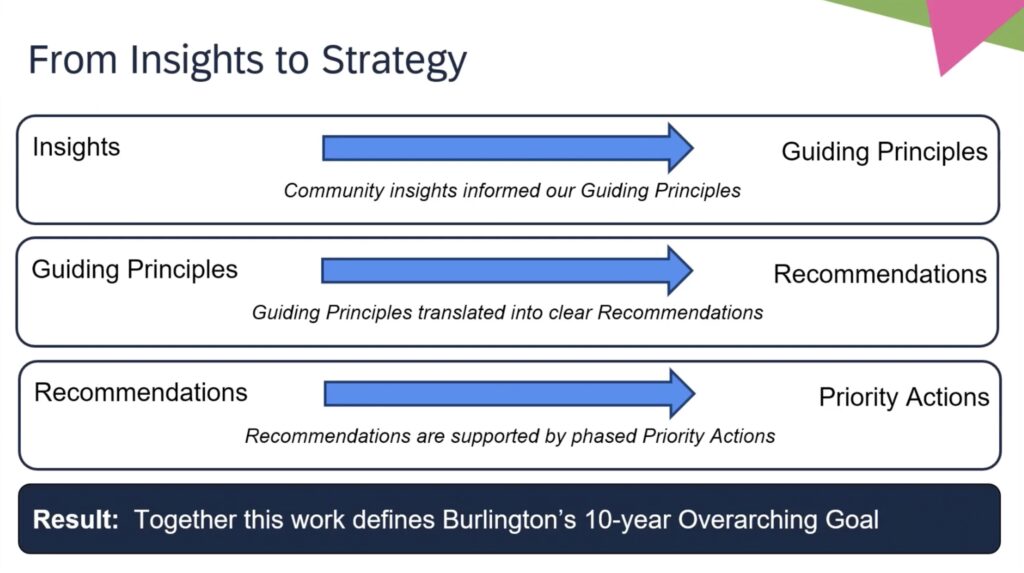
Ingram then went through all of the plan’s guiding principles, each of which had draft recommendations designed to reach that principle’s goal. Attendees were then polled on which of the recommendations the city should prioritize to follow the principle.
The first principle was to “communicate clearly and work collaboratively.”
“That strategy will focus on better storytelling, stronger promotion of cultural experiences, and clearer communication across the sector,” Ingram said. “This could include improving how cultural opportunities are shared with residents, strengthening partnerships with cultural organizations, and exploring new ways to highlight Burlington’s creative community.”
The second was to “integrate culture into placemaking and city-building,” the goal of which is to “embed culture into daily civic life.” Ingram explained that the city is looking to develop and implement a festival and event strategy to coordinate and “bring greater clarity and consistency” to how it supports large events.
The third principle was to “enable creative and cultural practice.”
“Our goal is to make the cultural sector viable, stable, and resilient,” Ingram said.
Accordingly, the city is looking to implement a “Percent for Art” policy for municipal capital projects. “It can be a fee, anywhere from about 0.5 to 2% is usually added to those capital projects,” Ingram said. “This creates a more predictable and structural funding mechanism for public art, rather than relying on the occasional or one-off investments that we are operating on now.”
Ingram also noted that part of meeting this principle is expanding grant funding.
“Not only will we be looking to increase the investment, but we’ll also be looking to realign existing cultural supports,” she said. “There will be a more transparent, robust, and professionally adjudicated funding stream with the capacity to scale over time.”
This also means diversifying grant streams to support cultural events.
The fourth principle is “culture for all.” Ingram explained that this principle requires assessing city-funded cultural programs and events to identify and reduce barriers.
“That’s financial barriers, physical barriers, all of the barriers; we need to basically do assessments to see how our programs are doing today,” Ingram said.
Once the city has that information, it needs to dedicate resources to address those gaps.
The final principle is to plan for sustainable cultural spaces. The first step to meeting this goal is to conduct a citywide audit to understand the spaces already in Burlington and how they’re being used.
“The audit would help identify which spaces are fully utilized,” Ingram explained. “As well as [identify] where there may be gaps in access and where opportunities exist to better use underutilized or vacant spaces.”
The audit would help the city maximize the current cultural infrastructure while identifying where future investments or partnerships may be needed; Ingram said that the next step would be to build a 10-year cultural facilities plan.
“As Burlington continues to grow, it’s important that cultural infrastructure grows with it,” Ingram said. “The plan would help the city take a long-term strategic approach to cultural facilities, identifying future needs and spaces that support arts, culture, and creative activity across the community. And it will also build on the findings from that audit of cultural spaces.”
Ingram said that the team working on the plan has been collaborating with staff working on the Horizon 2050 plan, which seeks to map out Burlington’s next 25 years.
READ MORE: Burlington’s Horizon 2050 Plan Sparks Discussion on Growth and Environment
They are also working with Burlington Economic Development and Tourism, which is developing a “Destination Stewardship Plan.”
“We’ve been aligning with those because there is strong alignment between the three,” Ingram added.
Following the presentation, attendees were invited to add anything they felt was missing from the draft recommendations in the Zoom chat.
To watch the entire Culture Plan virtual meeting, click here. The City of Burlington is still accepting community feedback on the draft recommendations.
The final Culture Plan and report are scheduled to go to council in late spring 2026.