By Jack Brittle, Local Journalism Initiative Reporter
On December 12, the Ireland House Museum hosted its final After Dark event of the year, themed around Victorian Christmas.
The tour began in the museum portion of the property, where a tour guide spoke about the Ireland family tree. Lucie Marie Ireland Bush, the last descendant to live in the house, sold it to the City of Burlington for $1 in 1987, on the condition that they turn it into a museum.
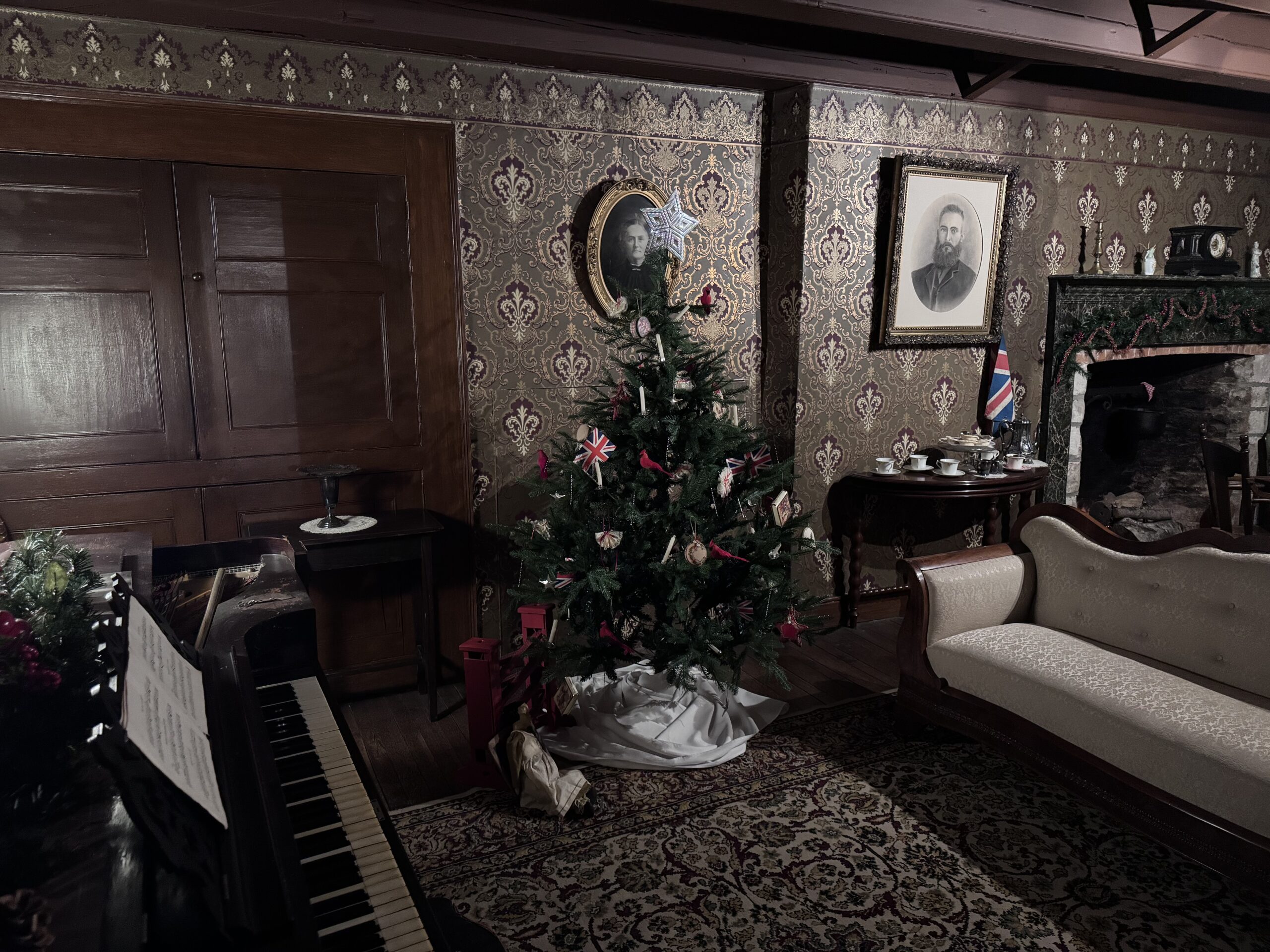
As guests entered the Ireland House proper, the guide pointed out the early versions of Christmas decorations set up in the parlour and main hallway.
A kissing ball, similar to mistletoe, was hung above the front door, made out of evergreens and berries. Tradition said that if a person refused a kiss under the ball, they would receive bad luck for the next year.
Prince Albert, Queen Victoria’s husband, introduced German Christmas traditions to the British Empire, including the Christmas tree. An early variation of a Christmas tree was placed on the table in the Ireland House parlour, which was decorated with handmade ornaments and candles. A Union Jack flag was also placed on the top of the tree.
A drawing of the royal Christmas tree was published in the Illustrated London News in 1848, which widely popularized the tradition of lighting and decorating a tree for the holiday. Today, of course, Christmas trees are ubiquitous in Christmas-celebrating households.
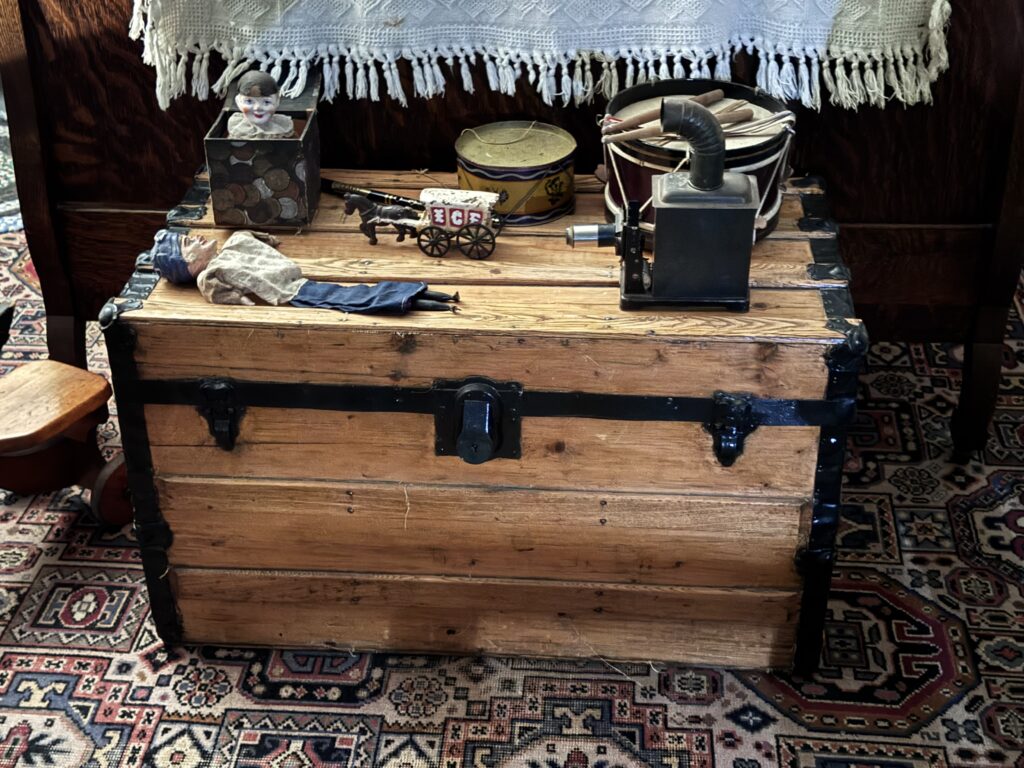
Back in the Victorian era and at the Ireland House event, gifts placed under the tree were handmade and included wooden toys, knitted hats, mitts and socks.
A wreath made of feathers, hair, and dried berries and nuts was also hung above the front door.
Attendees learned not just about décor, but also the all-important Victorian Christmas feast. The event guide described the typical mid-19th-century Christmas dinner: it consisted of goose or roast beef, with parsnips, turnips, and mashed or roasted potatoes. Squash and pumpkin from the harvest would also be taken from the cold cellar for the meal. Dessert would have consisted of plum pudding and mince pie.
Meat was usually cooked in a reflector oven, an early version of a rotisserie.
The tour guide also pointed out a dog-powered butter churner that was located in the cellar, which Lucie Marie would showcase to guests at parties. A dog would run on the device’s treadmill, which would automate the process of churning the butter. The machine was purchased from the Sears, Roebuck and Co. catalogue for $500.
The device is no longer operational.
The guide, after showing attendees a facsimile of a Victorian-era Christmas postcard, pointed out that everyone in the card was depicted drinking alcohol — even the children. This was controversial amongst the temperance movement of the time.
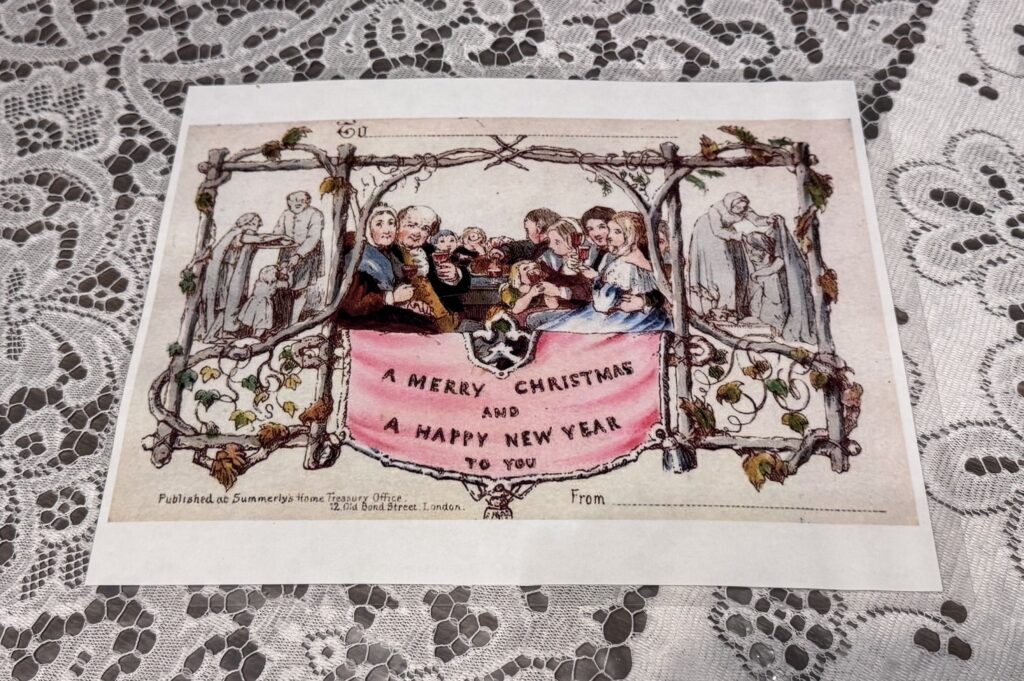
These postcards greatly popularized the use of Christmas cards, starting in the late 19th century. It also featured depictions of the less fortunate, who are represented on either side of the card.
The guide mentioned that although the Victorian-era facsimile card says “Merry Christmas,” as did others of its kind at the time, the prevailing greeting in contemporary England is “Happy Christmas,” a usage popularized in the 20th century after George VI used it in a royal broadcast.
Other festive traditions of the period were also on display: Christmas crackers were laid out on the table, which, at the time of their invention, contained bonbons and coated almonds. Oranges were a popular stocking stuffer at the time, due to their relatively high price because of importation.
The room’s Christmas tree was decorated with a precursor to tinsel, twisted strips of tin, which reflected candlelight to look like icicles. By the late Victorian era, the ornaments on the tree would still have been handmade, but most gifts, such as dolls, chalkboards and games, were increasingly purchased from stores.
The tour guide also explained that the name “Boxing Day” originated from the tradition of royal employees receiving Christmas food and desserts in boxes on the day after Christmas. Due to their responsibilities to the monarch, they could not indulge in the festivities the previous day; thus, Boxing Day developed into a day off in its own right.
To learn more about the Ireland House Museum, click here.