
By Kezia Royer-Burkett, Local Journalism Initiative Reporter
At Burlington City Hall, discussions around the future of Burlington Economic Development and Tourism (BEDT) have intensified, with councillors, staff, and BEDT board members weighing in on whether the organization should remain an independent entity or be absorbed into the city’s corporate structure.
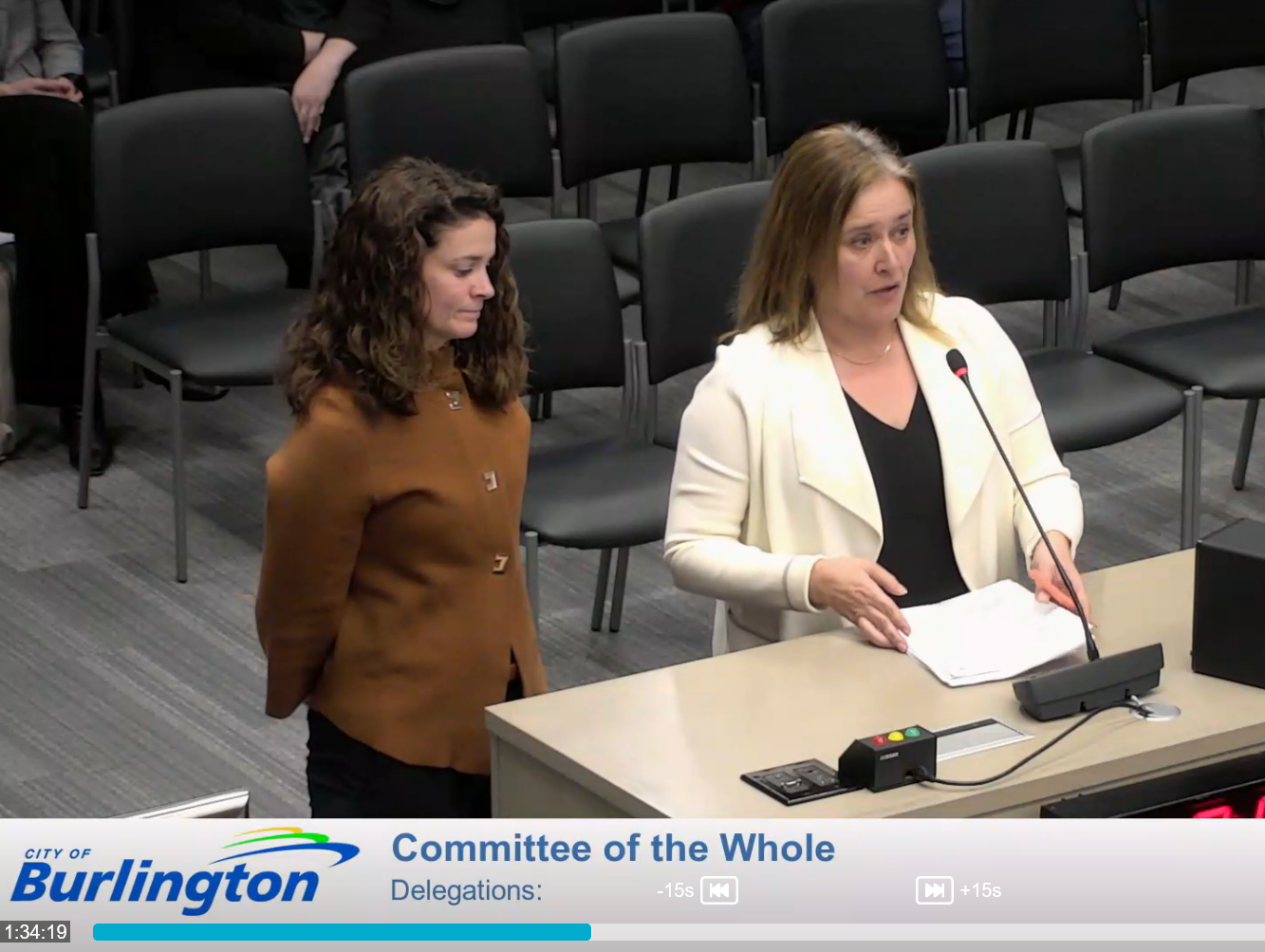
At the Committee of the Whole meeting on November 3, 2025, the council reviewed a third-party report titled Findings from Third-Party Review of Burlington Economic Development and Tourism (CAO-06-25). The report was largely unfavourable to BEDT’s current model, suggesting the city internalize its economic development and tourism functions “to optimize existing resources, minimize duplication, enhance operational effectiveness, and align with broader strategic priorities.”
The recommendation was met with strong opposition from BEDT’s board and the Burlington Chamber of Commerce, who both argued that independence fosters stronger collaboration and community trust.
“The Burlington Chamber of Commerce does not support this recommendation,” said Chamber President and CEO Terry Caddo, speaking on behalf of BEDT. “We strongly believe that Burlington Economic Development and Tourism functions most effectively as an independent organization rather than a department within the municipal government.”
Caddo emphasized that the Chamber was not consulted for the report, calling this a significant oversight. “The Chamber was not engaged or consulted by the report’s author in its preparation,” he said. “The report stated that the Chamber and [Burlington] Economic Development were duplicating information, and that truly is a false statement. We spoke on a regular basis to make sure we didn’t duplicate efforts.”
He urged the council to maintain the current model. “City council should preserve the collective framework that has served Burlington so effectively. The model is proven to foster innovation, build partnerships, and strengthen the city’s economic resilience.”
Julie Ellis, a board member of BEDT, added that dissolving the organization could have financial and legal consequences for the city. “BEDT fulfills the provincial requirement that 50% of net Municipal Accommodation Tax revenues flow to a qualified nonprofit tourism entity,” she explained. “This amount represents approximately $1 million annually. If dissolved, the council would need to re-establish a new nonprofit to maintain compliance, creating unnecessary administrative and legal costs and delays.”
Ellis also pointed to the value of the current partnership model. “The Municipal Accommodation Tax is a reinvestment mechanism that strengthens Burlington’s visitor economy,” she said. “The city and BEDT now have a unified model that works, and in fact, staff reports indicate that the same costs would need to be spent recreating the current structure if BEDT is brought in-house.”
Following the November 3 meeting, a Special Committee of the Whole was called for November 10 from 2 p.m. to 4 p.m. After an extensive discussion between the council and Chief Administrative Officer Curt Benson, the meeting recessed to allow for amendments. When council reconvened, Mayor Marianne Meed Ward acknowledged the uncertainty shared by councillors.
“We heard the concerns of council members,” said Meed Ward. “There’s not enough information, and more work needs to be done before making a decision, one way or the other. We’ll direct staff to report back in April 2026 with two options: an integrated model or a service agreement model. We’re not making a decision today.”
Councillor Paul Sharman, who chaired the meeting, called a vote to defer the decision and remove the portion of the recommendation regarding immediate integration. The motion passed, with the council agreeing that a final decision would be made in April 2026 after BEDT submits the requested reports.
Councillor Rory Nisan questioned the six-month delay, suggesting that the council could make a decision sooner. “We should make a call sooner rather than later,” he said, but ultimately voted in favour of the deferral, acknowledging the need for greater clarity.
CAO Benson assured the council that staff would return with more detailed information to help guide the final decision. “We’re prepared to add more colour to the documents requested,” he said, emphasizing the importance of collaboration between the city and BEDT moving forward.
For now, BEDT — representing over 900 members — is set to continue operations under its current structure, with no changes to its funding through 2026. A transition plan is expected to be ready by April 2026, when the council will revisit the question of whether Burlington Economic Development and Tourism should remain independent or be integrated into city operations.