By Kezia Royer-Burkett, Local Journalism Initiative Reporter
Human trafficking often conjures images of faraway places and dangerous city streets, but as Silvia Samsa, executive director at SAVIS of Halton, emphasizes, this devastating crime happens much closer to home than most people think.
“People assume it can’t happen in Oakville or Burlington, that it only happens to people from difficult backgrounds,” Samsa said. “But we’ve worked with survivors who came from stable, middle-class families. It happens right here in Halton.”
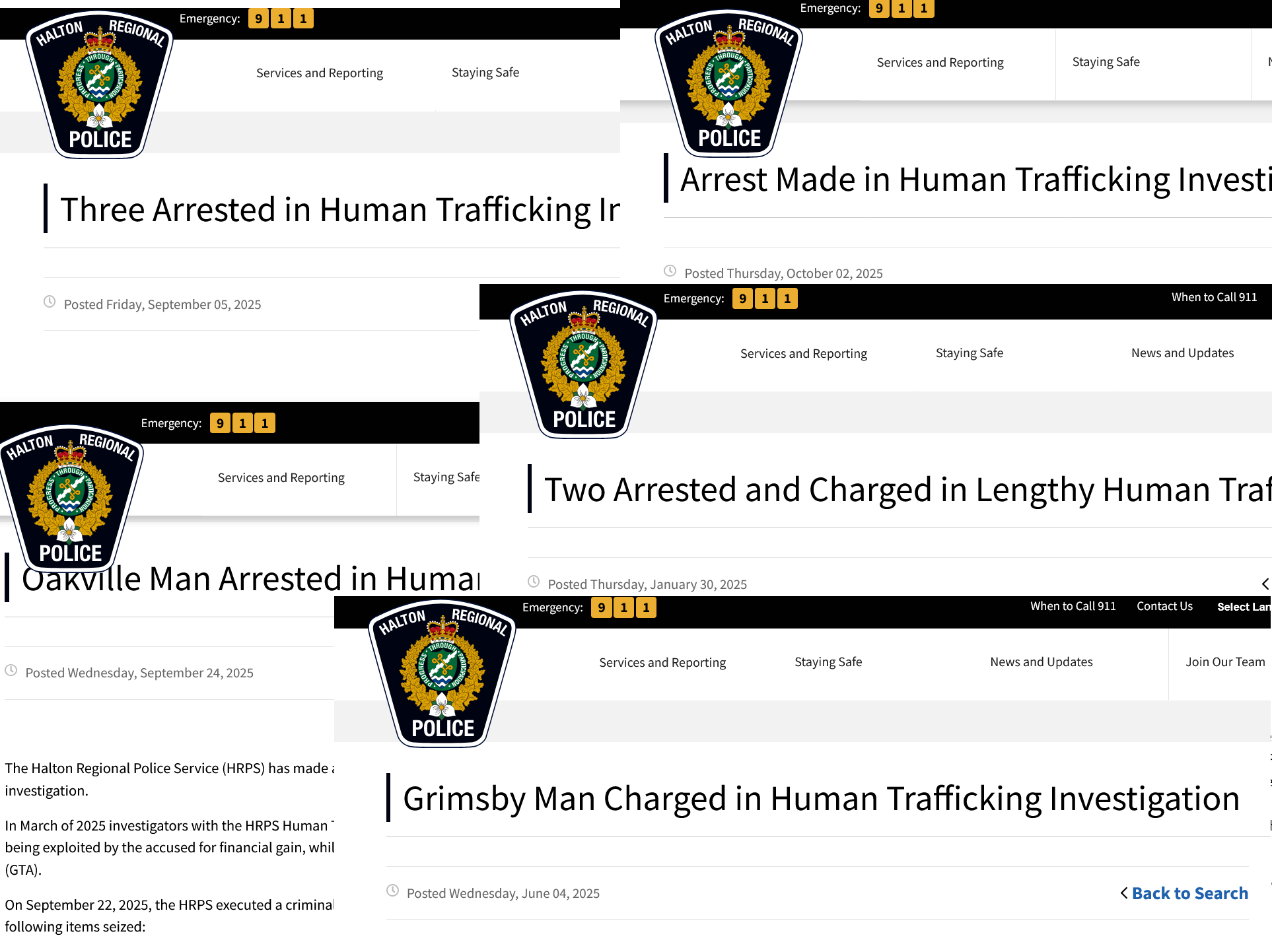
For nearly 35 years, SAVIS (Sexual Assault and Violence Intervention Services of Halton) has provided confidential, non-judgmental support to survivors of sexual assault, violence, and trafficking. The organization recently launched a public awareness campaign to spotlight the role of female traffickers following the arrest of 32-year-old Lia Mai Genest-Matte of Thornhill.
While the case raised public attention, Samsa said it also exposed deeper truths about how traffickers operate and the misconceptions surrounding them.
“We often think of a trafficker as a man in a dark alley,” she explained. “But women can also be traffickers. Sometimes they’re survivors themselves, drawn into a cycle where they gain favour with a trafficker by recruiting other girls. Many of them have been victims too.”
According to Samsa, human trafficking rarely begins with abduction or violence. Instead, it starts with emotional manipulation and trust.
“It doesn’t happen overnight,” Samsa explained. “We had a 15-year-old from Oakville who met a man at the mall. He bought her gifts, gave her a phone, and picked her up from school. Months later, he asked her for a ‘favour,’ and that was the start of her being trafficked.”
Samsa noted that traffickers can make more than $250,000 from a single victim, making it a lucrative and organized crime. “It’s coercion disguised as care,” she said. “By the time the person realizes what’s happening, they’re already isolated, ashamed, and afraid.”
The Halton Collaborative Against Human Trafficking (HCAHT), which includes survivors as key members, works alongside police, schools, and community organizations to address prevention, education, and survivor support. Having survivors’ voices in the discussion is critical, Samsa said.
“If we haven’t lived it, how can we truly speak about it? Survivors guide the work we do.”
Recognizing the signs of trafficking is essential for prevention.
“If someone suddenly has expensive gifts, new clothes, their hair and nails always done, but no job or income — it’s worth asking where it’s coming from,” Samsa said. “They may be on their phone constantly, disappear for long periods, or become withdrawn from family and friends. These are red flags.”
SAVIS works directly with local schools to educate students about consent and healthy relationships — key areas that can prevent grooming before it starts.
“A healthy relationship isn’t someone texting you 100 times a day or monitoring your every move,” Samsa explained. “We teach students that love isn’t control.”
Social media has also become one of the biggest recruitment tools for traffickers. “Apps like Snapchat or WhatsApp can be dangerous spaces because traffickers look for vulnerability,” she said. “They build emotional connections online. They say, ‘You’re beautiful, you’re special, I understand you.’ And that’s how it begins.”
Parents and caregivers, Samsa added, should keep open communication with their children and pay attention to unexplained gifts or secretive behaviour.
“Ask questions. Where did that new phone come from? Who bought you those shoes? These conversations can be uncomfortable, but they’re crucial.”
Much of the trafficking activity in Halton occurs in hotels, particularly those near major highways, where traffickers can move victims quickly. SAVIS collaborates with the Halton Regional Police Service to train hotel staff to recognize warning signs.
“If the same people are checking in frequently, if a young person seems controlled or frightened — report it,” Samsa encouraged. “We also support initiatives like the ‘Ask for Angela’ campaign in bars and restaurants, which allows women to discreetly seek help if they feel unsafe.”
For survivors who manage to escape, finding stability can be difficult. “The biggest barrier is housing,” Samsa said. “Many survivors have criminal records or poor credit because of what they were forced to do while being trafficked. Landlords don’t want to rent to them.” SAVIS helps survivors secure first and last month’s rent, access food banks, and obtain gift cards and essentials to rebuild their lives. “We meet them where they’re at,” Samsa said. “We support them as they take their next steps — emotionally, financially, and practically.”
SAVIS also runs small group sessions for survivors to connect and heal together, offering transportation support for those who need it. “It’s a place where survivors can finally speak without shame,” Samsa said. “Many have faced years of silence.”
Samsa urges anyone who suspects trafficking to report concerns safely. “If you see something, say something,” she said. “Talk to the police, call our crisis line, or reach out to community agencies. The worst thing we can do is ignore it.”
SAVIS offers free, confidential, and non-judgmental 24-hour support through its crisis line for survivors of sexual assault, human trafficking, and violence, as well as their friends and family members.
“There’s support out there,” Samsa said. “And when you reach out, you’ll be met with compassion, not judgment. No one should suffer in silence.”
If you or someone you know may be a victim of trafficking or sexual violence, contact SAVIS of Halton’s 24-hour crisis line, 905-875-1555, for confidential assistance.