By Jack Brittle, Local Journalism Initiative Reporter
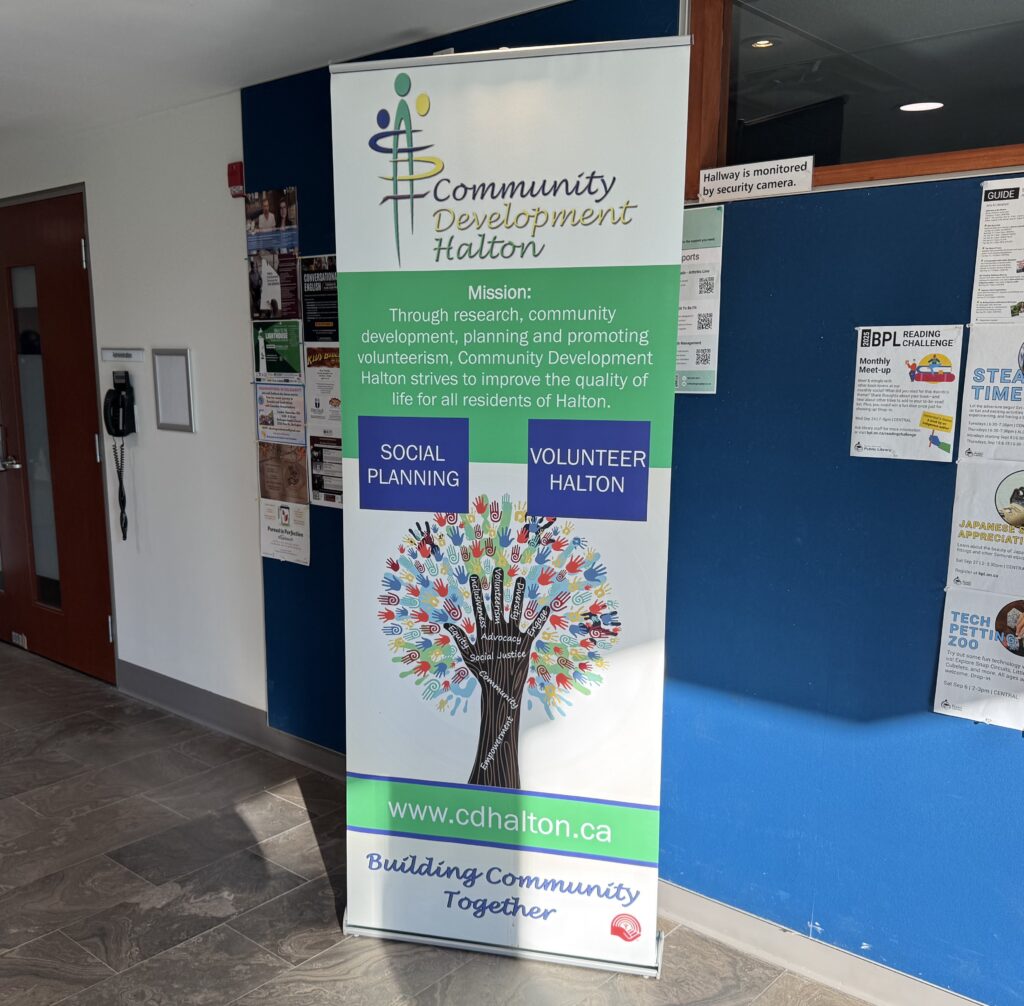
Earlier this week, Community Development Halton (CDH) held a screening of Tamer Soliman’s documentary, The Great Disconnect, at the Central Branch of the Burlington Public Library. The Sept. 9 event also served as a celebration of the 41st anniversary of CDH.
Rishia Burke, executive director of CDH, said that they did not get to properly celebrate the organization’s 40th anniversary last year due to difficulties with bylaws. As a result, the celebration took place online.
“We thought, ‘You know what? Let’s do something in person for 41,’” Burke said. “It doesn’t matter that it’s a funny number, it’s important to celebrate. And because we’ve been doing so much work on connection and belonging, we felt like it should be an in-person event.”
Burke said that CDH decided to screen the film because it aligns with the group’s new strategic plan, which is focused on community building, civic engagement, and volunteerism.
The film, released in 2019, aims to discover the cause of a growing lack of community within Western nations.
“It really leans into the theme around, ‘Do we need each other?’” Burke said. “I think the answer is yes, but the dichotomy that we find ourselves in right now is individualism versus thinking about the whole. So the movie’s going to ask some hard questions about that.”
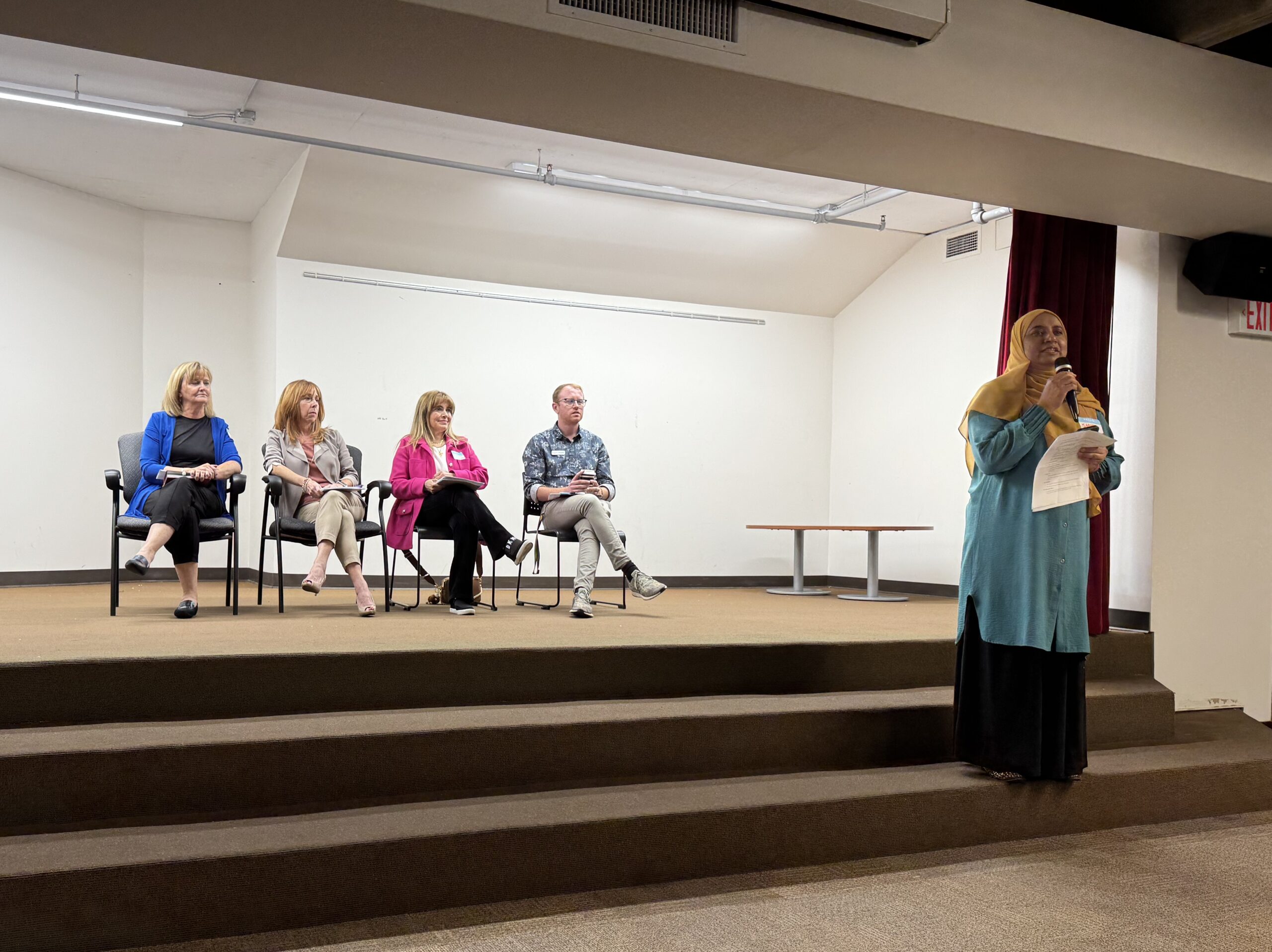
At the conclusion of the film, a panel consisting of Elizabeth Wells, executive director of Our Kids Network; Hanadi Al Masri, director of business development for the Halton Multicultural Council (HMC Connections); Michele Sparling, founder of the Just Be You program; and Steven Barrow, social planner at CDH, assembled at the front of Centennial Hall to further discuss topics and questions raised in the movie.
The panel was moderated by Shiba Anjum, a CDH board member.
Al Masri spoke about her experience moving to Canada 23 years ago and eventually finding community.
“It was a new environment for me, and I lost social connections,” Al Masri said. “I felt like I was living by myself. The kids go to school, they come home every day with stories, and I’m still in my bed and doing the same things inside the house. I was going into a depression.”
Al Masri said this all changed when she started to strike up conversations with fellow passengers on the bus.
“I found a woman from Quebec, and she was amazing,” Al Masri said. “And she said, ‘Let’s start to meet and do things together. And then we found another woman from Africa, and we created a cultural hub where we would cook together, read books, and have our kids play together.”
She credited her experience volunteering with HMC Connections with further fostering a sense of belonging.
Wells spoke about the work that she does with Our Kids Network. She said that since 2003, the group has been studying and monitoring the well-being of children and youth in Halton.
“What I’m really passionate about is driving that data and evidence to create change,” Wells said. “And what I was thrilled to see in this movie that we just watched, was them talking about that data and that evidence that shows you that direct correlation between wellbeing, and relationships, and connection.”
Wells said that if kids have positive relationships with adults and peers, they are less likely to feel isolated or use substances.
“They’re more likely to report positive mental health and greater resilience,” Wells said.
Speaking of connections, Sparling described the culture shock of moving from Nova Scotia to Ontario.
“Community, family, and connection were always very important, because that’s all we had,” Sparling said. “And when I moved to Ontario, it said, ‘Oh wait, this isn’t quite the same way.’”
Sparling said that she made an effort to talk to her neighbours and encouraged them to knock on her door whenever they pleased.
She spoke about the genesis of Just Be You.
“Two of our kids, one in particular, as their mental illness progressed, became more isolated, more alone, and I got involved in the mental health community as a volunteer,” Sparling said. “I would talk to parents and children across the province through my volunteer work, and I heard more often that they were alone, they were isolated.”
“They didn’t have friends, they didn’t have a place to go to hang out and just be themselves,” Sparling said. “And so I started looking into it and realizing that we need to do something.”
Sparling began fundraising and eventually started the peer-to-peer mental health support group.
Anjum commented on the similarities between the four panellists.
“What I’m seeing here is each of you work on different fronts, but the common thread is creating pathways for people not to survive, but to belong,” Anjum said.
Burke spoke about the fact that Centennial Hall was filled to capacity for the event.
“It’s a topic that hits a chord with people,” Burke said. “The question of the movie is ‘Do we need each other?’ The answer is yes, and we think tonight is proof positive that, with this many people showing up that we do need each other, and we need to figure out better ways of doing that.”