By Jack Brittle, Local Journalism Initiative Reporter
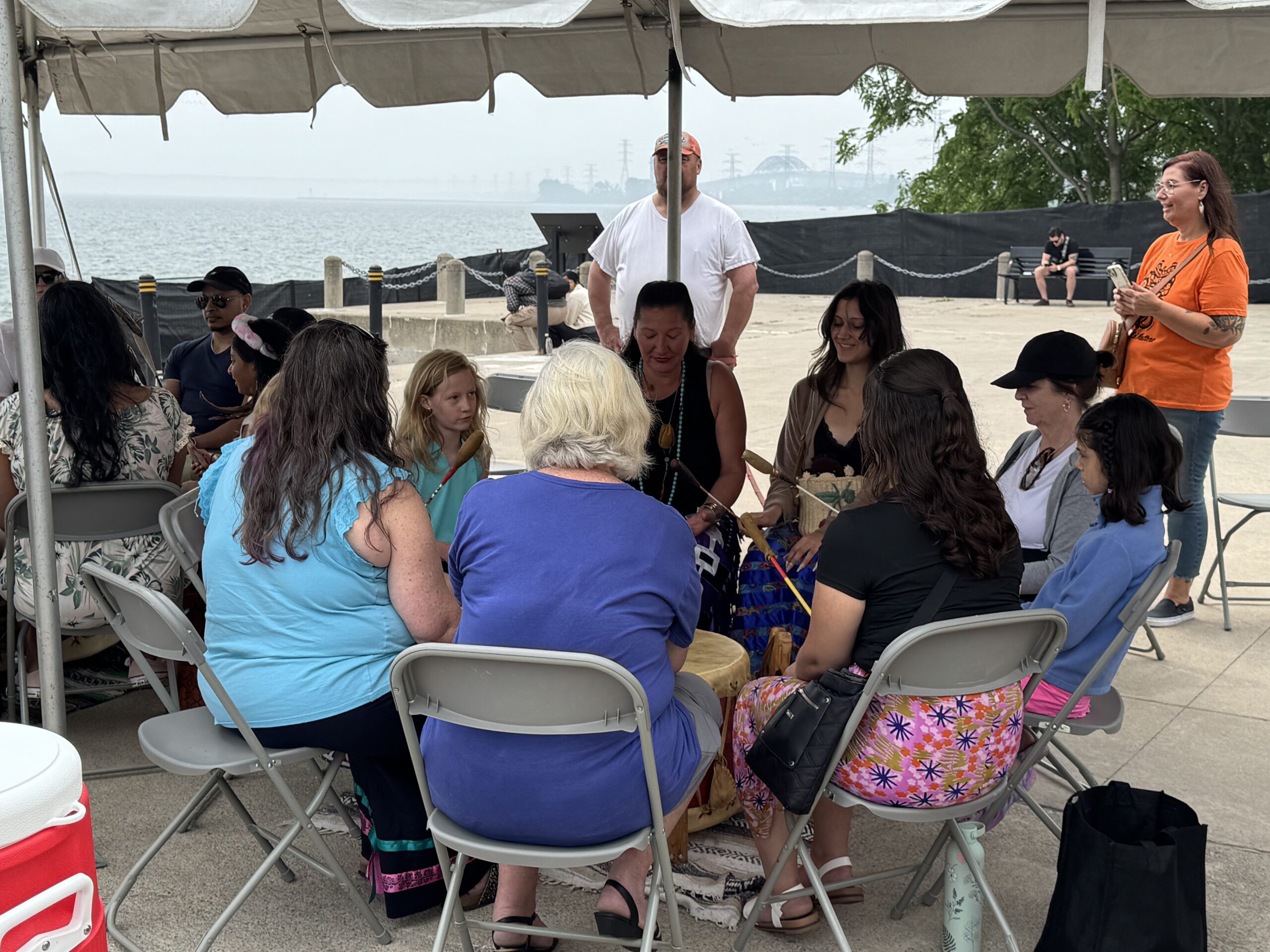
On June 21, Burlington marked National Indigenous Peoples Day with a public celebration at Spencer Smith Park, honouring Indigenous culture, history, and resilience.
Kate Dickson, emcee for the event, spoke about what she hopes people got out of the celebration.
“We’re asking you to come into our world, albeit for three hours, today on Indigenous Day and come drum and sing with us,” Dickson said.
She also spoke about the intersection between Pride Month and National Indigenous Peoples Day.
“Indigenous communities are very respectful of people who are in our world referred to as two-spirit people,” Dickson said. “And there are stories that come from antiquity of taking delight in people who register an understanding of gender related issues within the same context. So it was always a source of tremendous interest and great respect.”
Dickson is a retired high school teacher and principal and was one of the first Indigenous teachers to teach a full semester Indigenous course in Ontario. She retired in 2012 and now visits schools, teaching kids about Indigenous culture.
Dickson said that it is important for children to learn about how Indigenous people lived before colonization and the horrors of residential schools so that they know “what was lost and suppressed.”
Mayor Marianne Meed Ward was also present at the event and addressed those in attendance.
Dickson sits on the Indigenous Advisory Circle, along with White Eagle, who did a land acknowledgment and set intentions for the afternoon.
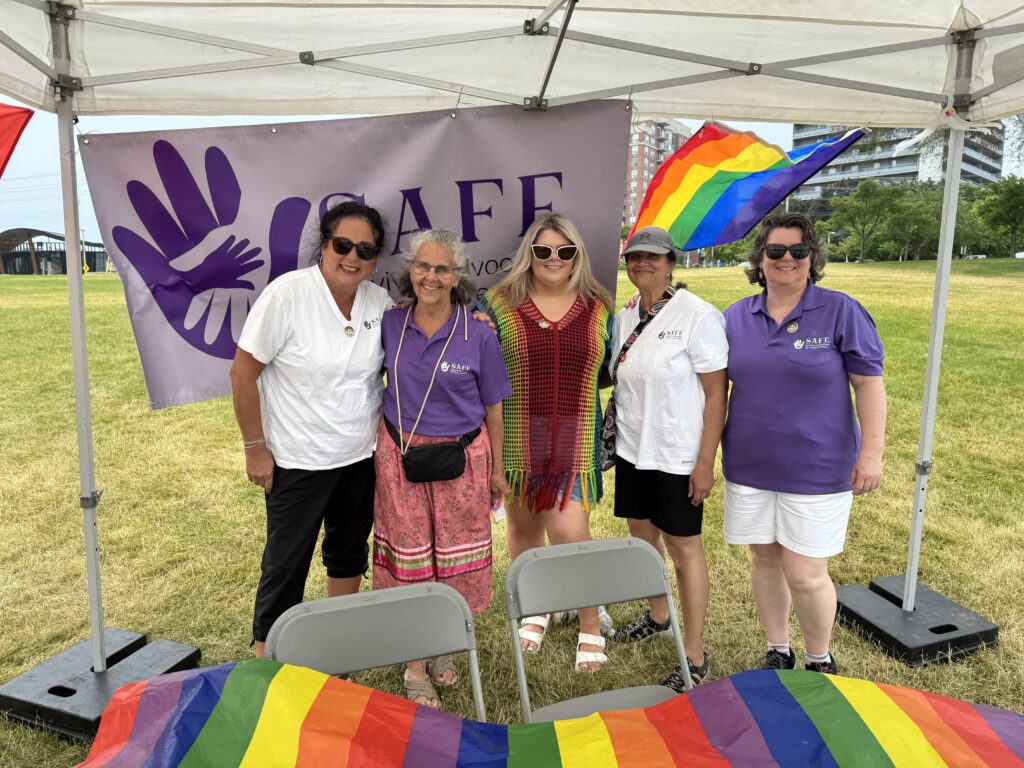
Dickson mentioned that one of the calls for action made by the Truth and Reconciliation Commission is for more collaboration between Indigenous and non-Indigenous people. Chris McKhool, a member of the band Sultans of String, came to mind as an example of this action. McKhool, who had his own stand at the event, created an album with the Sultans of String called Walking Through the Fire, which features Indigenous singers over top of the non-Indigenous band’s instrumental tracks.
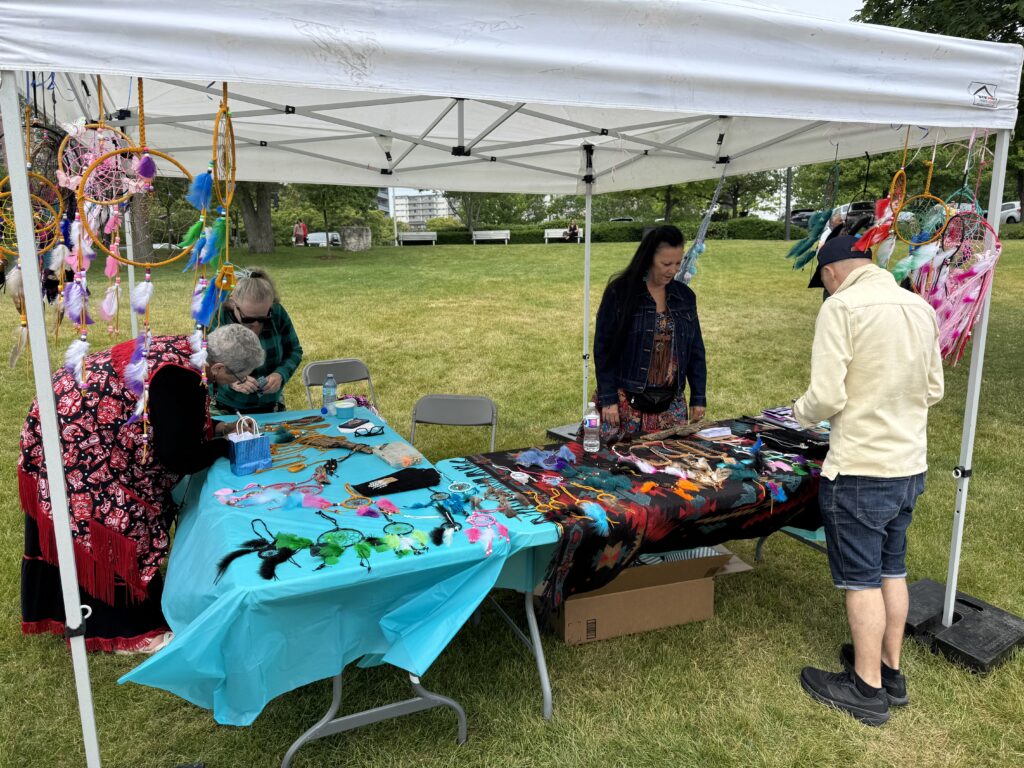
Other stands featured Indigenous vendors and artisans, as well as community agency booths with information on their programming.
Amber Kakiishiway and Matt Bergman provided music for the event, while Jaimie Lindsay performed traditional Indigenous dances, and Shannon Thunderbird, Dickson’s sister, led the drum circle.
Dickson explained why she thinks the drum circle resonates with so many people.
“Drums are universal,” Dickson reflected. “They’re in every single place around the world, and they’re all female. All drums are female, and they speak to the heart. When we have drumming groups, it’s not unusual to sit with boxes of Kleenex, because it pulls from the heart.”
Dickson noted that all drums are female because the steady beat they create represents a child’s heartbeat in the womb. Additionally, in Indigenous cultures, sticks are called “grandmother’s arms.”
“We don’t call them strikers or beaters, because you don’t beat your mother. You don’t beat a woman, and the drums are female.”
Dickson described how many people are intimidated to approach an Indigenous person and broach historical wrongdoings.
“I think the most fundamental part is that people are starting to feel guilty,” Dickson said. “I have so many people come up to me after I have talked about residential schools, and they say, ‘I didn’t know any of this when I was growing up,’ and they’re angry.”
“And I will say, ‘But you weren’t allowed to,’” Dickson continued. “‘It was mandated that you were not allowed to learn about any of this.’”
Instead, people can use the anger they feel at the past to help Indigenous people going forward.
“I always tell them we need help,” Dickson said. “You are more political than we are. We don’t want to be political. We never were, but we’re having to be.”
“We need people who have grown up in a different justice system to help us,” she continued. “So contact your MP, MPP, call the mayor, and find out what initiatives are taking place.”
Dickson stressed the lack of clean drinking water in many reserves across Canada.
“More than anything else, promote our need to bring water to what are now third-world country reserves,” Dickson said. “This is the help we need. We don’t need you to apologize, because if you really feel this requirement to apologize, well, apologizing is in the actions you take.”