
By Maisha Hasan, Local Journalism Initiative Reporter
On the evening of May 26, Mayor Marianne Meed Ward and Ward 4 Councillor Shawna Stolte, who is also Burlington’s deputy mayor of housing, hosted a housing panel to discuss the city’s most pressing concerns with affordable housing, with the help of local experts.
Those experts come from different perspectives on the housing crisis: on the panel was David Ionico, chair of the West End Home Builders’ Association (WE HBA), and Dr. James Dunn, associate dean of McMaster University’s Faculty of Social Sciences and the director of the Canadian Housing Evidence Collaborative (CHEC). Ward 5 Councillor Paul Sharman, Ward 6 Councillor Angelo Bentivegna, and Halton Regional Chair Gary Carr were also present.
Meed Ward began by noting that Burlington has committed to a provincial housing target of adding 29,000 new housing units by 2030. This aligns with population projections: Burlington’s population is expected to reach a whopping 265,000 by 2051.
To plan for that amount of growth, the city is focused on guiding development “along [the city’s] GO stations where there’s access to good transit and in major undeveloped lands, like Bronte Woods and King Road where [the city] has recently, in Bronte Woods, completed a master plan to build a complete community there,” Meed Ward said.
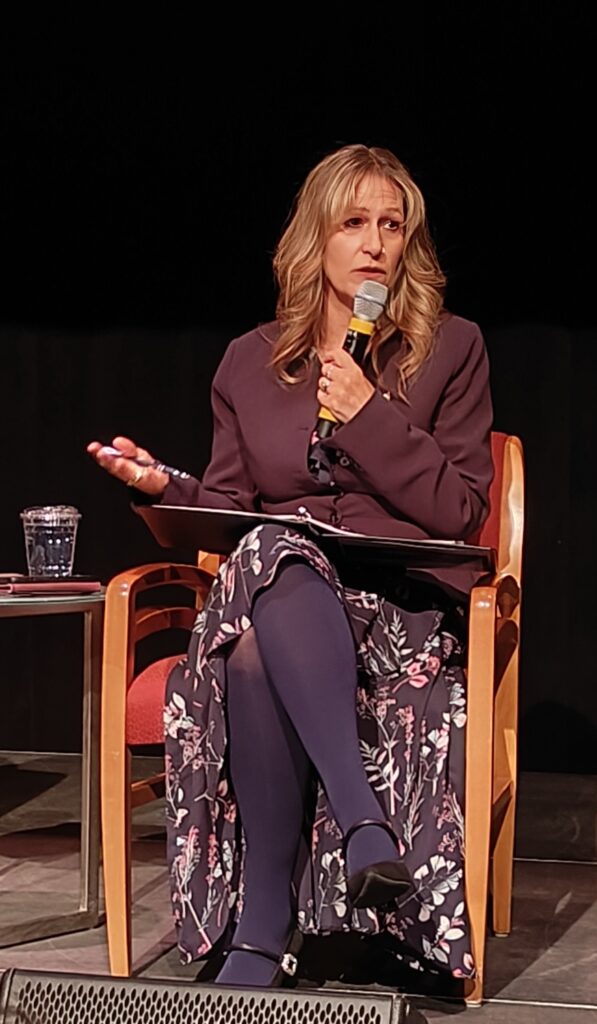
The mayor recently returned from a study tour in Helsinki, Finland, where she had the opportunity to learn about that city’s urban planning and place-making strategies. The city committed to creating enough affordable social housing and appropriate policies for everyone to be housed, and is well on their way to attaining this: homelessness is set to be eradicated this year.
The mayor went on to address how the U.S. tariffs have impacted the Burlington housing market.
“The United States has strained our housing market considerably because of the unpredictability and the fact that many of our construction uses steel, relies on steel in some way, and of course, those tariffs are present. There’s also increased construction costs generally because of the cost of goods going up. There are supply chain disruptions across not just Canada but North America but the globe now. There’s reduced investment and market confidence and when there’s turmoil markets pull back, investment pulls back, capital pulls back and so do investors in the housing market and then we’re seeing job losses which of course makes it very difficult for people to even think about buying a house and meeting those payments.”
Julie Sergi, the chair of Cornerstone Association of Realtors, one of the event sponsors, came up to the stage to share market insights. The Cornerstone Association of Realtors is a newly amalgamated association formed on July 1, 2024, supporting realtors in Mississauga, Burlington, Hamilton, Simcoe, and Waterloo Region.
“In April, there were 152 property sales. Year to date, sales have declined by nearly 40%, and they are over 50% below long-term trends…and the number of new listings in Burlington is also down,” Sergi noted. “There were 450 new listings in April, down over 13% from the same time last year. However, the average sale price in Burlington was up, at 1.179 [million dollars], up 2.4% over last April. This data suggests that while fewer people are buying and selling, prices are not declining.”
Despite the data, Sergi holds hope as the Canada Mortgage and Housing Corporation (CMHC) reported 398 housing starts since 2025, the highest it has been since 2013.
As the panel continued, Dunn responded to questions about advancing affordable housing goals, referencing his work on how the non-profit sector could play a role in affordable housing. Dunn also pointed out that young adults at the start of their careers are too busy paying high rents to save to build, buy, or even pay the down payment for a home.
“We suggest that we need to invest in this not-for-profit housing and that it would be operated on a cost-recovery basis. So a non-market housing provider, let’s take rental for an example, would be the same as a large rental provider…what we need is a lot more non-profi…so [these would be] sophisticated real estate organizations benefiting from government grants and operating on a not-for-profit basis, and they’re only charging on a cost-recovery basis. They rent for what it costs them to deliver the housing,” Dunn explained. “Now that will start high, it’ll start above average market rent, but over time the rents will go up at a lower rate than they would in the market sector, and so we’ll have much more deeply affordable housing, say in 10 years from now.”
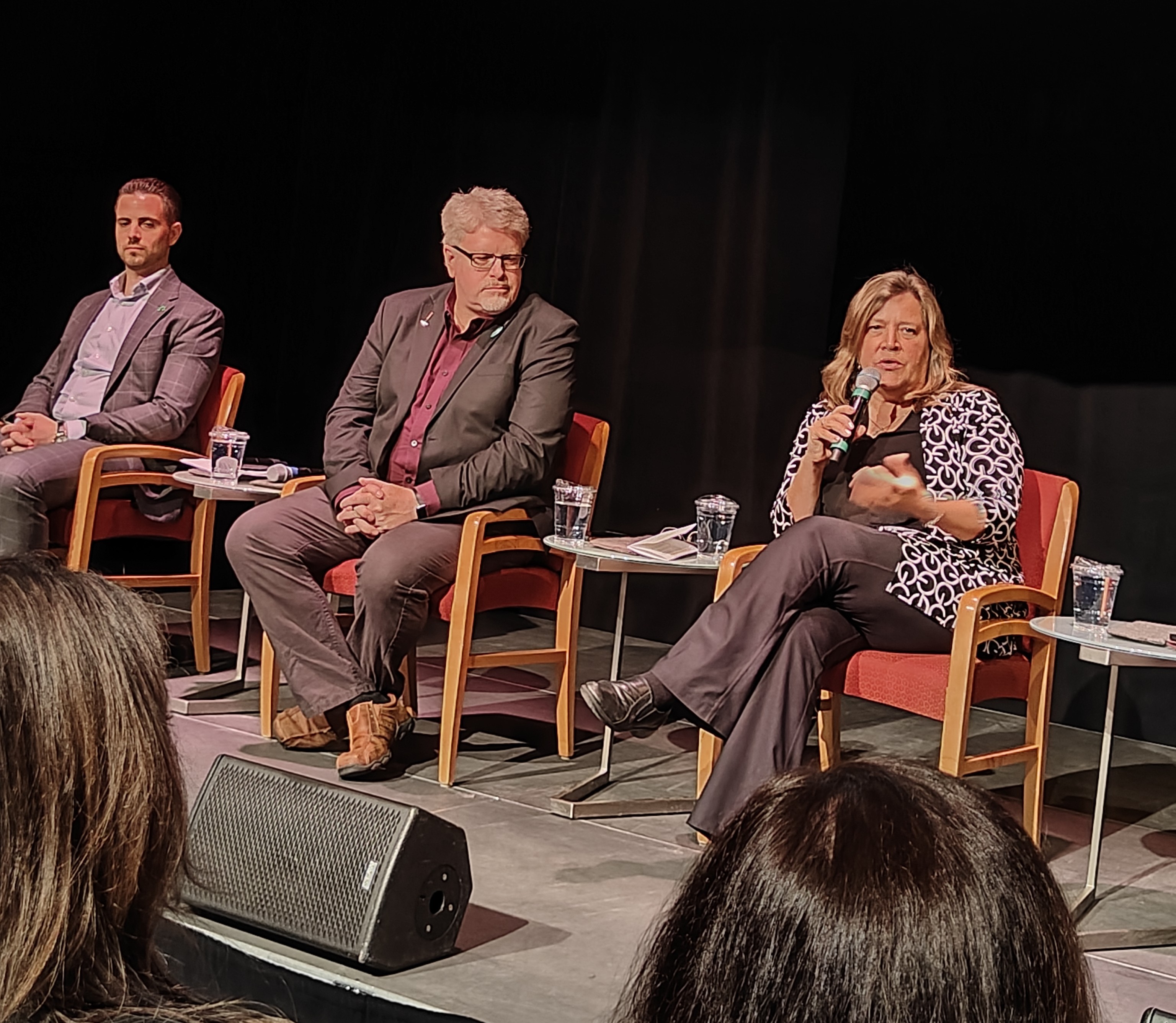
Dunn also referenced Helsinki, where a mixed housing model includes rent-geared-to-income units alongside full-market rentals. In this system, tenants contribute rent unless they qualify for full assistance, ensuring a blend of income levels within a single building.
Ionico continued the conversation, noting that any housing is better than no housing when facing the threats of tariffs and the rise of homelessness.
“The fundamentals just aren’t working right now, and the fundamentals have to be straightened out before we can start introducing different aspects to projects.”
Ionico spoke about the private sector’s role in addressing the housing crisis and the importance of collaboration across sectors.
“I would like to emphasize that the private industry does want to collaborate. Things get done quicker when there’s collaboration. As mentioned, we are generally pro-housing. We think there should be a diversity, a multiplicity of housing. I think what we struggle with right now is that just the fundamentals of getting housing built are so utterly broken,” Ionico said. “And it’s not all at the municipal level, there are different layers…when you start introducing not-for-profit housing, it just makes the project even tougher. So it’s not necessarily that there’s adversity to that from our perspective or an adverse viewpoint on that, it’s just we’ve got some big issues to tackle before any housing gets off the ground.”
A key point that was made by Meed Ward and Stolte was that the municipal government got out of the practice of building housing some twenty years ago. Instead, the City of Burlington has been working to speed up processes related to development; the city’s Pipeline to Permit Committee, which includes city staff, elected officials, and representatives from the housing sector, including WE HBA, represents another innovation — panel members agreed that they didn’t know of another municipality with this type of collaborative public-private committee.
There was some discussion about the homelessness crisis and its prevention; though Meed Ward noted early in the panel that homelessness was outside of the scope of the event’s agenda, an audience question came in on the topic, and was answered primarily by Dunn.
Prevention was discussed as the most effective strategy for addressing homelessness. Providing financial support can play a key role, especially as more people struggle to keep pace with rising living costs.
“If there is a recession or a downturn or [people] in the construction or steel industry right now and they lose their jobs and they can’t afford [rent], we have the ability to do top-ups and help people bridge that,” Meed Ward added to the discussion.
More discussions of community building and non-profit projects concluded the discussion, based on questions from the audience. While the event as a whole presented a hopeful picture of housing in Burlington, Ionico offered a pragmatic reminder that affordable housing isn’t always feasible in every context, depending on financial and practical constraints.
“You need to say, first of all, will affordable housing work in the context of this development, and in some cases it will, in some cases it just won’t, and you know what’s better than a combination? Any housing is better than no housing,” said Ionico.